Rueter-Hess Reservoir blends water storage, recreation and 9,000-year history
A reservoir built to protect Douglas County’s water future now doubles as a public fishing and trail site, with 9,000 years of history underfoot.
Rueter-Hess Reservoir is one of Douglas County’s clearest examples of public investment doing two jobs at once. It secures water for a fast-growing part of the Front Range, and it also gives residents a place to fish, hike and watch wildlife in a landscape shaped by both engineering and deep human history.
Water security first
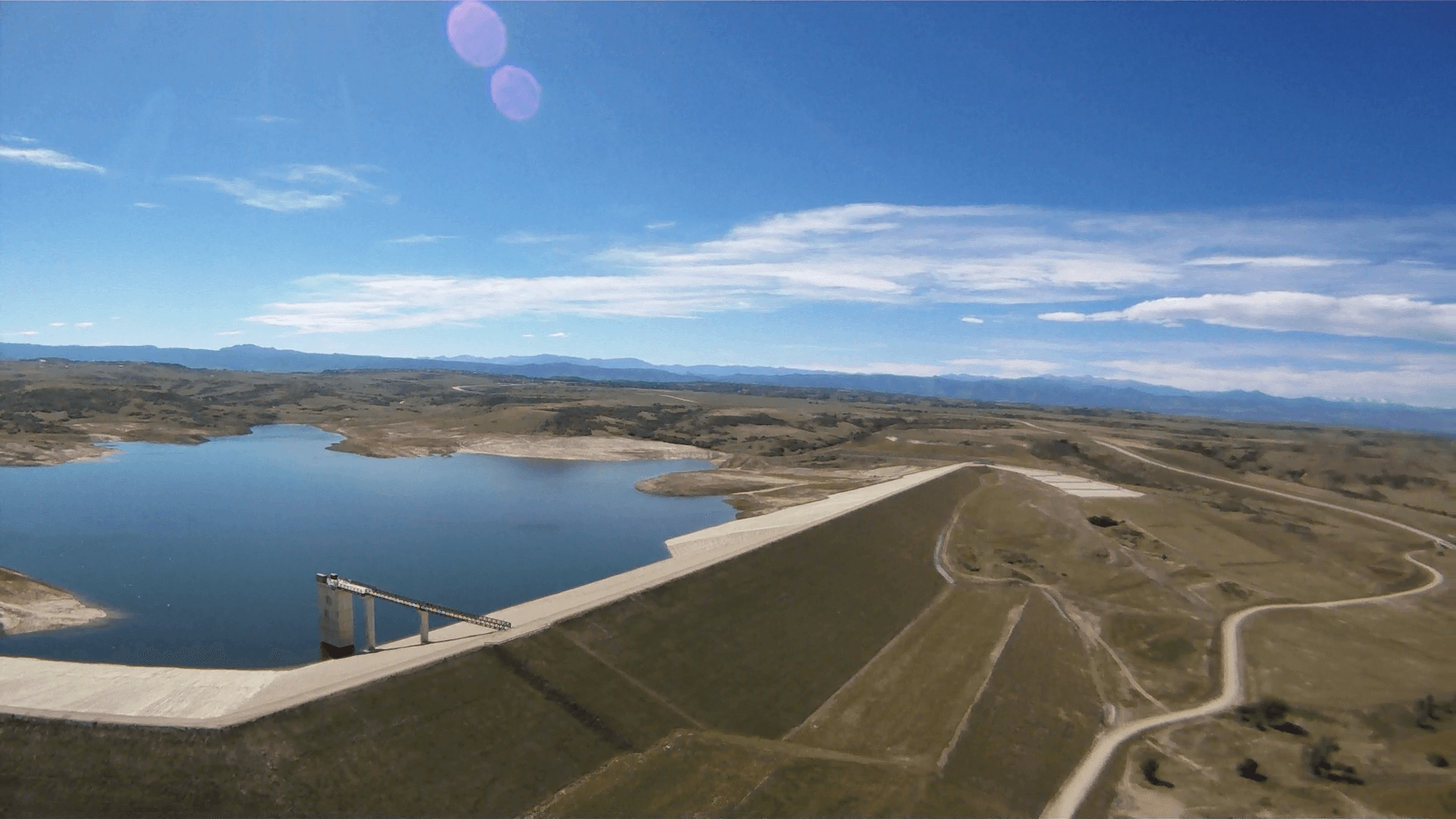
Completed in 2012, Rueter-Hess sits on Hess Road, about a mile east of I-25 at the Castle Pines Parkway exit, on Newlin Gulch, a tributary drainage of Cherry Creek. The dam rises 185 feet above bedrock, the reservoir covers 1,170 acres, and it can hold 75,000 acre-feet of water. Parker Water & Sanitation District describes it as a key part of its long-term goal of reaching a 75% renewable water supply, which is the reason the project matters far beyond the county line.
That scale gives Douglas County a reservoir that is not just a scenic backdrop but a core utility asset. In practical terms, the reservoir helps meet present water demand while building resilience for dry years and future growth, a point that matters in a county where every additional home, school and business depends on reliable supply.
A site with a much older story
The reservoir is named for Rosie Rueter Hess and Percy Hess, longtime Douglas County residents from whom Parker Water & Sanitation District purchased the land. The district says remnants of Rosie’s homestead still remain at the base of the dam, where a few old cottonwoods are still standing. That makes the site unusual even by local history standards: it is a modern infrastructure project built directly over a homestead landscape that still leaves traces behind.
Construction also revealed archaeological artifacts that pushed the story back far beyond the Hess family. The district says the discoveries provide evidence of human inhabitation dating back 9,000 years, a reminder that the ground under the reservoir has long been part of the county’s working landscape. Native and immigrant settlers used the area for hunting, mining gold, homesteading and ranching, and that layered history is now part of the reservoir’s identity.
Who runs the recreation side
Recreation at Rueter-Hess is overseen by Douglas County, and the county’s Rueter-Hess Recreation Advisory Board brings together Parker Water & Sanitation District, Douglas County, the Town of Castle Rock, the Town of Parker, the City of Castle Pines and the City of Lone Tree. That governance structure matters because the site has to balance public access with the reservoir’s primary job as drinking water storage.
The county now manages access through reservations, parking passes and boat rules designed to protect water quality. Vehicles entering the reservoir portion of the property need an online reservation, and the parking pass costs $10 per car. The reservoir is open Friday through Monday from 8 a.m. to 6 p.m., shifting to 8 a.m. to 5 p.m. starting Nov. 1 through winter unless otherwise posted.
What you can bring, and what stays out
Douglas County says all watercraft must pass an invasive species inspection before going on the water, and they must be clean and dry. Allowed craft include standup paddleboards, canoes, kayaks, river pontoons and johnboats, with limited use of electric trolling motors now allowed for fishing on approved craft. Motors must be detachable, hand-operated, no more than 55 pounds of thrust, with a shaft extending no more than 24 inches below the waterline, and the boat length cannot exceed 14 feet. No trailers are allowed on the property.
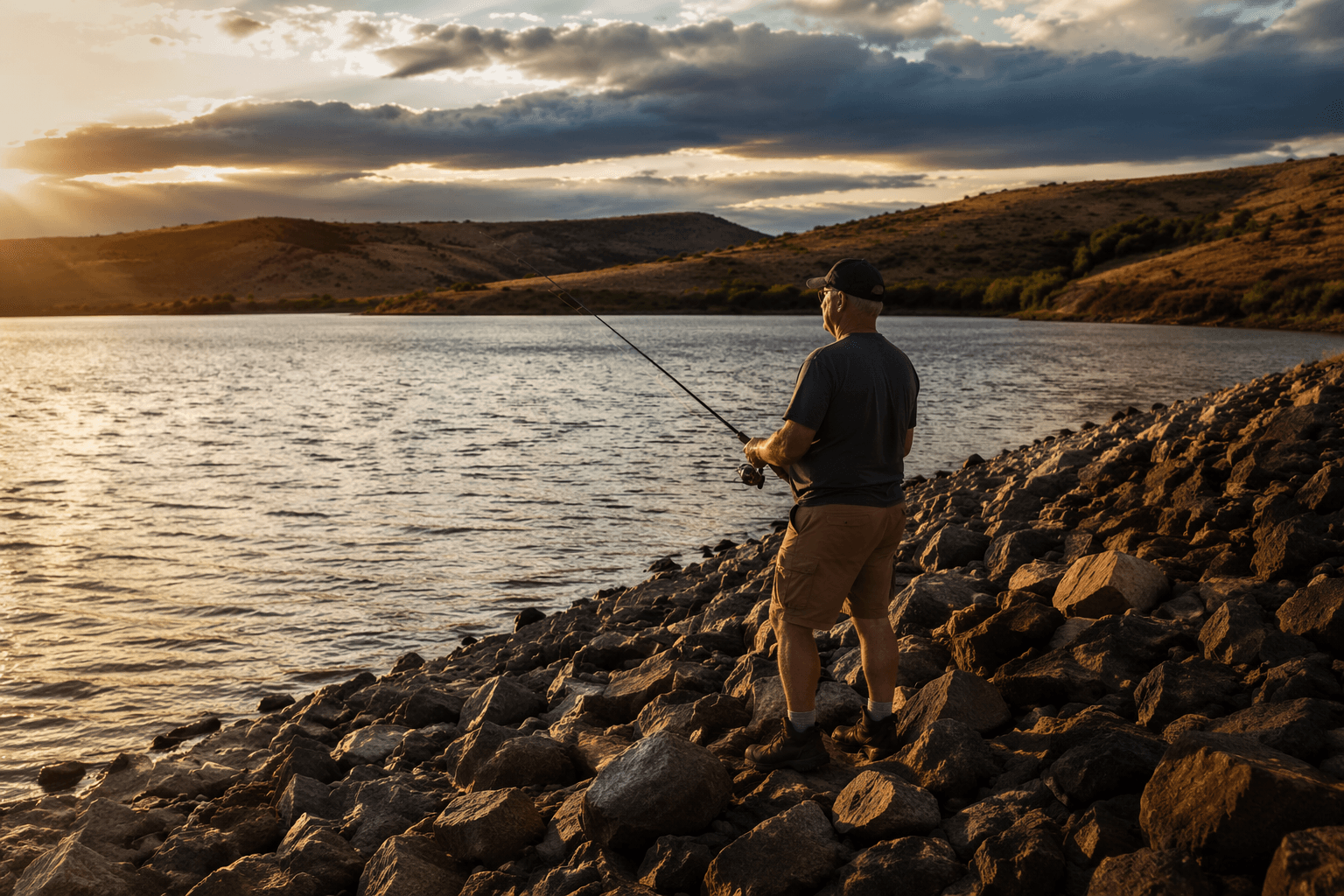
For anglers, the rules are equally specific. A valid Colorado fishing license is required, and Douglas County also requires a free daily fishing permit to help manage the fishery. Fishing is allowed from shore or from approved watercraft, but waders, belly boats, float tubes and live bait are not allowed. The reservoir has been stocked with fish including walleye, largemouth bass, yellow perch, wiper, channel catfish, black crappie and bluegill, and the county’s catch-and-keep rules set size and bag limits for the species it allows anglers to keep.
How the place changed daily life
Rueter-Hess changed county life in a quieter way, too. A project that began as water storage now gives residents a place to get outside without leaving the county, whether that means a shoreline fishing trip, a paddleboard outing or a walk on the trails. Douglas County says the property includes natural areas and trails, and the west side is kept to soft-surface use and activities that do not damage the wildlife and natural character of the site.
The trail network gives the reservoir its most visible public face. The Rueter-Hess Incline Challenge has 132 steps and 232 feet of elevation, while the Rosie Rueter Trail loop that leads to and from the parking lot is just over a mile long. It is open daily from sunrise to sunset, and no reservation is required for the incline or trails, which makes the property one of the county’s few places where a utility corridor, a wildlife landscape and an accessible outdoor destination overlap in the same visit.
Why it matters now
Rueter-Hess is a rare Douglas County project that answers two questions at once: how to keep water available for long-term growth, and how to let the public use a utility asset without compromising its core purpose. The reservoir’s 75,000 acre-feet of capacity, 185-foot dam and 75% renewable-water goal show the investment side; the fishing permits, trail access and wildlife-focused restrictions show the public payoff. That combination is why the reservoir has become one of the county’s most distinctive pieces of infrastructure, and one of its most unusual places to spend a day outside.
This article was produced by Prism’s automated news system from verified source data, official records, and press releases, then run through automated quality and moderation checks before publishing. The system is built and supervised by the people who set the standards it runs under. Read our full AI policy.
Did this article answer your question?