Commissioners to review preliminary findings on Treatment and Recovery Center
Commissioners weighed preliminary findings on the county’s crisis center as they stalled extra 2026 funding and pushed toward a new contract and 2027 budget.
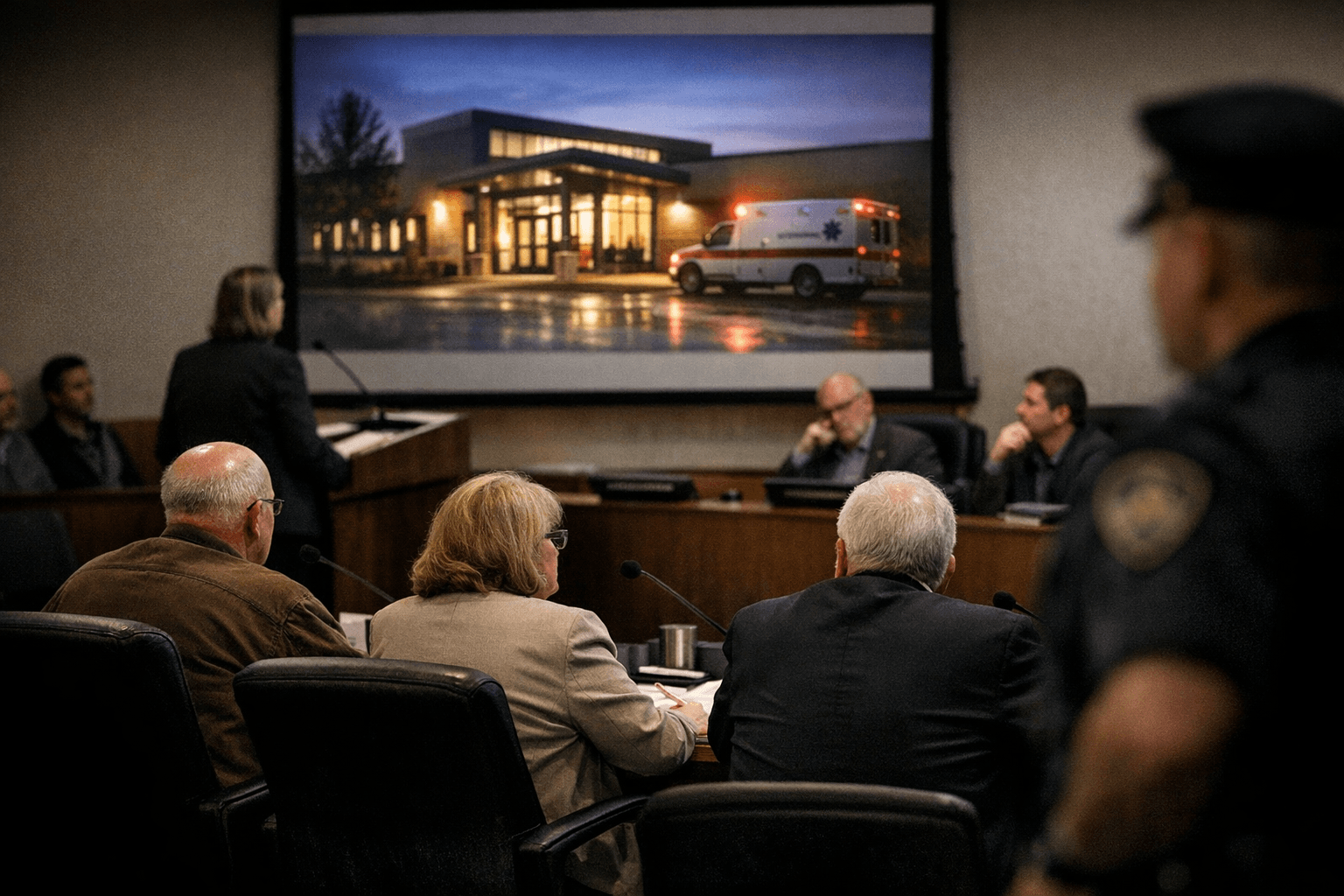
Douglas County commissioners were set to hear preliminary findings Tuesday at 4 p.m. on the Treatment and Recovery Center, as they face the central question behind the review: how much Bert Nash Community Mental Health Center should be paid to run the county-owned facility at 1000 W. Second St. in Lawrence.
The work session at the Douglas County Historical Courthouse, 1100 Massachusetts Street, was informational only, with no action scheduled. Commissioners were to follow it with their regular 5:30 p.m. business meeting, part of the weekly cadence that usually brings the board together on Wednesdays to take up county business.
The review by MultiPass Consulting, paired with behavioral-health consultant Margie Balfour, was authorized after county leaders and Bert Nash diverged over the center’s operating cost. The proposed project was capped at $98,900 and was designed to help shape a new TRC contract and the county’s 2027 budget process. Commissioners also deferred an additional funding request for the center’s 2026 operations until the review is complete.
The timing matters because the TRC has become a cornerstone of Douglas County’s crisis system. Opened in phases starting April 10, 2023, after commissioners approved the lease and operating agreement on April 5, the center was planned as a crisis-care option meant to divert people from emergency rooms and law enforcement. The original rollout called for the Urgent Care Unit to open first, followed by the Observation and Stabilization units on May 25, 2023.
County leaders and Bert Nash have since held up the center as part of a broader public-health strategy built around prevention, integration and access. That network includes the Engage Douglas County coalition, Handle with Care, supportive housing, the 988 Suicide and Crisis Lifeline and the county’s Mobile Crisis Response Team, which uses therapists, case managers and sometimes peer support specialists.
The center has also expanded its footprint in the state system. In March 2025, it received Kansas Crisis Intervention Center provisional licensure from the Kansas Department for Aging and Disability Services, a designation Bert Nash and the TRC described as a milestone for a model of care recommended by the Substance Abuse and Mental Health Services Administration.
The operational numbers now under review are substantial. The TRC says it has served more than 9,100 episodes overall, employs about 92 professionals and averaged about 18 minutes from arrival to crisis assessment and treatment. In 2024, it responded to 3,683 crisis episodes, including 1,582 individuals served and 2,282 admissions. Commissioners are expected to use the review to decide whether the center’s staffing, payment structure and service model match the mission taxpayers were promised when the facility opened.
This article was produced by Prism’s automated news system from verified source data, official records, and press releases, then run through automated quality and moderation checks before publishing. The system is built and supervised by the people who set the standards it runs under. Read our full AI policy.
Did this article answer your question?