Countywide exhibits trace Douglas County’s long fight for freedom
One $8,000 grant is turning Douglas County into a six-site history trail on freedom, from Underground Railroad routes to a lost Black community at Clinton Lake. Many stops are free.
A countywide story of freedom
One $8,000 grant is helping turn Douglas County into a six-site history trail that links Lawrence, Eudora, Baldwin City and Lecompton to the unfinished fight for freedom. The new America 250 exhibits do more than mark a national anniversary: they ask who was included in the promise of 1776, who was left out, and how Kansas communities kept pushing for civil rights long after statehood.
That larger question runs through the full project, which Watkins Museum of History says will chronicle stories from the 1850s to the 1960s across Baldwin City, Eudora, Lawrence, Lecompton and the communities of Clinton Lake. The Kansas Museums Association describes the effort as an exploration of the realities of securing freedom for all people in Kansas, a framing that is especially fitting in a county where the history of abolition, Black community life, Indigenous leadership and the struggle over rights all overlap.
Start in downtown Lawrence
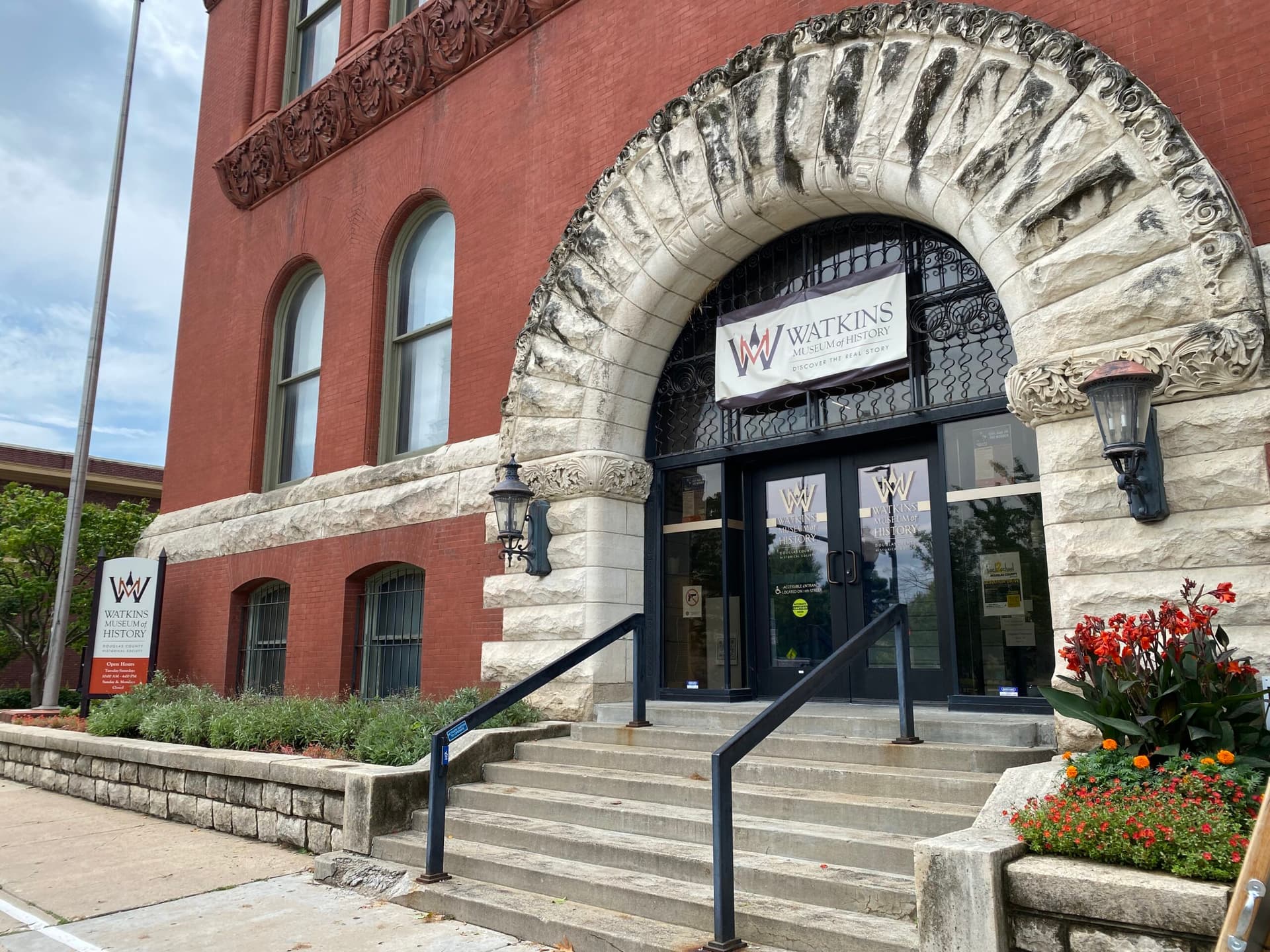
At Watkins Museum of History, 1047 Massachusetts Street, the exhibit is titled *Those Who Were Left Out*. The museum says it focuses on the revolutionary spirit of Lawrence in the 20th century while connecting that local energy to a broader countywide story of who got to claim freedom and who had to fight for it. The exhibit opens May 5, 2026 and runs through August 22, 2026, and Watkins says it is free and open throughout the summer.
The museum’s framing is especially important in Lawrence, where public memory often centers on territorial conflict and abolitionist identity. Here, the exhibition pushes further, showing how the promise of American liberty remained uneven for African Americans, Native Americans, women and LGBTQ+ people. It is a reminder that Douglas County’s history is not only about the ideals people proclaimed, but also about the barriers residents faced when they tried to live those ideals.
Watkins is also using the exhibit to anchor related programming. A presentation by Underground Railroad photographer Jeanine Michna-Bales is scheduled for May 15, 2026, and a Bleeding Kansas bus tour is scheduled for May 16, 2026. Another spring exhibit, *Through Darkness to Light*, runs April 7 to May 23, 2026, signaling that the museum’s America 250 programming is part of a wider season of public history.
Follow the Underground Railroad story west of town
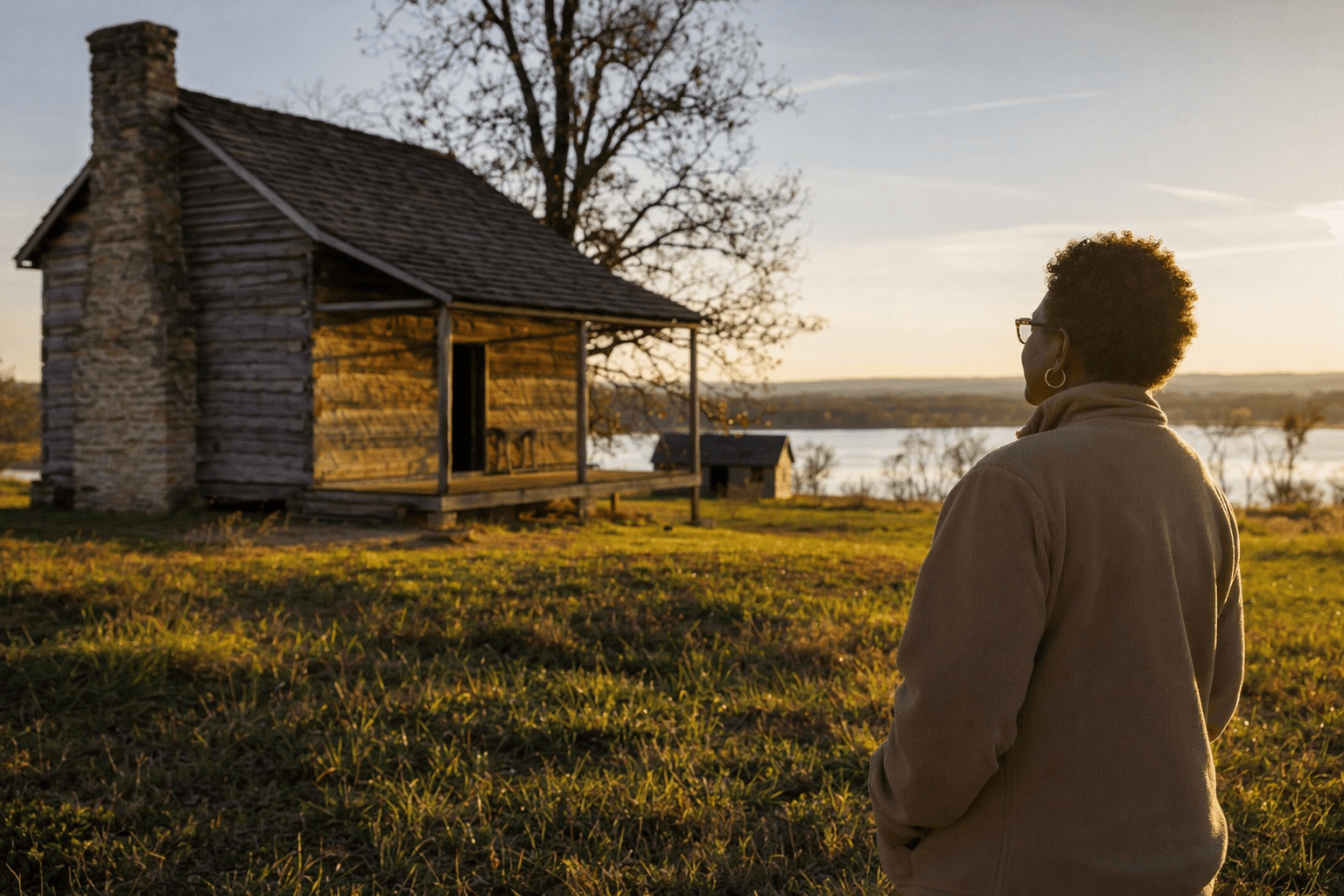
The Wakarusa River Valley Heritage Museum, 716 N. 1190 Road in Lawrence, holds one of the county’s most striking exhibits: *Angels of Freedom*. This chapter focuses on Underground Railroad abolitionists and the history of a Black community in Bloomington that was lost when Clinton Lake was created. The museum is open on weekends or by appointment, making it a practical stop for families who want to see how the landscape around Lawrence still carries the imprint of that erased community.
Watkins says the Wakarusa River Valley area played a significant role for freedom seekers traveling to Canada before the Civil War. That detail gives the museum exhibit unusual force: the valley was not just a scenic corridor, but a route shaped by risk, rescue and human determination. In a county where the physical geography has been altered by reservoirs and development, the exhibit helps visitors see how memory survives even when the original landmarks are gone.
See how freedom looked beyond Lawrence
The countywide footprint reaches beyond the city limits, and that matters. In Baldwin City, the Women’s Spirit Santa Fe Trail Historical Society History Room in the Baldwin City Public Library is part of the exhibition network, bringing the story into a familiar civic space where families already go to read, study and gather. It broadens the project beyond a museum district and makes freedom history visible in the places people use every day.
In Eudora, the Fish Family exhibit at the Eudora Area Historical Society centers on Paschal Fish, who Watkins identifies as a Shawnee leader born in 1804 and died in 1893. The museum says the Fish family helped establish Eudora and pursued freedom, independence, financial security and a high-quality life there from the 1840s to the 1870s. That story widens the definition of local freedom history, showing that the struggle was not only about flight from slavery, but also about Indigenous survival, settlement and the fight to build stable lives in a changing territory.
Lecompton keeps the territorial conflict in view
Lecompton is another essential stop because Douglas County’s freedom story cannot be separated from the territorial crisis that shaped Kansas before statehood. The exhibition reaches the Territorial Capital Museum at 640 E. Woodson Avenue, giving visitors a place to connect the countywide themes of rights, resistance and contested power to the political history that helped define the state.
Watkins notes that Kansas became a state 84 years, 6 months and 27 days after the Declaration of Independence was written, a gap that captures the distance between the nation’s ideals and the realities many people lived. Bringing Lecompton into the same countywide exhibition as Lawrence, Eudora and Baldwin City shows that the history of freedom here was never confined to one town or one moment.
Mark June 6 on the calendar
Families looking for the easiest all-ages visit should plan for Douglas County Hands-On History Day on June 6, 2026. The event will offer free admission, extended hours and family activities at four heritage partner sites: Watkins Museum of History, Eudora Area Historical Society, Wakarusa River Valley Heritage Museum and Territorial Capital Museum.
That format matters because it turns a commemorative project into something residents can actually use. Instead of reading about county history in the abstract, visitors can move between sites, compare stories and see how the same themes of exclusion and resilience show up in different communities. It is the kind of civic programming that makes history feel public rather than remote.
Why the project matters now
The countywide rollout was planned well before opening day. In December 2025, six Douglas County partners received an $8,000 Kansas Tourism Marketing Grant to promote the exhibition, and the timing was tied to the 2026 World Cup and the expected surge of international visitors in northeastern Kansas. Sen. Marci Francisco said those promotional efforts would help ensure success during that period of increased tourism.
That tourism angle is not just about attracting visitors. It is also about telling a fuller Douglas County story at a moment when public institutions are being asked to do more for more people. These exhibits connect local museums, libraries and historical societies to a larger civic purpose: helping residents see that freedom in Kansas was never handed down evenly, and that the struggle over access, dignity and belonging still shapes the county today.
This article was produced by Prism’s automated news system from verified source data, official records, and press releases, then run through automated quality and moderation checks before publishing. The system is built and supervised by the people who set the standards it runs under. Read our full AI policy.
Did this article answer your question?