Douglas County heritage council guides preservation and historic resources
Douglas County’s heritage council turns preservation into maps, grants, and practical choices that shape old buildings, landscapes, and taxpayer dollars.
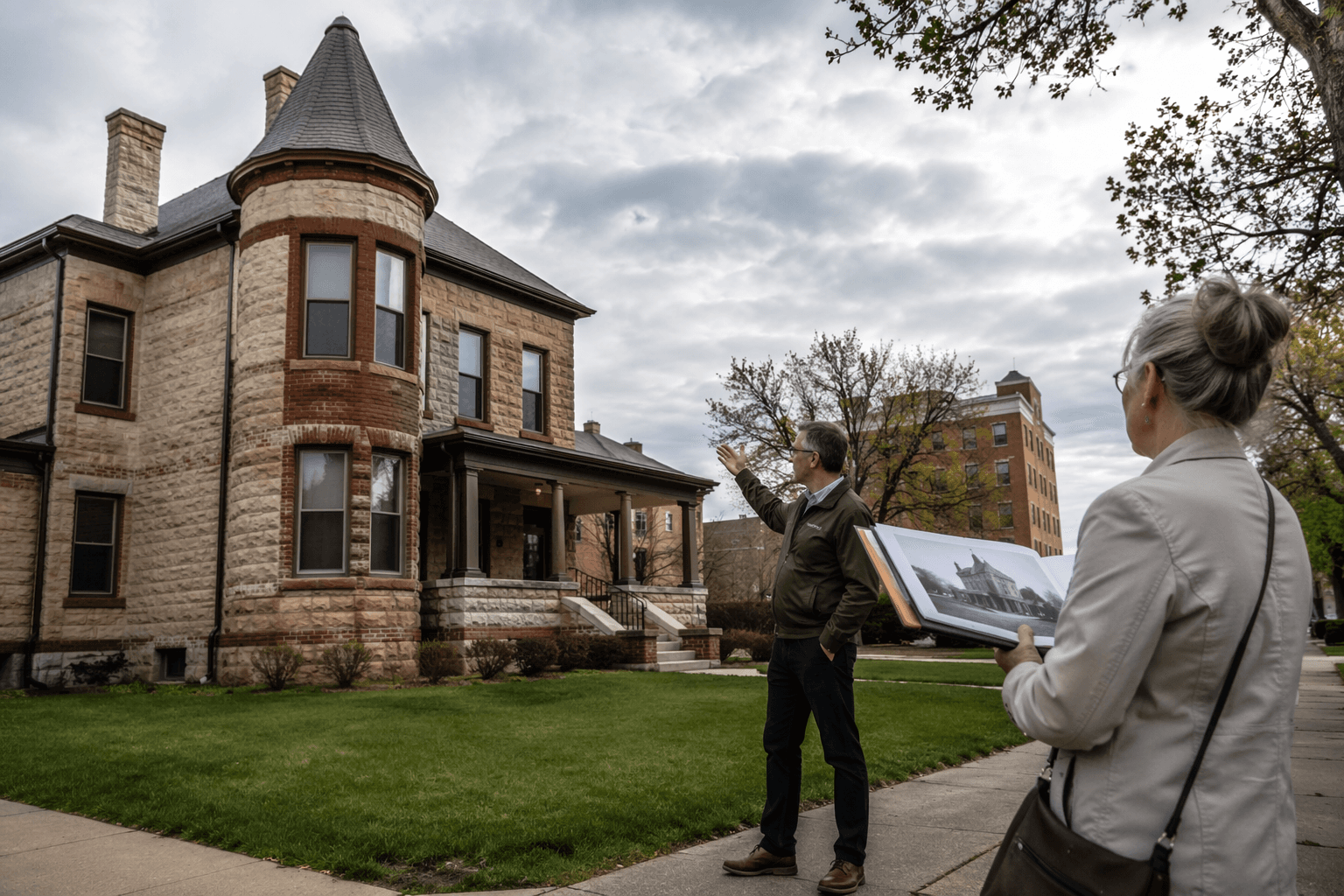
Douglas County’s preservation system steers grant money, public maps, and planning decisions that can affect older homes, rural landscapes, and community landmarks before any repair or reuse work begins. For property owners, that can mean access to funding and documentation; for taxpayers, it means public dollars are being used to decide which places are repaired, interpreted, and carried forward.
What the heritage council actually does
The Douglas County Heritage Conservation Council advises the Board of County Commissioners and serves as the county’s formal preservation mechanism. Its mission reaches beyond historic buildings, covering tangible and intangible natural and cultural heritage, while also aiming to reduce destruction, encourage sustainable development and adaptive reuse, and make heritage resources more accessible.
Its public terms are direct: honor the past, enrich the present, and inspire the future. Its vision is for all communities to benefit from conserving a diversity of heritage resources, which makes the council relevant not only to historians but also to owners, neighbors, and taxpayers who want to know how preservation fits into county policy.
Heritage work includes natural, cultural, tangible, and intangible resources, so the same system that can help protect an older building can also support a prairie landscape, a community story, or a site tied to local memory.
How county surveys become usable tools
A comprehensive countywide historic survey of unincorporated Douglas County was completed in 2021, and the resulting property data can be explored through the Interactive Map of the Kansas Historic Resources Inventory. For someone trying to understand what is already documented about a place, that is the most practical starting point in the system.
Douglas County’s Rural Historic Resources Guide synthesizes multiple surveys completed between 2011 and 2021 into one report, following a township-by-township, multi-year approach that covered all rural areas of the county. The guide also added the information to the Kansas Historical Society’s Kansas Historic Resources Inventory, giving owners, researchers, and planners a single place to see how rural heritage resources have been recorded.
The county’s GIS web apps help people answer their own questions. If you own an older property, are considering a renovation, or simply want to know whether a site has already been surveyed, the county’s map and guide are the first stop, not a buried archive.
What the grant program changes for owners and taxpayers
The Natural and Cultural Heritage Grant Program funds projects that protect, conserve, and share the county’s heritage resources. The program was developed alongside the Heritage Conservation Council in 2011. It is annual and competitive, and individual awards can reach as much as $60,000, with projects generally required to be completed within two years.
In 2021, the county awarded $200,000 to 13 projects. By 2023, about $285,000 was available, including $75,000 set aside for projects tied to the Open Space Plan. In 2024, the county announced $420,000 in total funding and $220,000 for the general grant round.
Commissioners approved $210,000 for 12 community projects on April 16, and the annual report lists 26 applicants requesting $1,003,086. Half of the grantees were first-time recipients, and leveraged match and in-kind support totaled $753,712.
In 2026, 42 applications requested more than $1,050,000, the largest number of applications and the highest total funding request in the program’s history.
How the county explains preservation now
In August 2024, the Heritage Conservation Office and the county GIS Department launched an interactive story map to show the history and impact of the grant program itself.
Preservation is no longer confined to courthouse architecture or a single era of local history. Recent projects have included ecological restoration, native seed collection, Indigenous history, community arts, and interpretive signage. That wider mix matches the council’s stated goal of protecting both natural and cultural heritage, not just old walls.
The county’s heritage story is not limited to downtown buildings. Some sites need interpretation, some need landscape care, and some need repair or adaptive reuse.
What to do with the county’s preservation tools
For property owners, the practical sequence is straightforward. Check the Interactive Map of the Kansas Historic Resources Inventory to see what is already documented, review the Rural Historic Resources Guide if your property is in a rural area, and then look at the Natural and Cultural Heritage Grant Program if your project fits the county’s preservation goals. In its 2024 application process, the county let prospective applicants discuss projects with Heritage Conservation Coordinator Kaitlyn Ammerlaan before deadlines were due.
This article was produced by Prism’s automated news system from verified source data, official records, and press releases, then run through automated quality and moderation checks before publishing. The system is built and supervised by the people who set the standards it runs under. Read our full AI policy.
Did this article answer your question?