Douglas County specialty courts plant tree to mark treatment month
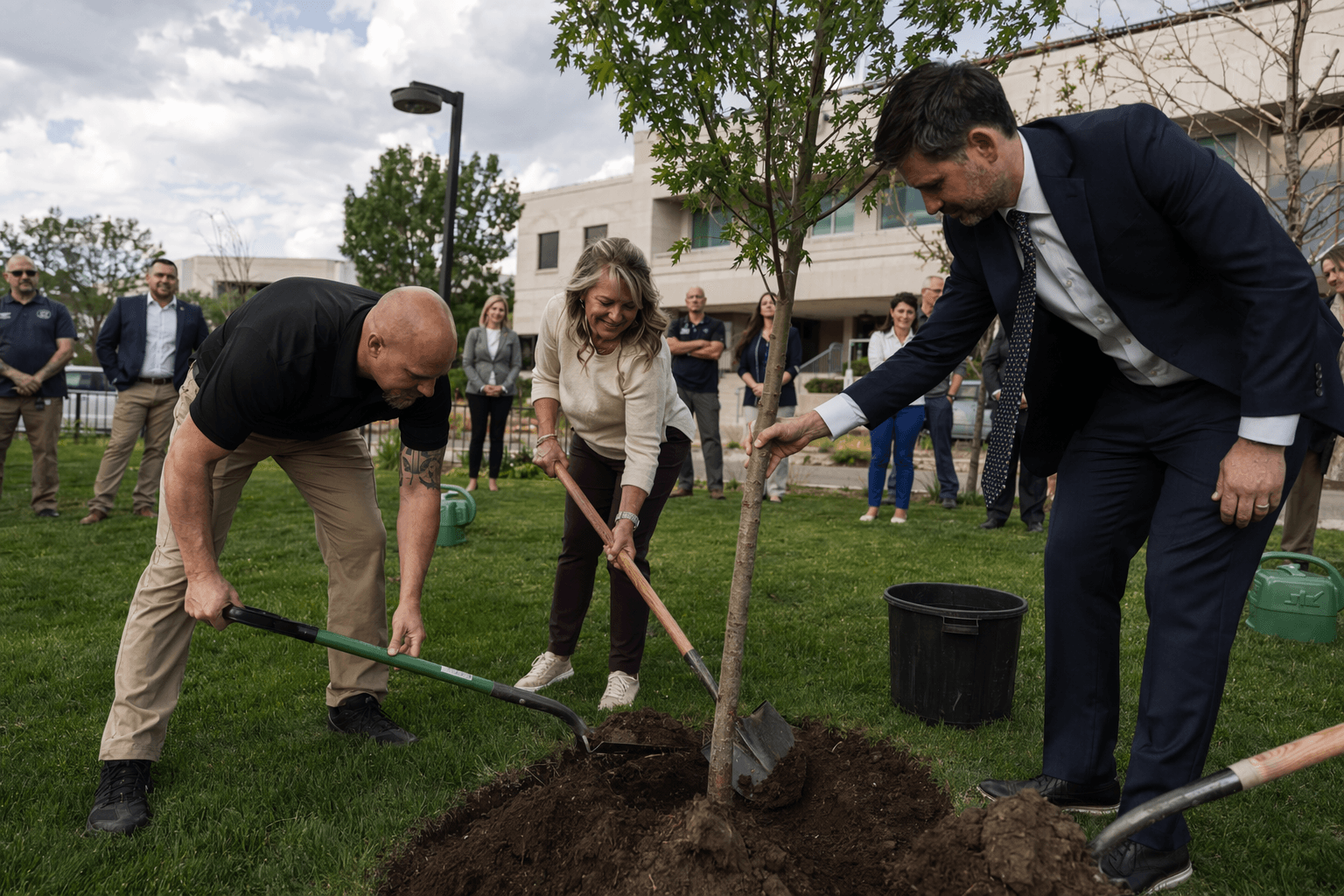
A tree on the Judicial and Law Enforcement Center lawn marked more than symbolism: Douglas County’s treatment courts are pointing to graduates, jobs and degrees as proof they work.
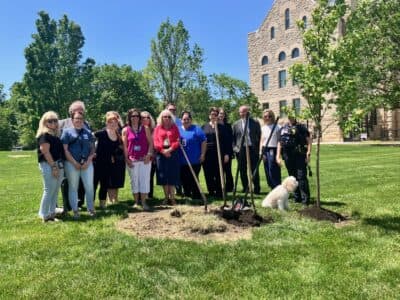
A young tree on the lawn outside the Judicial and Law Enforcement Center stood in for a bigger test on Tuesday: whether Douglas County’s specialty courts can turn addiction, mental illness and veteran trauma into steady work, education and safer lives.
Judges and staff tied the planting to National Treatment Court Month, observed each May to recognize adult, family, juvenile, impaired-driving, mental health, tribal healing to wellness and veterans treatment courts. In Kansas, Rule 190 defines specialty courts as therapeutic problem-solving courts that address issues such as mental illness or addiction that can drive justice-system involvement.
Douglas County’s programs have been building that model for several years. The drug treatment court began in January 2020 under Judge Kay Huff and the Drug Court Team. By June 7, 2024, it had recorded 22 graduates. One of them, Tim Shoulderblade, became the human face of the county’s pitch for these courts after describing how the program helped him break from addiction and legal trouble.
Shoulderblade said Drug Court helped him regain his driver’s license, find work and earn a GED. He later graduated from Haskell Indian Nations University in 2025 with an associate’s degree in social work and plans to continue at the University of Kansas for a bachelor’s degree. His path gave Tuesday’s ceremony a concrete measure of success beyond the tree itself: a former participant moving into higher education and a professional future.
The county’s veterans court, launched in late 2024, was described as the sixth veterans treatment court in Kansas. Its mission is to connect U.S. veterans with community resources and treatment providers so they can build meaningful, productive and law-abiding lives. The behavioral health court works with the court, the district attorney’s office, criminal justice services, defense attorneys, law enforcement, Bert Nash Behavioral Health and treatment providers to address defendants with serious mental illness who cycle through court, detention and mental health systems.
Judge Mark Simpson, who oversees Division 5 and the drug treatment court, also handles the county’s assisted outpatient treatment program with Bert Nash Community Mental Health Center for people with severe mental illness after inpatient treatment. Judges Stacey Donovan and Amy Hanley joined him at the event, underscoring that the county is treating the courts as a public safety tool as much as a recovery program.
The tree will stay on the courthouse grounds as a visible marker of a system meant to do more than punish. Across Kansas and nationwide, where more than 4,000 treatment court programs now operate, the push is toward alternatives that can save lives, protect communities and reduce the long-term cost of repeated court involvement. In Douglas County, the planting was a small gesture with a larger claim behind it: that second chances can be measured in graduates, degrees, licenses and lives that stop revolving through the system.
This article was produced by Prism’s automated news system from verified source data, official records, and press releases, then run through automated quality and moderation checks before publishing. The system is built and supervised by the people who set the standards it runs under. Read our full AI policy.
Did this article answer your question?