Douglas County tax growth slows, commissioners eye tighter 2027 budget
Douglas County’s property values are still rising, but at a slower 4% pace, a shift that could leave less room for 2027 taxes, services and projects.
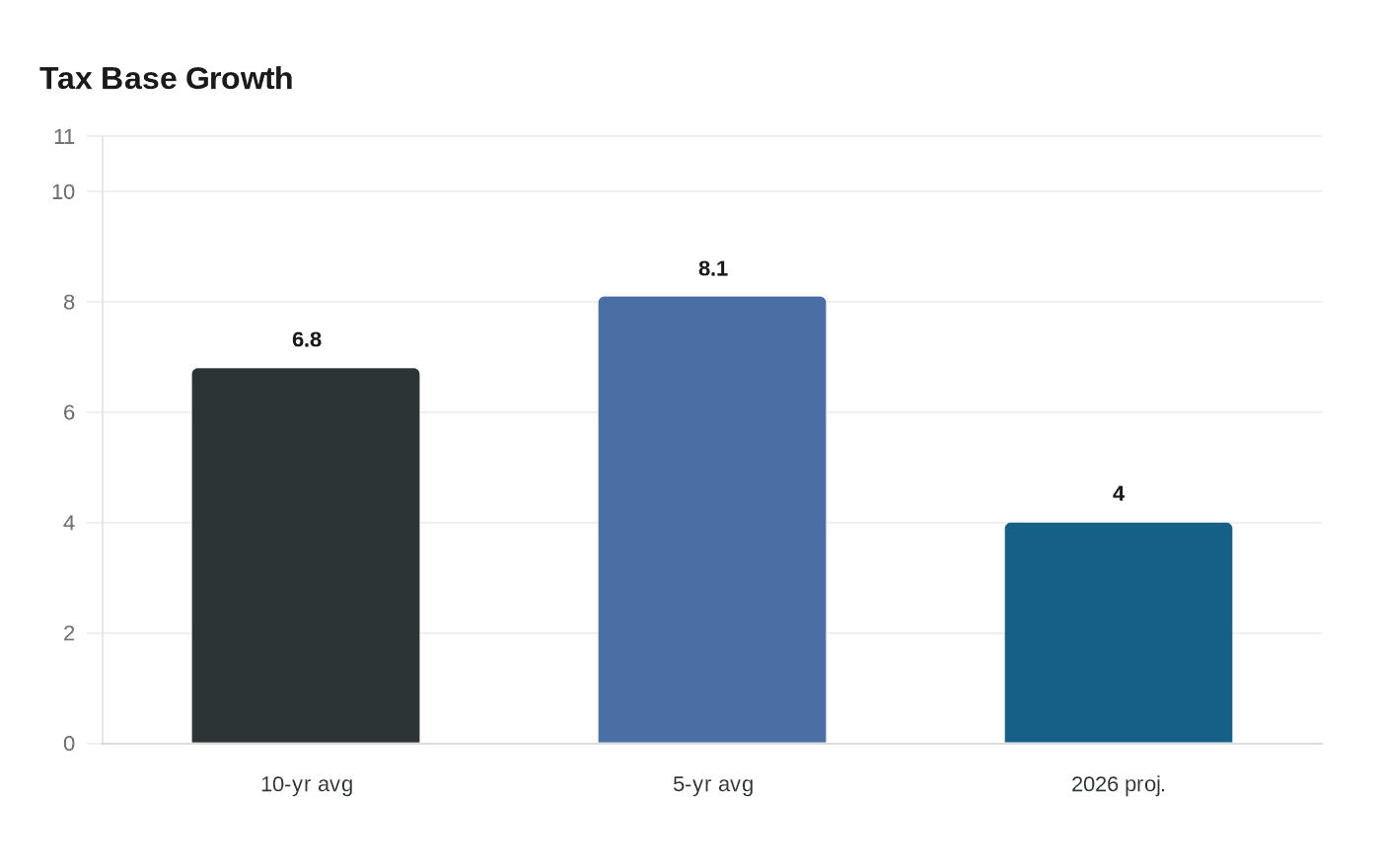
Douglas County’s tax base is still growing, but not at the pace commissioners had grown used to during the recent boom years. County staff said assessed property values have averaged 6.8% annual growth over the past decade and 8.1% over the last five years, but the latest projection for the 2026 tax year is about 4%, the slowest increase since 2021.
That slowdown does not mean residents are headed for lower bills. Even modest valuation growth can still push property taxes higher, which is why the 2027 budget conversation was expected to focus on how much room the county has left to absorb rising costs without cutting services or delaying work. The agenda memo for commissioners’ briefing pointed to a familiar but tighter set of priorities: sustaining core services, managing higher operating costs, investing in the workforce, supporting health and human services, and beginning early planning for major capital needs.

The county’s property-tax calendar adds another layer of pressure. Assessed values are updated each November after the current tax year is calculated, and the county’s tax team moves through the spring and summer mailing notices, handling appeals and sharing certified values with other taxing districts before budgets and mill levies are finalized in the fall. In 2025, county staff said the process touched a $279 million revenue cycle and as many as 50,000 pieces of tax-related mail, a reminder of how many homeowners and property owners are pulled into each year’s budget decisions.
The 2026 budget cycle offered a clear example of the balancing act ahead. County Administrator Sarah Plinsky said staff aimed to present a budget with a flat mill levy unless commissioners directed otherwise. Instead, the Douglas County Commission adopted a maximum levy of 40.669 mills, down from 41.298 mills in 2025, while still projecting $89.8 million in property tax revenue for 2026, up from $86.4 million the year before. The county’s revenue neutral rate stood at 38.958 mills, underscoring how even a lower levy can still translate into higher collections when valuations rise.
Earlier in 2026, the Douglas County Appraiser’s Office told commissioners that most residential and commercial properties would see value increases of 1% to 8%, driven by year-over-year price changes, supply-demand imbalances, renovations, additions or changes in property use. At the same time, nonprofit leaders including Lori McSorley of Van Go thanked commissioners for supporting more than 40 community partner organizations working on mental health, food insecurity, health care access and employment. Those needs are unlikely to shrink as growth cools, which is why the county’s next budget cycle looked less like a windfall year and more like a test of what Douglas County can afford to protect first.
This article was produced by Prism’s automated news system from verified source data, official records, and press releases, then run through automated quality and moderation checks before publishing. The system is built and supervised by the people who set the standards it runs under. Read our full AI policy.
Did this article answer your question?