Haskell museum in Lawrence preserves history of Native boarding schools
Haskell’s museum in Lawrence turns the boarding-school era into a local place of memory, records, and responsibility. Its archives, exhibits, and research spaces make that history visible to Douglas County today.
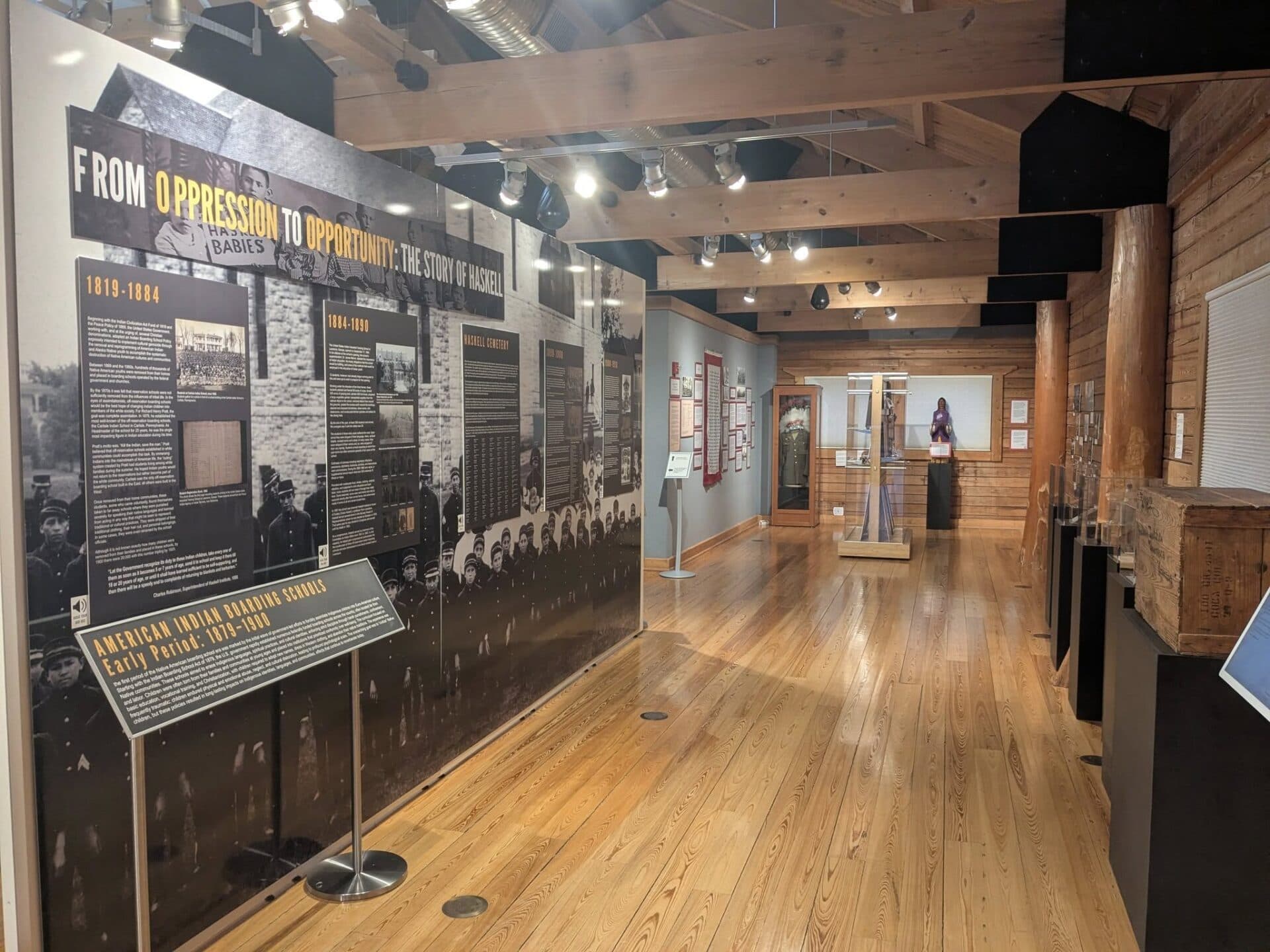
Haskell Indian Nations University’s Cultural Center and Museum gives Lawrence residents a direct place to confront the American Indian boarding-school era where it unfolded. At 2411 Barker Avenue, the museum links Douglas County to a national story of assimilation, survival, and Native persistence, and it does so with a mission that is explicit: to preserve the unique history of Haskell Indian Nations University and raise awareness of the truth about the American Indian boarding school experience in the United States.
Why the museum matters in Lawrence
Haskell began in 1884, when twenty-two American Indian students entered the school then known as the United States Indian Industrial Training School. That detail matters because it places the origins of the institution not in abstraction, but in a specific city block in Lawrence and in a specific federal project that shaped Native education across the country. The museum makes that history visible locally, so the boarding-school story is not just something read about in textbooks or national reports, but something tied to a campus, a street address, and an ongoing university community.
The museum also sits inside a larger institutional identity that Haskell still describes as having “140 years of rich cultural diversity & heritage.” That language reflects how the university frames itself now: not only as a place marked by painful history, but as a living campus where heritage, student life, and memory continue together. For Douglas County, that means the museum is not a side note to campus life. It is one of the clearest places in town where public history, education, and accountability meet.
What visitors encounter inside
The Haskell Cultural Center and Museum opened on September 14, 2002, and its role goes well beyond a single exhibit hall. Walking tour materials describe a display area for visiting exhibits, archives, a research room, and environmentally controlled storage for museum and archive collections. That combination makes the building a preservation site as much as a public-facing museum, with spaces designed both for visitors and for long-term care of records.
The museum’s permanent “Tribal Military” exhibit honors Native veterans and explains a key part of Haskell’s early history: for many of the school’s first years, it was run like a military school, with children required to wear uniforms and march everywhere. That exhibit turns a difficult institutional history into something concrete and legible, especially for visitors trying to understand how discipline, control, and assimilation were enforced in everyday school life. It also places Native service and military history alongside that broader story, rather than separating them.
The archives make the history harder to ignore
The museum’s collections show that Haskell is preserving not just objects, but records of student life, campus change, and institutional memory. Its published materials include Haskell Highlights: 1884-1978, Buildings on the Haskell Campus: Past and Present, 1975, Haskell Institute USA: 1884-1959, Haskell Indian Leader student newspaper and yearbooks from 1887-1997, Haskell Student and Faculty Publications, and Haskell Messenger. Those titles document the school across decades, from its earliest years to the more recent campus record.
That archive matters in a county guide because it gives local schools, researchers, and visitors a way to trace the institution through its own paper trail. The Haskell Cultural Center and Museum archives page is part of a site that also includes collections, donate, and contact navigation, reinforcing that this is a working archive with public access in mind, not a closed storage room. In practice, that means Lawrence has a place where the record of Native education is not distant or hidden. It is cataloged, preserved, and available for study.
The early years and the boarding-school context
Haskell’s early history is now framed by more than one institutional source. A 2022 Kansas Historical Society video titles the school’s first era “Assimilation and Persistence, 1884-1909,” a phrase that captures the tension at the heart of the campus’s beginnings. The school history also reaches beyond buildings and dates to the people who first lived it. A Haskell early students project covering 1884-1895 exists to document the lives and experiences of the school’s first students, bringing the story back to individuals rather than policy alone.
That is where the museum becomes especially important for Lawrence. The boarding-school reckoning can sound remote when it is described only in national terms, but Haskell turns it into local evidence. The museum’s mission, exhibits, and archives all point to the same conclusion: the history of Native education in the United States passed through this city, and the consequences of that history remain part of the public record.
What local audiences, schools, and visitors are asked to do
The museum does not ask visitors to treat Haskell as a relic. It asks them to learn from it. Because the site preserves student publications, yearbooks, staff materials, and campus histories, it gives local audiences a place to study how the boarding-school era shaped Native lives and how Native communities sustained identity, memory, and cultural continuity through it.
For schools and teachers in Douglas County, that makes Haskell a powerful civic classroom. The museum’s mission centers truth, the archives preserve documentary evidence, and the permanent exhibit explains the school’s military structure in plain terms. Together, those elements make the campus useful for lessons about federal policy, Native resilience, and the responsibilities of public memory. For visitors, the message is equally direct: this is not only a museum about the past, but a Lawrence institution that asks the present to account for it.
A local place with national consequence
Haskell’s museum is one of the clearest examples in Douglas County of a place where local geography and national history overlap. The building at 2411 Barker Avenue preserves the records of a school that began with twenty-two students in 1884, documents its military-style discipline, and keeps the material history of the campus in view through archives, exhibits, and research spaces. In a time when the boarding-school era is being examined more openly across the country, Lawrence has its own place to see that history, learn from it, and reckon with what it still means.
This article was produced by Prism’s automated news system from verified source data, official records, and press releases, then run through automated quality and moderation checks before publishing. The system is built and supervised by the people who set the standards it runs under. Read our full AI policy.
Did this article answer your question?