Historic Masonic Temple in downtown Lawrence eyed for apartment conversion
Downtown Lawrence’s vacant Masonic Temple could become four apartments with 28 bedrooms, including one nine-bedroom unit built around the building’s giant organ.
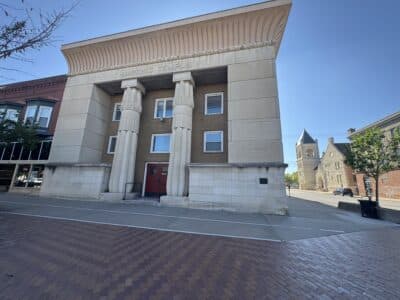
Plans filed for the former Masonic Temple at 1001 Massachusetts Street would turn one of downtown Lawrence’s most unusual vacant buildings into four apartments with 28 bedrooms, a proposal that puts preservation and housing demand on a collision course at 10th and Massachusetts streets.
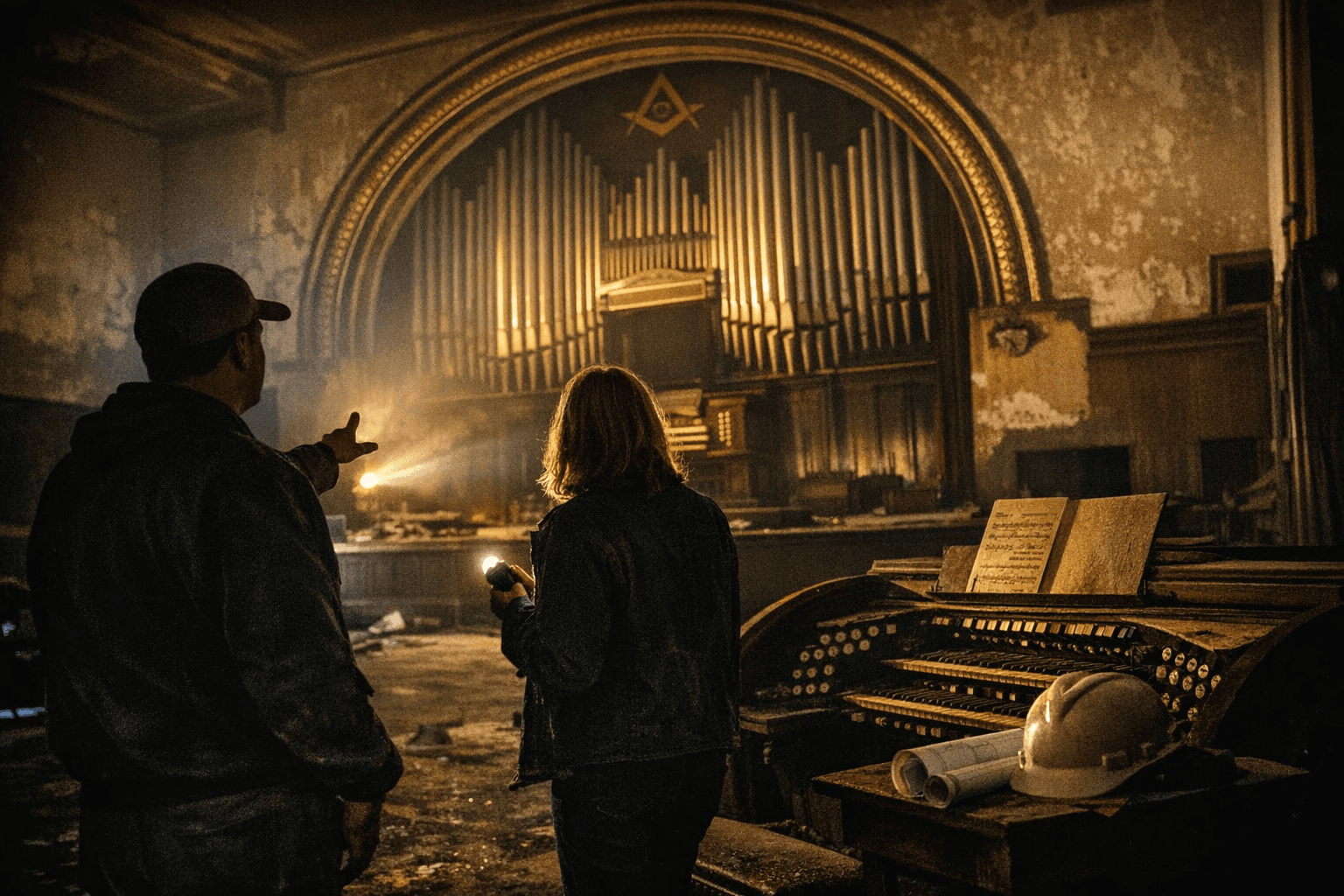
The biggest question is not just how many units the building could hold, but what kind of housing it would become. One apartment would use the old auditorium as a living room and keep the temple’s huge organ in place. Another unit would contain nine bedrooms, a setup that raises immediate questions about who would live there and whether the building would function as true downtown housing or as a highly specialized conversion.
Attorney Patrick Watkins, who represents the owner, said the project could fit a congregate-living model, with residents in private bedrooms and shared kitchen and common spaces. That approach has become more familiar in other older Lawrence properties, but the Masonic Temple’s scale and layout make it a more unusual test case. The building is one of the few Egyptian Revival-style structures in Lawrence, with thick stone columns and a landmark profile that has stood out for more than a century.
Built in 1910, the former temple has sat empty since the Lawrence-area Freemasons sold it in 2003 amid declining membership. At the time, the building was listed for $775,000 and described as containing a 275-seat auditorium and balcony, plus a basement dining room and a kitchen built partly beneath the sidewalk. The long vacancy has made the building a familiar symbol of downtown’s preservation dilemma: a prominent landmark that has been hard to reuse because of its historic protections and unusual interior.
Those protections are substantial. The temple is a key contributing structure in Lawrence’s Downtown Historic District and lies within the Downtown Urban Conservation Overlay District, which means any changes face close scrutiny through the city’s historic-review process. A 2011 proposal would have turned the building into a wedding and reception hall and sought city tax incentives, but that plan never moved the structure back into active use.
The building’s organ gives the redevelopment its most distinctive historic hook. A 1919 commission for an organ in the Masonic Temple led the Reuter-Schwarz Organ Company to move operations to Lawrence, where it later became the Reuter Organ Company. Today, Greenhouse Church occupies 1012 Massachusetts Street across the street, while the temple remains a vacant shell with one of downtown’s most complicated futures. If the apartment plan advances, it could finally give the landmark a residential role, but only by balancing preservation rules, structural constraints and enough market demand to make 28 downtown bedrooms more than a novelty.
This article was produced by Prism’s automated news system from verified source data, official records, and press releases, then run through automated quality and moderation checks before publishing. The system is built and supervised by the people who set the standards it runs under. Read our full AI policy.
Did this article answer your question?