Investigation finds toxic coal ash contamination at Lawrence Energy Center
Arsenic, lithium and molybdenum have seeped into groundwater under the Lawrence Energy Center, and Evergy says cleanup of the old coal ash ponds is still years from finished.
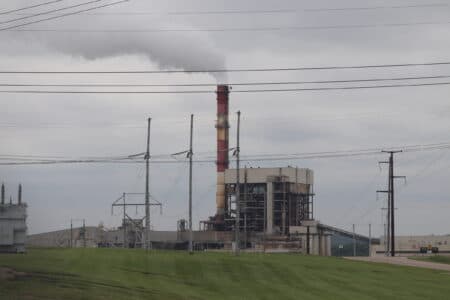
Toxic coal ash at the Lawrence Energy Center has already pushed arsenic, lithium and molybdenum into groundwater beneath the site, and one nearby property was flagged for possible impact. In at least one monitoring well, arsenic was found at roughly nine times the safe level, deepening questions about how much contamination is moving beyond the old dump sites and how long Douglas County residents will have to wait for answers.
The problem centers on the legacy ash ponds at the coal-fired plant just northwest of Lawrence, a facility commissioned in January 1955 that remains a visible reminder of the city’s industrial footprint. Coal ash, the waste left after burning coal, can carry a mix of toxic metals and other contaminants. Environmental concerns tied to exposure include cancer, heart and thyroid disease, reproductive harm and neurological injury.

Evergy says the public is not in direct danger, but its own technical filings show the corrective measures assessment for the inactive ash ponds began on October 12, 2020 after statistically significant levels of arsenic, lithium and molybdenum exceeded groundwater protection standards. That assessment was completed and posted on March 11, 2021. Evergy also said it installed off-site nature-and-extent wells in June 2021 and sampled them again in 2024 and 2025.
The company has also said it started investigative work in 2021 on property immediately adjacent to the Lawrence Energy Center to characterize possible groundwater impacts from the former ash pond system. That matters for neighbors, because the contamination is not confined to paperwork or distant monitoring reports. It is being tracked in the ground under and around a major local utility site, where groundwater moves slowly and cleanup can take years.

Evergy has held public meetings in Lawrence as the process has dragged on. A corrective-measures meeting was held March 12, 2024 at the Douglas County Fairgrounds, and a 2025 progress report says another public meeting for the remedy-selection process was also held there. The utility has said it is evaluating in-situ groundwater remedy options and monitored natural attenuation, but the pace of those reviews leaves open how quickly the pollution will be contained.

The stakes are sharpened by Evergy’s decision not to end coal burning at the Lawrence Energy Center by 2028, extending the life of the waste stream tied to the plant. The company’s coal-ash record has also drawn federal scrutiny elsewhere in Kansas, where EPA reached a settlement with Evergy over coal-combustion-residual compliance at the retired Tecumseh Energy Center and the utility paid a $120,000 civil penalty. For Lawrence, the central question is whether the contamination stays beneath the plant or keeps edging outward while the cleanup timeline stretches on.
This article was produced by Prism’s automated news system from verified source data, official records, and press releases, then run through automated quality and moderation checks before publishing. The system is built and supervised by the people who set the standards it runs under. Read our full AI policy.
Did this article answer your question?