KU project uses postcards to reconnect Langston Hughes with Lawrence roots
Ten free postcards now pair today’s Lawrence streets with historic scenes from Langston Hughes’ boyhood, from the Carnegie Building to Liberty Hall and Sunflower Outdoor & Bike Shop.
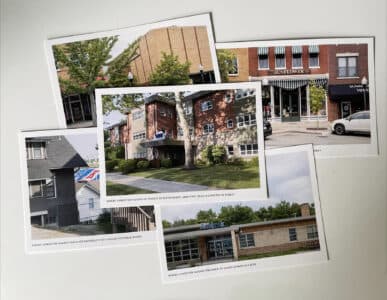
A new set of 10 postcards is turning Langston Hughes’ Lawrence childhood into something residents can hold, pass along and place on the streets they use every day. Created by Tim Hossler with the Average Places Project and the Obscured Landmarks Initiative, the cards pair current photos of ordinary-looking sites with historic images from Hughes’ boyhood and were assembled to mark the 125th anniversary of his birth in February 2026.
The project centers on places Hughes knew as a child, not abstract monuments. One postcard shows the Carnegie Building at 200 W. Ninth St., where Hughes discovered books at the Lawrence Public Library. Another features the Bowersock Opera House, now Liberty Hall, where he watched live shows from the segregated upper balcony. A third highlights Barteldes Seed Store, now Sunflower Outdoor & Bike Shop, where he sold maple seeds to help support his family.
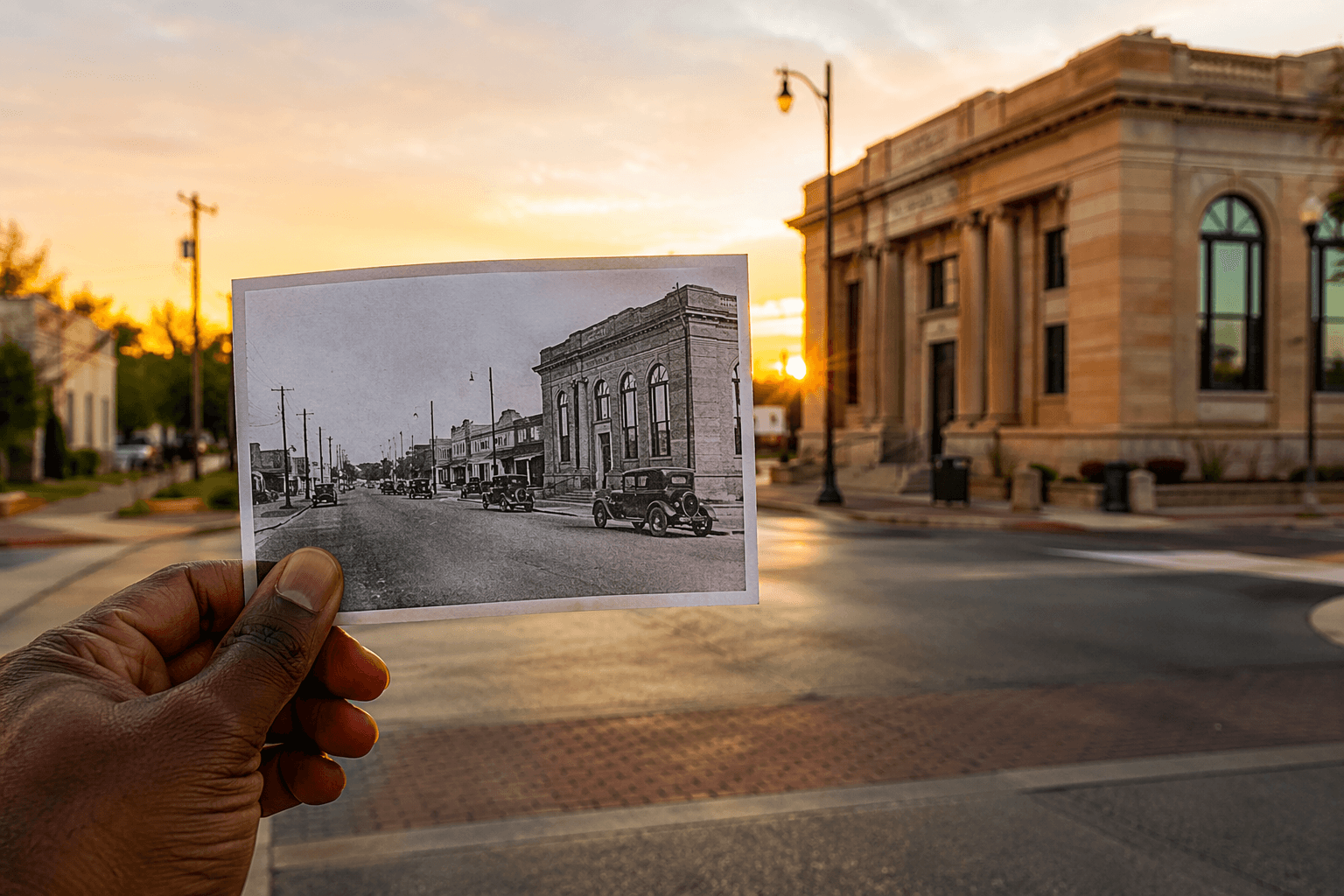
Hughes was born in Joplin, Missouri, in 1901 and lived in Lawrence from 1903 to 1915, according to KU archival materials. He briefly lived with his mother in Topeka around 1908 and 1909 before joining her in Illinois in 1915. He later became one of the defining literary voices of the Harlem Renaissance, but the postcard project argues that Lawrence itself helped shape his earliest experience.
The cards were made possible by the Hall Center for the Humanities, The Commons at KU, the Spencer Museum of Art, the Watkins Museum of History and the Lawrence Public Library. Community members can pick them up for free at locations on the Lawrence campus and around town, making the project as much a public-history tool as a commemorative one.
That emphasis matters in a city where Hughes’ story can still be missed in plain sight. Humanities Kansas has described Lawrence as a free-settlement that drew many Black Americans but also reflected racism and segregation, a tension visible in Hughes’ own memories. The Kenneth Spencer Research Library says Hughes returned to KU and spoke on campus three times, in 1932, 1958 and 1965, reinforcing how long his connection to the university and city has endured.
In one KU presentation in 1965, Hughes said, “The first place I remember is Lawrence, right here...” The postcards build from that idea, showing that the places shaping a major American writer are still embedded in the blocks residents cross, shop on and walk past every day.
This article was produced by Prism’s automated news system from verified source data, official records, and press releases, then run through automated quality and moderation checks before publishing. The system is built and supervised by the people who set the standards it runs under. Read our full AI policy.
Did this article answer your question?