Lawrence Journal-World releases Douglas County primary election guide
Douglas County voters face an August 4 primary that reaches from county commission seats to statewide offices, plus a separate Supreme Court amendment guide.
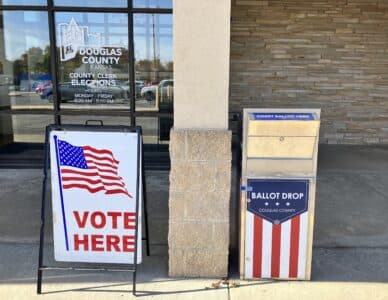
Early voting is underway ahead of Douglas County’s Tuesday, Aug. 4, 2026, primary, with a ballot that runs from local commission seats to statewide offices and a question on how Kansas chooses its Supreme Court justices. Lawrence Public Library lists the same date on its elections page. For Douglas County voters, the practical questions are who will steer county spending and growth, who will represent the county in Topeka and Washington, and how they want the state to choose its Supreme Court justices.
What is on the ballot
The ballot reaches well beyond one race or one office. The federal side includes U.S. Senate and U.S. House contests in Districts 1 and 2, while the statewide list runs from governor and lieutenant governor to secretary of state, attorney general, state treasurer and commissioner of insurance.
Kansas House contests also appear in Districts 5, 10, 44, 45, 46, 47, 48, 49 and 50. Those offices touch the issues voters feel first in Lawrence and throughout Douglas County: school policy, taxes, courts, insurance rules, and how much authority state leaders have over local decisions.
The county commission races matter most at home
The clearest local power on the ballot sits with the Douglas County Commission. District 1, 2 and 3 commission seats are the key local contests on voters’ 2026 ballots, and by late May some Douglas County races had only one candidate as filing deadlines neared.
District 1 is the most clearly defined matchup on the ballot. Two Democrats, incumbent Patrick Kelly and Milton Scott, are running in the primary for the seat that represents parts of northern, northwestern and central Lawrence. That contest puts a sitting commissioner against a challenger in a district where the winner will help set county direction on budgets, land use and the day-to-day relationship between Lawrence and county government.
County commission decisions shape how Douglas County responds to land-use disputes, budget pressure, social services, roads and the county’s broader approach to growth. Those choices determine how much money is available for operations and where the county draws lines between development and preservation.
Why this primary reaches into daily life
In Douglas County, commission seats influence spending and land use; state races influence education, courts, taxes and health policy. Decisions made by county and state leaders can affect school funding debates, housing pressure, court administration and the pace of development around the city.
The Journal-World published a separate primary voter guide on the Supreme Court selection amendment on July 18, 2026. The amendment concerns how Kansas selects judges and how much independence the courts retain from the political process.
How to check your ballot before Tuesday
Sample ballots are available through VoteKS.org, and Douglas County’s election pages include a polling-place lookup tool. The county ballot is not identical everywhere, especially with different congressional, legislative and local district lines depending on where a voter lives.
The Douglas County elections office at 711 W. 23rd St. is the local hub for election information, and Lawrence Public Library also lists the August 4 primary date and related election basics. Together, those public resources let voters confirm what is on their ballot before they arrive at the polls or cast an advance ballot.
This article was produced by Prism’s automated news system from verified source data, official records, and press releases, then run through automated quality and moderation checks before publishing. The system is built and supervised by the people who set the standards it runs under. Read our full AI policy.
Did this article answer your question?