Lawrence teachers navigate John Brown, Bleeding Kansas amid curriculum pressure
At Billy Mills Middle School, a lesson on John Brown shows how Lawrence classrooms are handling Bleeding Kansas while teachers face pressure to soften or sharpen history.
A classroom in Lawrence, not a textbook debate
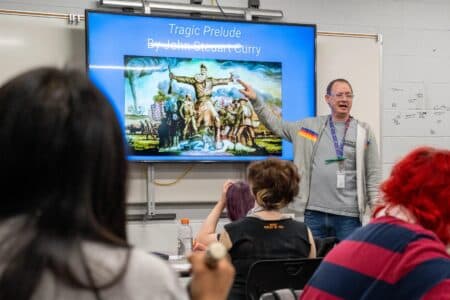
At Billy Mills Middle School, teacher Tom Barker is not treating John Brown as a distant name on a Kansas timeline. He is bringing students face to face with a figure who still divides the state, and that choice says a lot about what Lawrence schools are being asked to do right now: teach hard history without sanding off its violence or its moral weight.
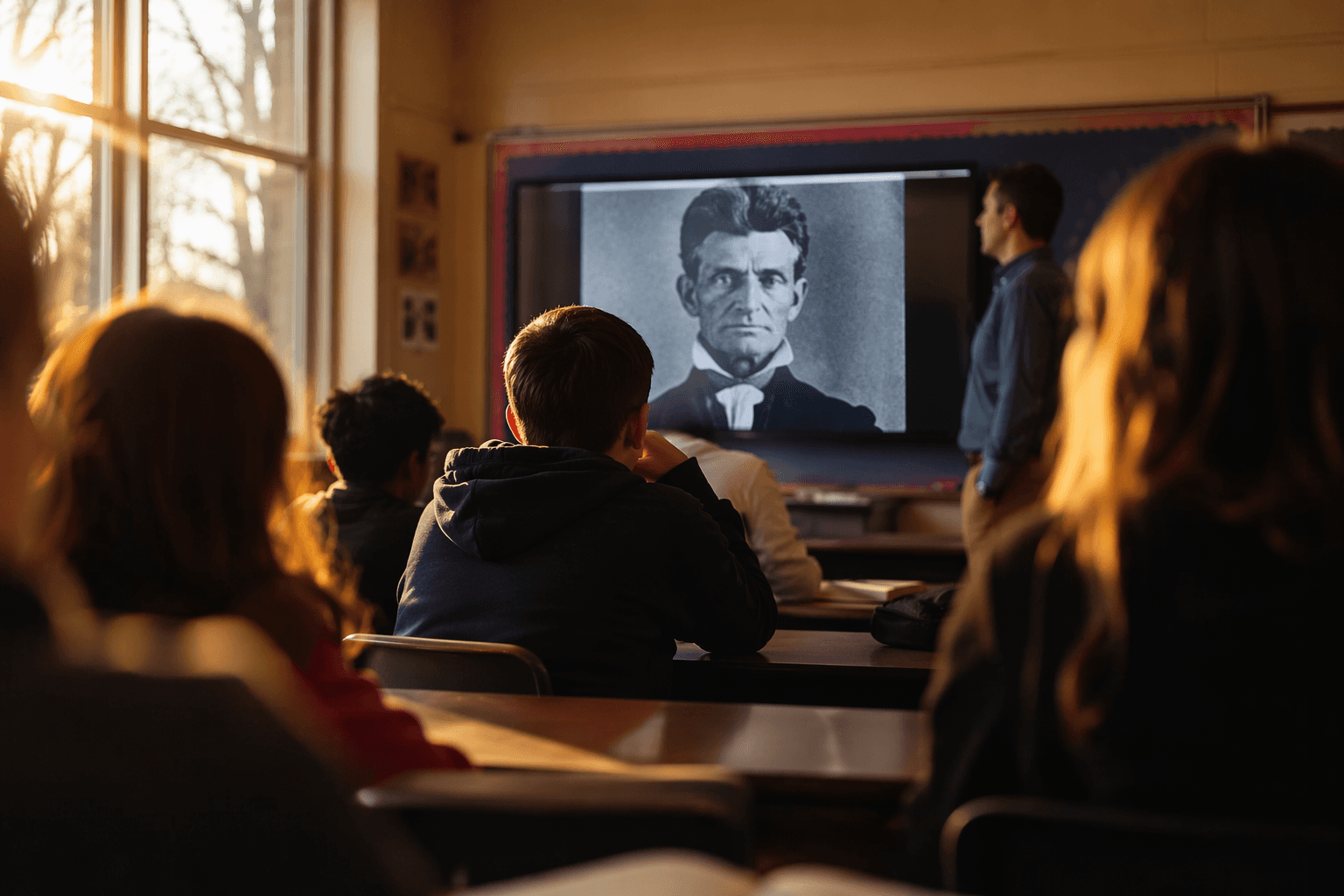
That lesson reaches far beyond one middle-school room in Lawrence Public Schools USD 497. It lands in a community that sits at the center of Bleeding Kansas history, where the fight over slavery helped shape Kansas statehood and left scars that still color how the state tells its own story. In Barker’s classroom, students are encountering not just dates and battles, but the harder question of how a community teaches children about a past built on conflict.
Why John Brown still unsettles Kansas
John Brown came to Kansas in 1855 and quickly became one of the territory’s most significant antislavery figures. Kansas Historical Society materials say he followed five of his sons to the territory and later led antislavery guerrillas there, including in the struggle around Lawrence. That history is part of why Brown remains such a charged figure in classrooms: some see him as a hero who refused to accept slavery, while others see a man who embraced deadly violence.
The tension is not academic. Brown’s story is tied to the basic facts of Kansas history, including the violence that spread through the territory as proslavery and antislavery forces fought for control. The term Bleeding Kansas began appearing in the press in the spring of 1856, capturing a conflict that was already turning political disagreement into bloodshed. When teachers cover Brown, they are forced to teach both his antislavery convictions and the violent methods he used to pursue them.
Lawrence sits at the center of that history
Lawrence was not just a backdrop to the conflict. It was one of the places where the violence escalated most visibly. On May 21, 1856, proslavery forces sacked Lawrence, attacking a city that had become a symbol of antislavery resistance in Kansas Territory.
The revenge that followed came only days later. The Pottawatomie Massacre took place on the night of May 24-25, 1856, when Brown and his sons killed five proslavery settlers near Pottawatomie Creek in Franklin County, Kansas. The Kansas Historical Society also notes that John Brown Jr. heard about the attack on Lawrence, gathered the Pottawatomie Rifles, and arrived too late to help. That detail matters because it shows how Lawrence’s history and the violence around it were linked through real people making fast, dangerous decisions.
For Lawrence teachers, that history is not remote. It is local. It happened in the same city where students now walk into class, a city that helped define the territorial struggle over slavery and the national crisis that followed.
What teachers are weighing now
The Lawrence classroom scene matters because it is taking place during a period of political scrutiny over how schools handle race, violence and history. Teachers are not only deciding what content to include. They are deciding how direct to be, how much context to give and how much risk they are willing to take when a lesson touches a politically sensitive subject.
That pressure is not imaginary. RAND found in its 2023 State of the American Teacher survey that 65% of teachers nationally said they limited discussions about political and social issues in class. EdChoice reported in September 2025 that 40% of teachers said they had modified at least some curriculum or class discussion topics because of political pressure. In its October 2025 polling report, EdChoice said more than half of teachers reported modifying curriculum or discussion topics because of political pressure.
The same report found different sources of pressure depending on the type of school. District teachers pointed more often to school administrators and governments. Private-school teachers more often pointed to administrators and parents. In practical terms, that means a lesson like Barker’s is never only about the past. It is also about the present day calculation of what can be taught openly, what may draw complaints and what teachers feel supported in saying out loud.
What this means for Lawrence families
For parents and residents in Douglas County, the significance is immediate. A lesson on John Brown is also a lesson on how Lawrence schools are deciding to frame slavery, violence and civic identity for children who are growing up in the same place where that history unfolded.
Billy Mills Middle School is part of Lawrence Public Schools USD 497, and Thomas Barker is listed in the school’s staff directory as a middle school teacher. That makes the classroom example especially concrete: this is not an abstract policy fight happening far away at the Kansas Statehouse. It is a local teacher, in a local school, teaching a local history that still carries moral and political pressure.
The broader lesson is that schools shape memory as much as they pass down facts. In Lawrence, that means students may come away learning that John Brown was neither simple hero nor simple villain, but a man whose beliefs, actions and violence helped define the territory they live in now. It also means teachers are under more strain than many families may realize as they try to tell that story honestly.
Why this history still matters in a changing classroom climate
Bleeding Kansas is not just a chapter in a Kansas history unit. It is part of the state’s civic identity, and the way it is taught can either sharpen students’ understanding of slavery and democracy or leave them with a flatter, safer version of the past. When a Lawrence teacher chooses to introduce John Brown directly, that is an act of public value as much as instruction.
The stakes are plain in Billy Mills Middle School and in classrooms across Lawrence: if teachers soften the story too much, students lose the chance to understand how violent the struggle over slavery really was. If they teach it plainly, they may face the same pressure that is shaping classrooms across the country. In Douglas County, the question is no longer whether this history will be taught. It is how honestly Lawrence will let its schools teach the truth of what happened here.
This article was produced by Prism’s automated news system from verified source data, official records, and press releases, then run through automated quality and moderation checks before publishing. The system is built and supervised by the people who set the standards it runs under. Read our full AI policy.
Did this article answer your question?