Retired Douglas County judge warns against electing Kansas Supreme Court justices
A retired Douglas County judge warned that electing Kansas Supreme Court justices could flood the court with campaign money and partisan pressure before a statewide vote on Aug. 4.
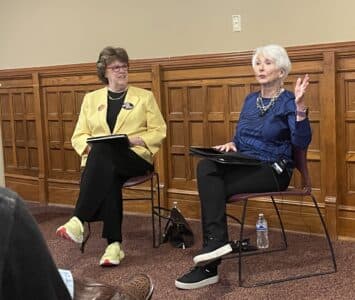
Douglas County voters could soon see Kansas Supreme Court races shift from quiet retention votes to hard-fought political campaigns, and retired Judge Sally Pokorny warned Friday that the change would invite money and pressure into decisions that can touch school funding, abortion rights, taxes and business regulation. Speaking at the Watkins Museum of History Community Room in Lawrence, Pokorny argued that the current merit-based system has kept the court more independent and better protected from partisan swings.
The constitutional amendment on the Aug. 4 primary ballot would let Kansas voters directly elect Supreme Court justices and abolish the Kansas Supreme Court Nominating Commission. Under the current system, the commission sends three names to the governor, who must choose from that list, and justices then serve six-year terms with retention elections instead of contested races. Pokorny said that structure has worked well and helps keep judicial selection away from campaign politics.

Her warning carried extra weight in Lawrence because she is not speaking as an outsider. Pokorny retired effective April 10 after 17 years on the bench and nearly 50 years as an attorney. She was sworn in as a Douglas County judge on January 15, 2009, and one of her signature accomplishments was creating the first Behavioral Health Court in Kansas, which first launched as a pilot in June 2016 to help people with mental illness break the cycle of incarceration.
The discussion came at a public appearance hosted by the Lawrence/Douglas County Chapter of Women for Kansas, where Pokorny was joined by longtime friends Patti McCormick and Kathy Webb. Her case centered on judicial independence and the way Kansas now screens nominees before they reach the governor’s desk, including a Kansas Bureau of Investigation background check. She warned that an election system could weaken that firewall and leave justices more vulnerable to outside political pressure.
Kansas voters approved the assisted-appointment system in 1958, after the partisan-election era and in the wake of the 1956 Triple Play scandal. The Kansas Supreme Court Nominating Commission has nine members, and as of spring 2026 Kansas was the only state with that bar-controlled model. Supporters of the amendment include Kansas Attorney General Kris Kobach, Kansas Chamber United for Business, Americans for Prosperity-Kansas and Kansas Policy Institute. Opponents include Kansas Appleseed and Kansans United for Impartial Courts.
The stakes reach beyond Topeka. Justices Eric Rosen and Larkin Walsh are scheduled for retention elections on November 3, 2026, and if the amendment passes, those would be the last retention votes for the court. For Douglas County, the ballot question is whether to keep a system that has kept Supreme Court elections out of day-to-day politics, or replace it with campaigns that could reshape how Kansas law is made and enforced.
This article was produced by Prism’s automated news system from verified source data, official records, and press releases, then run through automated quality and moderation checks before publishing. The system is built and supervised by the people who set the standards it runs under. Read our full AI policy.
Did this article answer your question?