Tornado warning hits southwest Douglas County as sirens, alerts vary
A tornado warning swept across southwest Douglas County, with radar spotting a dangerous tornado near Clinton Lake, Lone Star and Pleasant Grove before the threat was canceled.
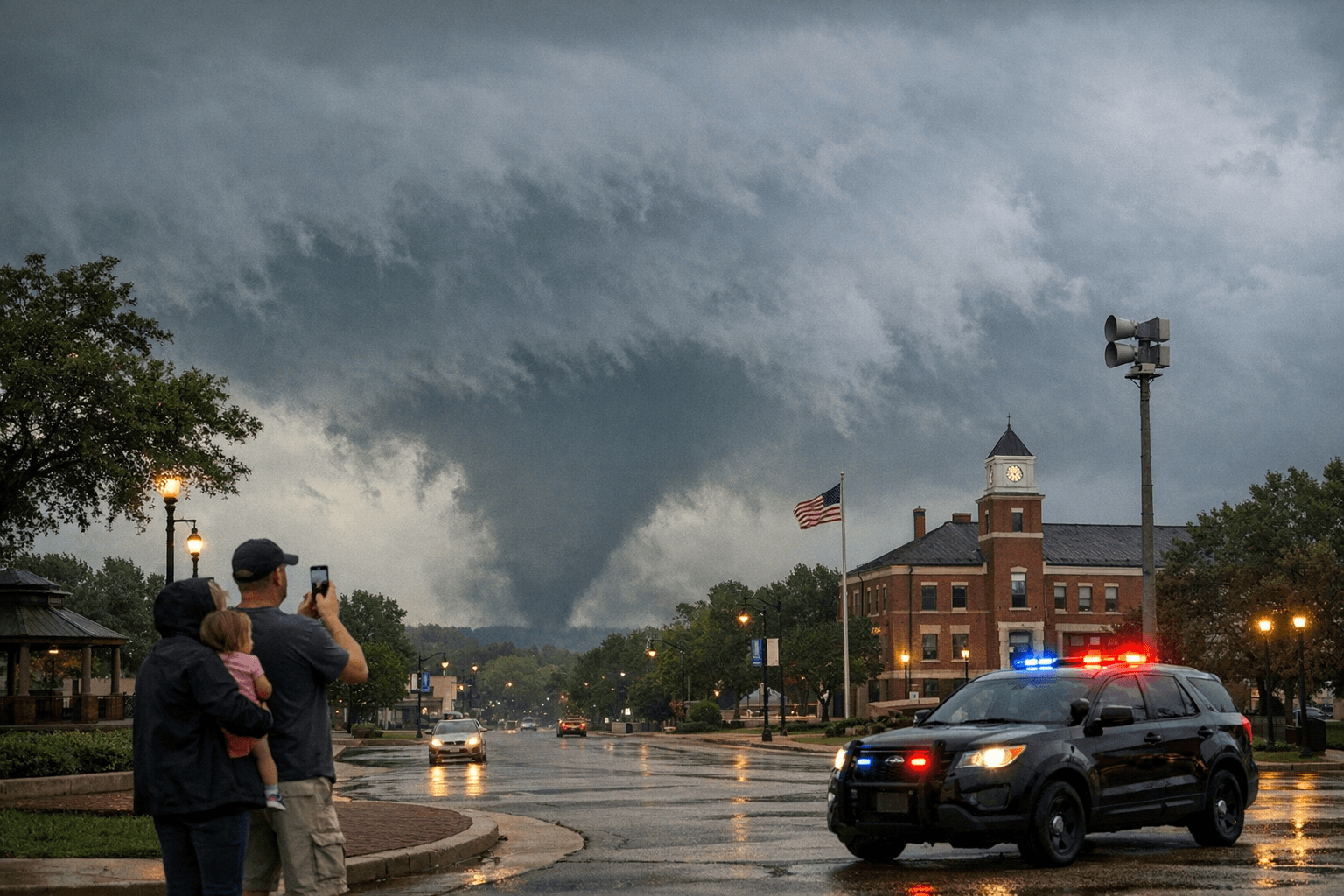
A tornado warning moved through southwest Douglas County fast enough to send people scrambling for shelter near Clinton Lake, Lone Star, Pleasant Grove and parts of southwestern Lawrence as radar tracked a dangerous tornado moving east at 30 mph. The warning also highlighted a familiar local problem: some residents heard sirens or got alerts, while others said the warning reached them differently or not at all.
The National Weather Service said tornado warnings were active across parts of Douglas, Osage and Shawnee counties from about 3:30 p.m. to 3:50 p.m. on April 26. The warning was later canceled, but severe thunderstorms remained in the area, keeping the risk of damaging wind, hail and additional warnings on the table as the storm line pushed through northeast Kansas.
Douglas County Emergency Management says the county’s outdoor warning system includes 44 sirens, but those sirens are meant as an outdoor alerting tool, not something residents should trust inside their homes. Officials say the sirens can be activated either when the National Weather Service issues a tornado warning or when local officials make a local determination that a tornado threat exists based on radar, National Weather Service text and reports from trained spotters or law enforcement.
That mix of triggers matters when storms are moving quickly. In a warning area that covered familiar places like Clinton Lake and Lone Star, residents who missed the alert were left to catch up after the fact, checking whether power flickered, whether tree limbs or downed lines were scattered along roads, and whether their phones, radios or television alerts were working the way they should.
County officials have repeatedly urged residents to use more than one warning method. Douglas County Emergency Management recommends NOAA Weather Radios, cell-phone applications and local media, and it sells NOAA Weather Radios at cost for $30.00. That layered approach became even more relevant during a busy April severe-weather stretch across Kansas, a period that also brought tornado touchdowns and softball-sized hail elsewhere in the state.
The warning over southwest Douglas County passed without becoming a larger disaster, but the sharp split in who heard it and how should serve as a reminder: sirens are only one piece of the system. When storms turn violent, the fastest protection is still a reliable alert network, a plan for shelter and a quick check for damage once the rain and lightning move on.
This article was produced by Prism’s automated news system from verified source data, official records, and press releases, then run through automated quality and moderation checks before publishing. The system is built and supervised by the people who set the standards it runs under. Read our full AI policy.
Did this article answer your question?