Free plant identification walks begin Thursday in Dubois County Park
Free plant walks will take residents from Dubois County Park to Jasper, Birdseye and Huntingburg to spot invasives like garlic mustard and autumn olive before they spread.
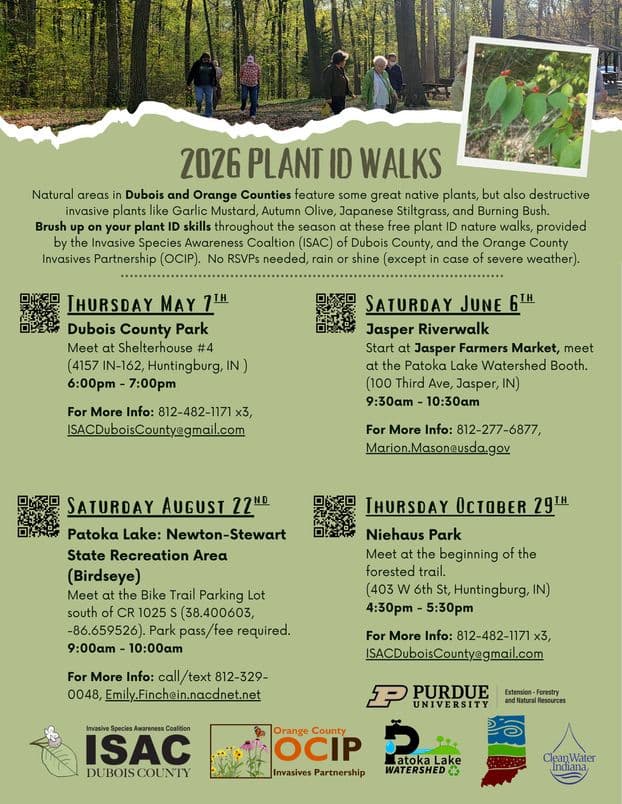
Native plants and invasive species can look similar enough to fool even experienced landowners, and that mistake can cost money along yard edges, drainage ditches, trail borders and farm ground. Four free plant identification walks in Dubois and Orange counties are designed to help residents tell the difference before species like garlic mustard, autumn olive, Japanese stiltgrass and burning bush spread farther across local properties.
The walks are being offered by the Invasive Species Awareness Coalition of Dubois County and the Orange County Invasives Partnership. Indiana Department of Natural Resources officials define invasive species as non-native plants, animals or diseases that can cause environmental, human-health or financial harm, and the state’s terrestrial plant rule makes it illegal to sell, gift, barter, exchange, transport or introduce 44 listed invasive plant species in Indiana. The timing matters because many plants change appearance through spring, summer and fall, making seasonal identification a practical skill for anyone managing woods, lawns, waterways or field edges.
The first walk is set for Thursday, May 7, at 6 p.m. at Dubois County Park Shelterhouse #4 in Huntingburg. The county park opened to the public on May 30, 1973, on a 44-acre site along State Road 162, and it gives residents a familiar place to learn what is growing in the understory, along paths and near disturbed ground.
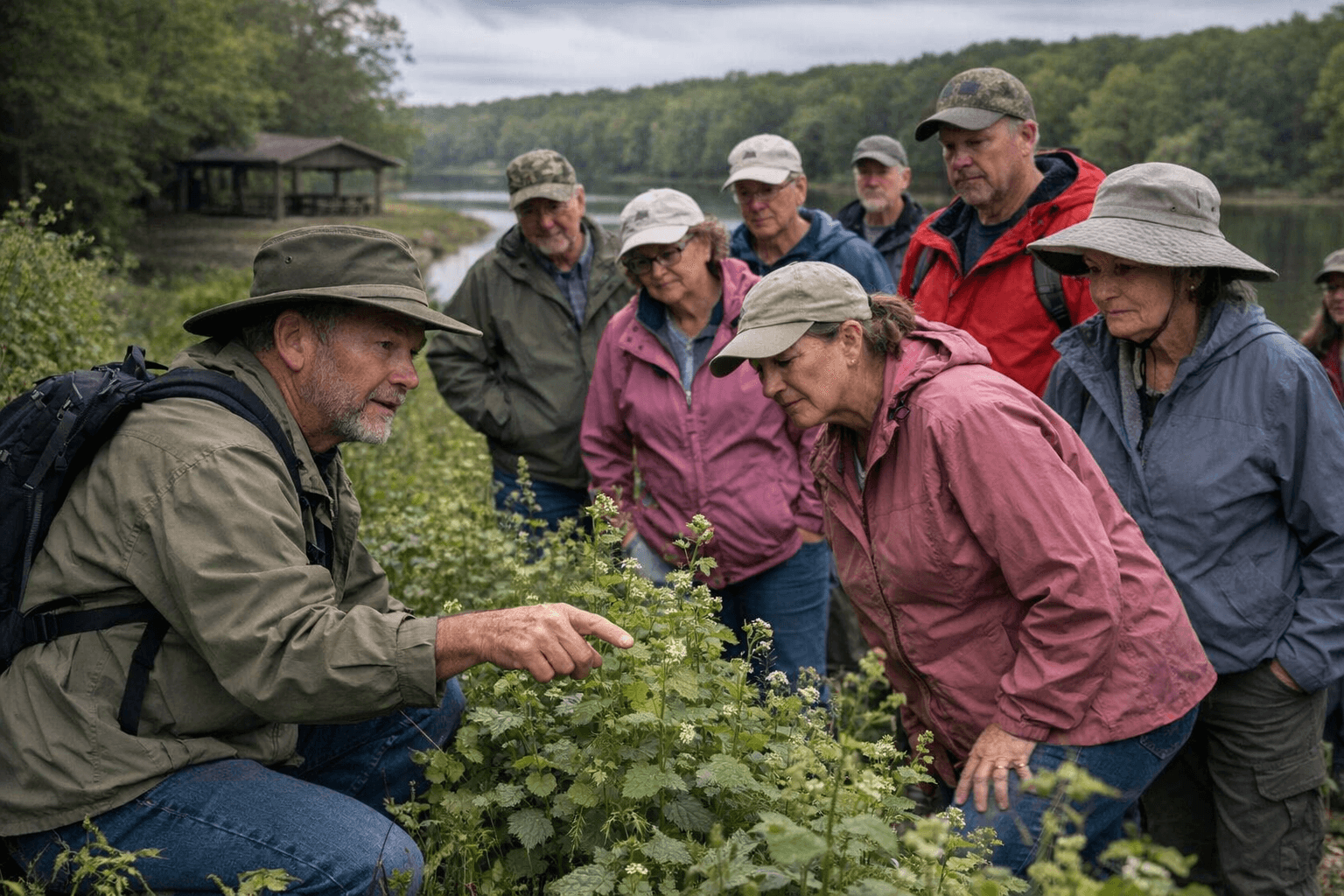
The second walk will be Saturday, June 6, at 9:30 a.m. at the Jasper Riverwalk. Attendees should meet at the Patoka Lake Watershed booth near the Jasper Farmers Market. Two more walks follow later in the year, on Saturday, August 22, at Patoka Lake Newton-Stewart State Recreation Area in Birdseye and Thursday, October 29, at Niehaus Park in Huntingburg. Each event is expected to take about an hour, move at a slow pace on paved or gravel trails and be open to all abilities. No RSVP is needed, and the walks are planned for rain or shine except in severe weather.
The educational push carries broader stakes than a casual field lesson. The Indiana State Department of Agriculture says Clean Water Indiana provides financial assistance to landowners and conservation groups to reduce nonpoint sources of water pollution through education, technical assistance and cost sharing, and that support is part of what helps fund the walks. That ties the program to drainage areas, streambanks and other places where invasive plants can crowd out beneficial native species and create long-term management costs.

Patoka Lake adds another reason the topic matters now. The Indiana Department of Environmental Management says the lake supplies drinking water to more than 65,000 residents in nine southwest Indiana counties, and it has been listed for several years in the EPA Assessment Database as threatened for drinking water use. Indiana DNR materials also specifically warn residents not to buy, sell or plant autumn olive in the state, and recommend removing it from properties. For Dubois and Orange county landowners, the walks offer a direct way to spot problems early, protect property value and make better decisions about what belongs in the ground.
This article was produced by Prism’s automated news system from verified source data, official records, and press releases, then run through automated quality and moderation checks before publishing. The system is built and supervised by the people who set the standards it runs under. Read our full AI policy.
Did this article answer your question?