JASPER grows from Jasper startup to national remanufacturing leader
Founded in Jasper in 1942, JASPER built a national remanufacturing business and shared more than $609 million in stock with associates.
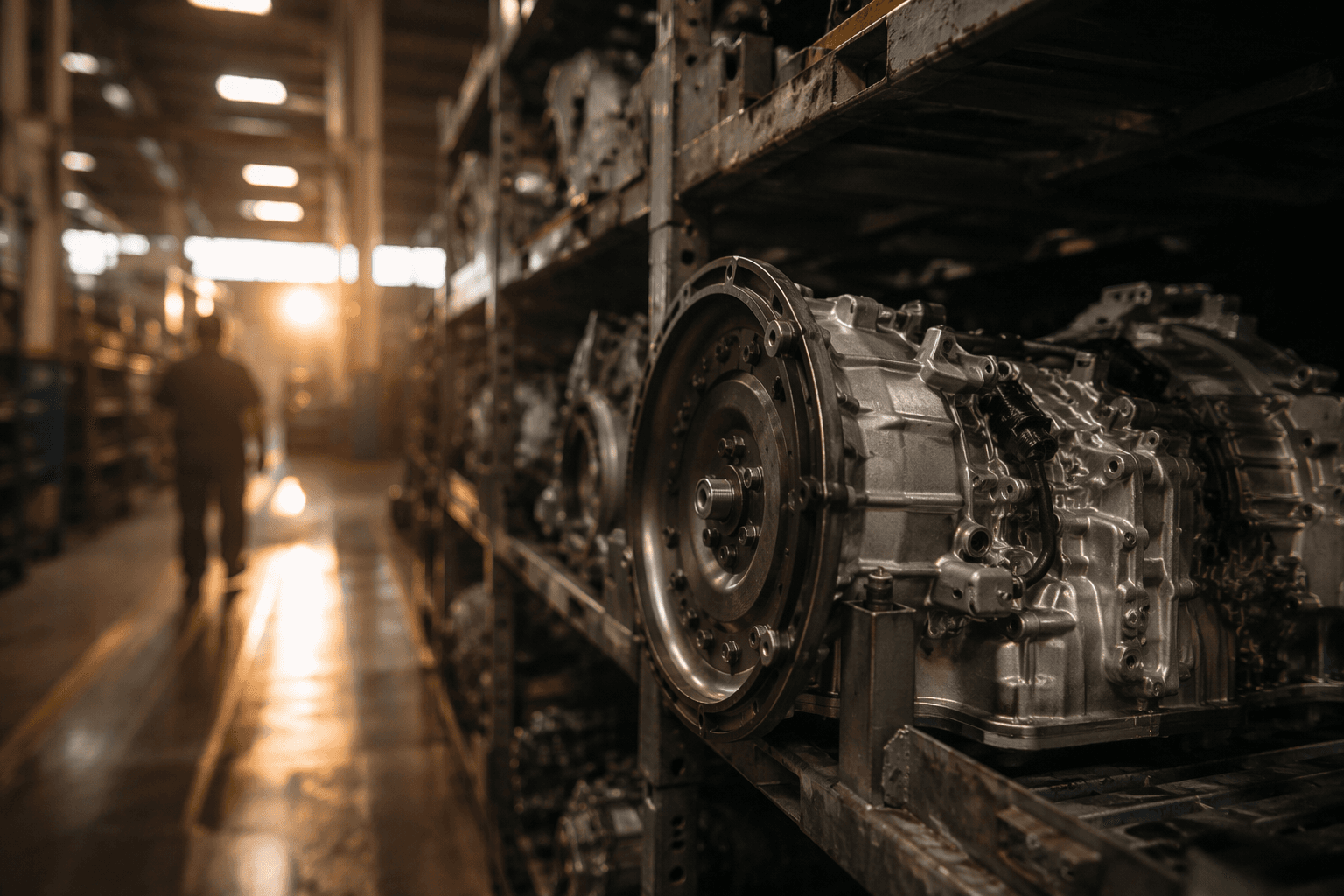
JASPER Engines & Transmissions turned a Jasper startup into one of Dubois County’s most important employers by building a remanufacturing business that stayed local and reached far beyond Indiana. Founded in 1942 during World War II by Alvin C. Ruxer, the company grew by adding capacity, tools and product lines instead of leaving town. That choice made JASPER more than a factory name on the edge of Jasper; it helped define the county’s manufacturing identity.
From wartime startup to industrial anchor

Ruxer later explained his thinking plainly: “I decided the automobile business was going to be big and that I should like to be a part of it.” That view mattered because the business he built was not based on selling only new parts. JASPER made its mark by remanufacturing, which means restoring and rebuilding powertrain products so they can go back into service.
The company’s official history traces a steady expansion from that first Jasper operation into a diversified manufacturer with a national footprint. A regional economic partnership profile in 2023 said JASPER served independent garages and fleets throughout the United States. That customer base is a big reason the company could scale while keeping its home in Dubois County.
What JASPER actually makes
The term remanufacturing can sound abstract until the product list is laid out. JASPER’s line includes gas engines, diesel engines, transmissions, differentials, rear axle assemblies, diesel air and fuel components, stern drives, lower units and outboard powerheads. A company listing says annual production exceeds 150,000 units across those categories.
That range helps explain why JASPER is not a narrow niche shop. LinkedIn lists the company at 1,001 to 5,000 employees, while Purdue University’s Made in Indiana profile describes it as the nation’s leading remanufacturer of a diverse line of drivetrain components. The company itself describes JASPER as the largest, strongest mass-remanufacturer in the world, a claim that matches the breadth of the product line and the size of its market reach.
For Dubois County, that breadth matters. A business that rebuilds engines, transmissions and marine components needs specialized labor, equipment and logistics, which creates deeper local industrial know-how than a single-product operation would. It also gives area workers a path into technical manufacturing jobs that are tied to a nationally recognized brand.
The turning points that let the company scale
JASPER’s growth did not happen in one leap. The company’s history page marks 1946 as By the Book, 1951 as New Building, 1957 as Growth, 1959 as Indiana Tool and Die Acquired and Production Increase, 1976 as Adding To Factory, 1987 as Alvin Ruxer Sold His Company, 1989 as Entering Racing Arena and 1998 as Crawford. Read together, those milestones show a business that kept reinvesting in place rather than chasing a move to a larger city.
A 2017 presentation on Alvin C. Ruxer adds another layer to that timeline. It says JASPER began remanufacturing light transmissions in 1957, acquired Indiana Tool & Die in 1959, began remanufacturing diesel engines in 1967 and began remanufacturing differentials in 1976. The same presentation says ownership changed in 1987 to the Bawel/Schwenk family, and that the company completed core processing and distribution in 1999.
Those dates matter because they show how a local business built scale step by step. Light transmissions gave way to diesel engines, then differentials, then a broader industrial system that could handle core processing and distribution. That sequence explains why the company could move from a Jasper startup to a national remanufacturing leader without losing its local base.
Why ownership changed the local story
The next major shift came in 2010, when JASPER Engines & Transmissions became a 100% associate-owned company through an employee stock ownership plan. JASPER Holdings says the ESOP stock was initially offered at $2.30 per share and was valued at $1,123.90 at the end of 2023. It also says the company has distributed more than $609 million in stock to associates.
That ownership structure is central to why JASPER matters to Dubois County workers. It ties the company’s growth to local employee wealth rather than to outside shareholders alone. For a county economy, that means the benefits of scale can show up in retirement accounts, household balance sheets and long-term workforce retention, not just in corporate earnings.
The employee-owned structure also helps explain the company’s staying power. A business with local ownership incentives is more likely to invest in the same place where its associates live and raise families. In Jasper, that has kept a major industrial employer rooted in the community for generations.
Why the company still matters in Dubois County
JASPER’s reach is national, but its economic identity is still local. The Evansville Regional Economic Partnership profile from 2023 said the company specializes in remanufactured engines, transmissions, differentials and fuel and air components, and serves independent garages and fleets across the United States. Purdue’s profile and the company’s own history both reinforce the same point: this is a Jasper business that became a national supplier without giving up its Dubois County address.
That combination of local roots and wide market reach explains why JASPER remains one of the county’s most consequential employers. It supports technical manufacturing jobs, anchors a chain of suppliers and services, and gives Jasper a business story built on practical work rather than outside hype. The company grew because it kept making more things in the same place, and that is still the reason its history matters to the county economy today.
This article was produced by Prism’s automated news system from verified source data, official records, and press releases, then run through automated quality and moderation checks before publishing. The system is built and supervised by the people who set the standards it runs under. Read our full AI policy.
Did this article answer your question?