Town hall in St. Anthony to address solar project, zoning concerns
Crossvine Solar, battery storage and the Mid-States Corridor will share the stage in St. Anthony as Dubois County weighs zoning, data centers and property taxes.

A July 22 town hall in St. Anthony will put Crossvine Solar, battery storage and the Mid-States Corridor in the same conversation as property taxes and zoning, as Dubois County weighs how those decisions could change land use and daily life. The 6:30 p.m. forum will be open to all residents and will feature candidates Lena Goffinet and Ken Colbert, hosted by Dubois County Democrats and the Property Rights Alliance.
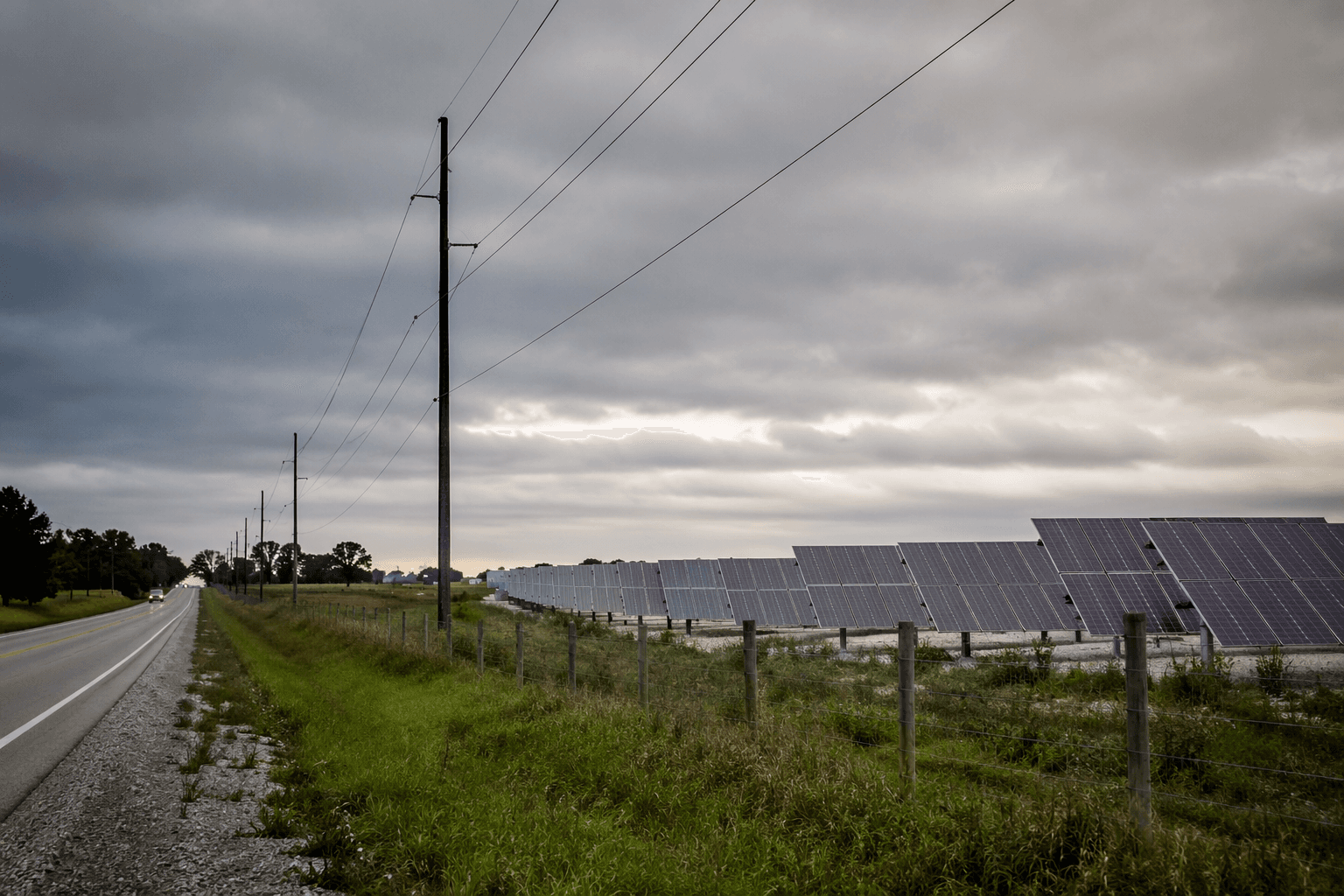
The solar project is already one of the county’s most immediate pressure points. Residents have sounded the alarm over the battery energy storage system tied to Crossvine Solar, and Dubois County commissioners previously said they could not take action to stop installation of the battery system. AES Indiana has also asked the Indiana Utility Regulatory Commission for approval of a 170 megawatt solar-plus-battery project in Dubois County, adding another layer to a project that is already drawing local attention.
Project descriptions vary in scale, but the expected footprint remains significant. A public project tracker lists Crossvine Solar as a planned 100 megawatt solar farm in Dubois County with commercial operation expected in March 2027. AES says Crossvine Solar + Storage is part of its clean-energy portfolio, and the company says it owns and operates more than 540 utility-scale and community solar, wind, energy storage and hybrid projects across 24 states. For neighbors near the site, the immediate questions are not abstract: how much land will be tied up, what equipment will be installed, and how close battery storage will sit to existing homes and farms.
The zoning discussion extends beyond St. Anthony and the solar site. In Huntingburg, the Common Council has already discussed updating development regulations to address emerging land uses such as data centers and battery storage systems, a sign that county officials are confronting the same issue from multiple directions. Property taxes are part of that mix as well, since any new industrial-scale development can change local tax bills and the planning decisions that shape who bears the costs of growth.
The Mid-States Corridor adds a separate but related transportation question. Public project documents include a Draft Environmental Impact Statement, Coordination Plan, Screening of Alternatives Report, Draft Purpose & Need and Public Involvement Plan, all of which show how the corridor debate reaches into land use, access and future development across Dubois County. By putting solar, storage, zoning, taxes and the corridor in one room, the St. Anthony town hall will force officials and candidates to confront the same unresolved issue: how much of the county’s future will be decided by utility projects, city zoning rules and transportation planning at once.
This article was produced by Prism’s automated news system from verified source data, official records, and press releases, then run through automated quality and moderation checks before publishing. The system is built and supervised by the people who set the standards it runs under. Read our full AI policy.
Did this article answer your question?