Army Corps Details Lake Lanier Flood Operations, Local Impacts
The U.S. Army Corps of Engineers provided an update on flood control operations at Lake Lanier after heavy rainfall in the basin, saying it curtailed releases from Buford Dam on December 22 to minimal flows of about 650 cubic feet per second via the small house unit. The Corps reported capturing roughly 60 billion gallons of flood water, provided current lake elevation figures, and said release decisions were coordinated with local and state officials, information that matters for boating access, park use, and downstream flood risk in Forsyth County.
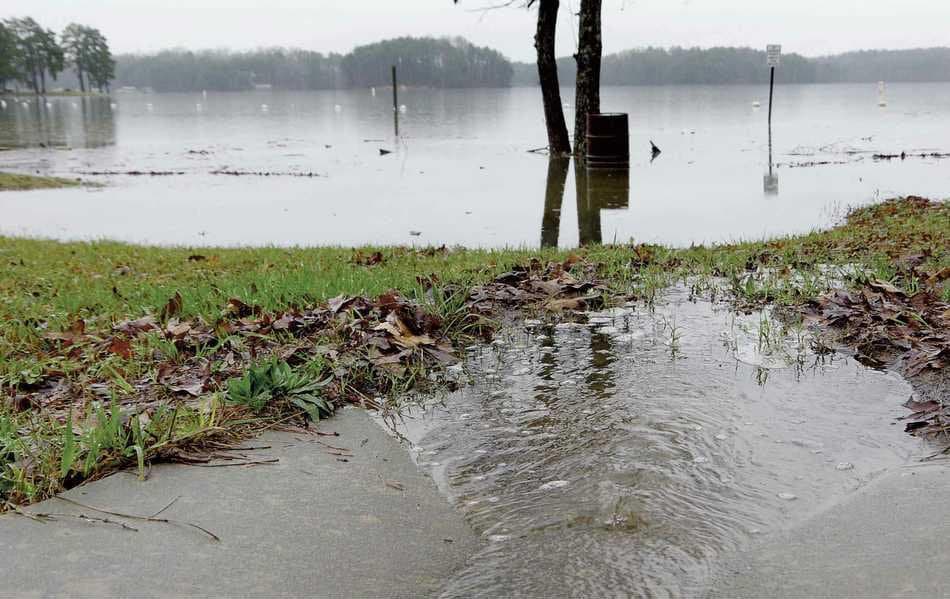
On December 23, 2025, the U.S. Army Corps of Engineers issued a public update on operations at Lake Lanier following significant rainfall in the upstream basin. The Corps said it reduced releases from Buford Dam on December 22 to minimal flows, routing approximately 650 cubic feet per second through the small house unit to limit downstream flooding. The agency reported that its operations captured about 60 billion gallons of flood water as reservoir levels rose and then were drawn down.
The Corps provided current lake elevation figures and described expectations for an ongoing ramp down. Release rates and timing were coordinated with local and state officials, according to the Corps public affairs office. Those decisions were presented as efforts to balance flood risk management for downstream communities with recreation and access needs around the lake.
Forsyth County residents experienced direct effects on ramps, parks, and other recreation areas around Lake Lanier. Reduced and fluctuating outflows can alter boat ramp availability and shoreline conditions, complicate scheduled park activities, and change safety considerations for water users. Local public works and parks departments have been working with the Corps and state agencies to track conditions and close or reopen facilities as appropriate.

Looking ahead, the Corps said releases will continue to be managed as downstream conditions evolve. That means release volumes may be adjusted to respond to observed river levels, weather forecasts, and coordination with emergency management partners. For residents and businesses along downstream reaches, particularly those in low lying areas, these operational decisions affect short term flood risk and the timing for when normal recreational use can safely resume.
Transparent communication between the Corps and local authorities remains crucial for public safety and for minimizing economic disruptions. Residents should monitor official Corps and local government channels for the latest lake elevations, release schedules, and notices about park and ramp availability.
This article was produced by Prism’s automated news system from verified source data, official records, and press releases, then run through automated quality and moderation checks before publishing. The system is built and supervised by the people who set the standards it runs under. Read our full AI policy.
Did this article answer your question?