Big Creek Greenway offers Forsyth County residents a safe daily escape
Big Creek Greenway has become south Forsyth’s flat, car-free daily route for walking, biking and stroller trips, and its network keeps expanding.
An everyday route, not a special outing
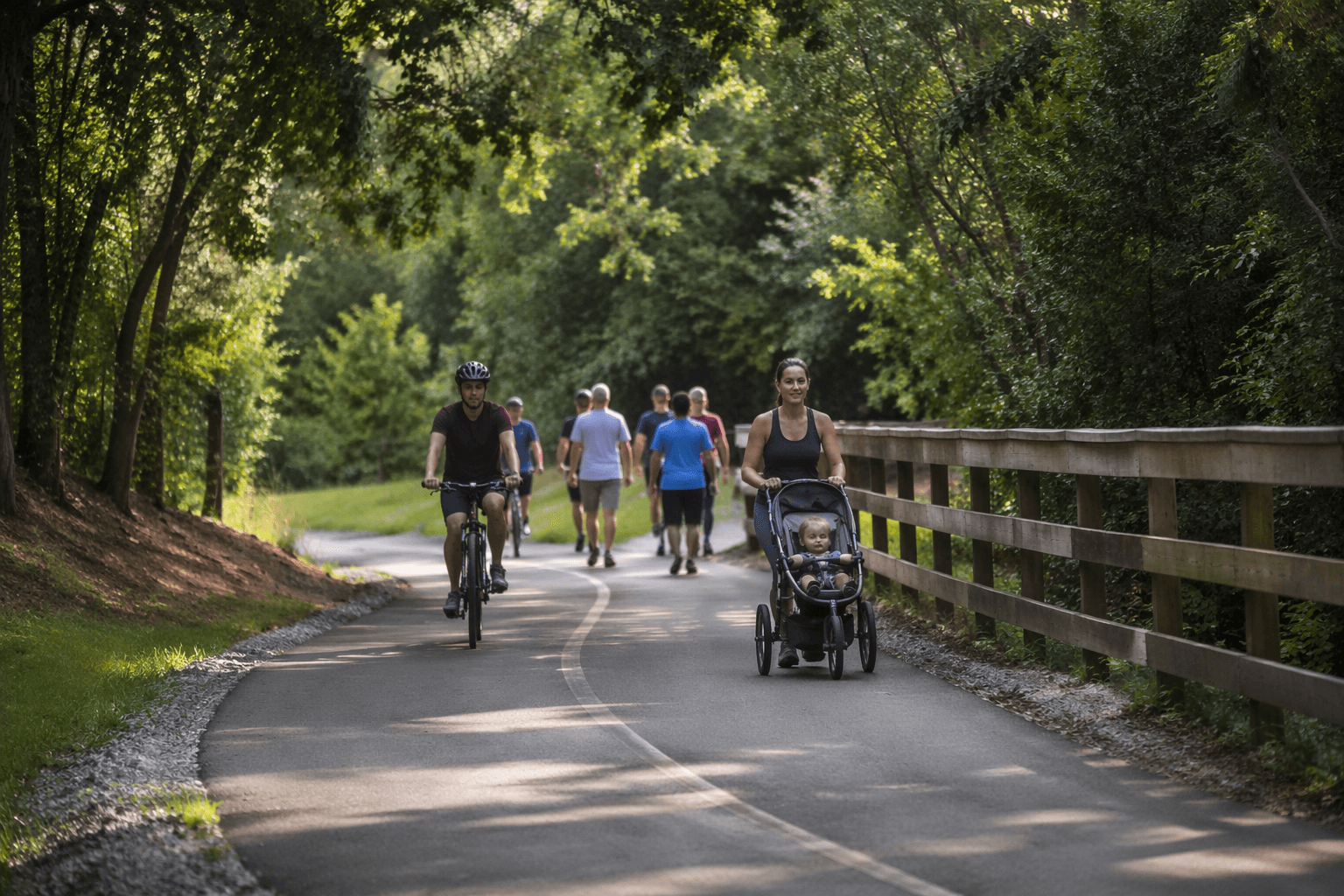
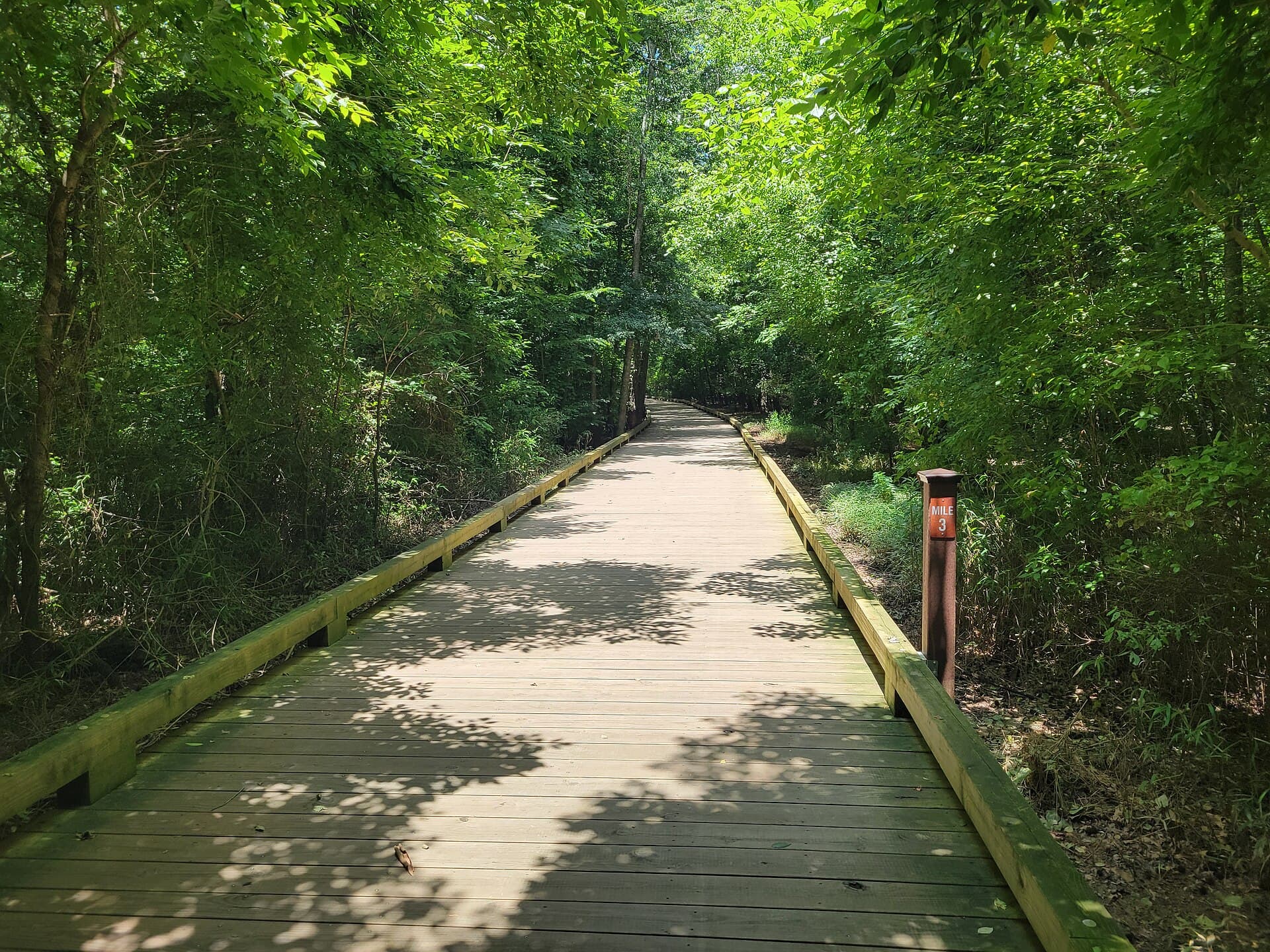
Big Creek Greenway has settled into the role it plays best in south Forsyth County: a flat, paved, car-free corridor that fits into ordinary life. In a part of the metro area where roads are busy and neighborhoods sit close together, the trail gives residents a safer and calmer place to walk, jog, bike, or push a stroller without turning the outing into a traffic challenge.
That is what makes the greenway so useful. It is not just a place for weekend recreation. It works as a quick after-work loop, a midday reset, a family walk with children, or a routine exercise path that people can return to several times a week. For many households, it functions less like a park and more like everyday infrastructure, a dependable outdoor route that supports normal schedules.
What the trail offers
Forsyth County describes Big Creek Greenway as a 12-foot-wide multi-use trail built for walking, jogging, biking and inline skating. The surface and width matter because they make the trail practical for different kinds of users at the same time. A runner, a cyclist and a parent with a stroller can all use the corridor in a way that would be difficult on a crowded sidewalk or along a busy road.
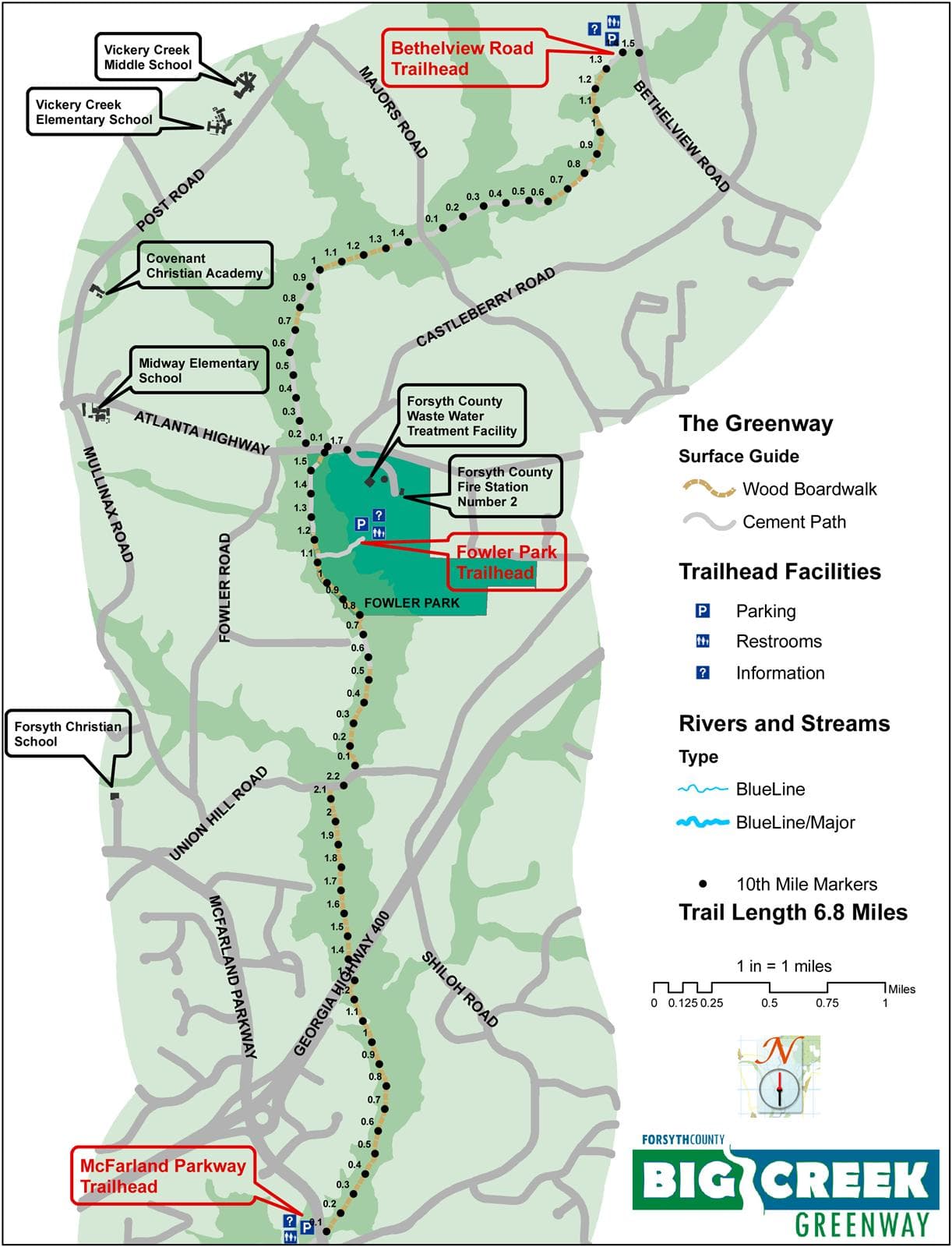
The trail now totals approximately 9.6 miles after Phase 4 added about 2.8 miles. That expansion widened the trail’s usefulness across south Forsyth, especially for people who want a long-distance route without having to leave the county. The newest segment begins at the Bethelview Road trailhead, runs north along Big Creek, parallels Kelly Mill Road and ends at Johnson Road, giving the greenway a clear spine through one of the county’s busiest residential areas.
The trail also makes sense because it answers everyday needs at once. Parents can get children outside without navigating intersections. Fitness-minded residents can use it for running or cycling. Workers and retirees can use it as a steady routine that does not depend on a program, class or event calendar. That flexibility is one reason trails become some of the most heavily used public spaces in suburban counties.
Why it matters in south Forsyth
The greenway helps define the character of south Forsyth at a time when growth continues to reshape the area. As more homes, shops and workplaces come online across Forsyth and nearby communities, a corridor like this gives residents a place to move, breathe and spend time outdoors without leaving the daily orbit of home, school and work. It also absorbs demand that might otherwise spill into crowded roads, gyms or private facilities.
That public value is part of the reason the trail has remained so important even years after its first phases opened. Forsyth County says Phases 1, 2 and 3 opened in 2009, and the current trail buildout was funded by the Parks, Recreation and Green Space Bond approved by voters in 2008. The greenway is now woven into how south Forsyth functions, which is why its importance can be easy to overlook even as so many families depend on it.
It is also one of the county’s quiet markers of quality of life. In one of North Georgia’s busiest suburban corridors, the greenway gives people a place designed for simple movement and quiet use. That combination, more than any single feature, is what makes it feel like a daily escape rather than a destination that requires planning.
Access, closures and the reality of heavy use
The trail’s usefulness comes with the reality of upkeep. In May 2025, Forsyth County closed the section between mile markers 5.1 and 5.2 near Hwy. 9 and the Fowler Park Trailhead for boardwalk replacement and access improvements. Then in February 2026, the county said it was closing the segment from Fowler Park north to the Bethelview Trailhead for the next phase of the renovation project.
Those closures are not just construction notices. They are evidence that the greenway is heavily used enough to require ongoing work, and that county leaders are trying to preserve a corridor people rely on for daily movement. For residents who build workouts, stroller walks or bike rides around the trail, the practical details of access points and segment closures matter as much as the trail’s length.
Even so, the broader picture remains one of continued investment. The trail’s original phases opened in 2009, Phase 4 expanded it by roughly 2.8 miles, and future Phase 5 planning would extend the greenway to Sawnee Mountain Preserve. That long-range vision suggests the county sees the corridor not as a finished park feature, but as an evolving piece of public infrastructure.
Part of a regional mobility network
Big Creek Greenway also fits into a larger web of trails and sidewalks beyond Forsyth County. Johns Creek says its trail planning is designed to connect parks, schools, employment centers, neighborhoods and shopping while reducing congestion. The city also says it prioritizes trail gaps within a half-mile of schools, libraries, parks and activity centers, a reminder that trails are increasingly being treated as transportation tools as much as recreation spaces.
That regional approach shows up in the McGinnis Ferry Road project, where sidewalks and trails are expected to connect residents to the Big Creek Greenway in Alpharetta. The project is a partnership involving Johns Creek, Alpharetta, Forsyth County and the Georgia Department of Transportation, and construction is expected to be completed in 2028. That connection matters because it reinforces what the greenway already represents on the ground: a shared corridor that helps people move between neighborhoods, destinations and daily routines without relying entirely on a car.
For south Forsyth families, that is the greenway’s real strength. It is flat, practical, familiar and close enough to home to use again and again. In a county where daily life can feel crowded by traffic and schedules, Big Creek Greenway remains one of the few places built to make ordinary movement easier.
This article was produced by Prism’s automated news system from verified source data, official records, and press releases, then run through automated quality and moderation checks before publishing. The system is built and supervised by the people who set the standards it runs under. Read our full AI policy.
Know something we missed? Have a correction or additional information?
Submit a Tip