Forsyth County heritage tour highlights historic sites across the county
From 101 School Street to Sawnee Mountain, Forsyth’s best heritage stops fit into one weekend loop and show how schools, roads and cemeteries built the county.
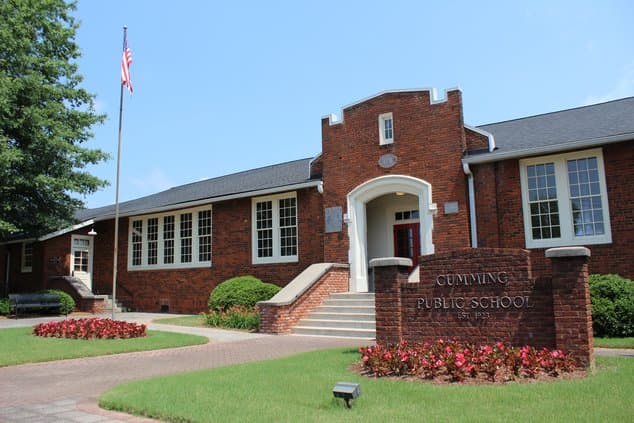
A practical Forsyth County history trail runs from the Cumming Public School Building at 101 School Street through downtown Cumming, Sawnee Mountain and the county’s older communities. The Historical Society of Cumming/Forsyth County has built that route around stops that show how travel, schooling, commerce and burial grounds shaped the county long before today’s growth pressures.
Start at 101 School Street
The easiest place to begin is the Cumming Public School Building at 101 School Street, where the Historical Society of Cumming/Forsyth County keeps its headquarters. That building is more than an office address. It was first erected in 1923 to serve grades 1 through 11 and, for the first time, give Cumming and Forsyth County a path to a high school diploma.
The building’s own history captures the county’s ability to rebuild. It burned shortly after opening, then was rebuilt within the same brick walls and reopened in 1927.
Walk the downtown core in one stretch
From School Street, the downtown sites are close enough to turn into a short walking loop or a quick drive. The Bandstand, Cumming Square, the Brannon-Heard Hotel and Fowler House are all part of the society’s historical sites list, and together they show how the county’s public life developed around the square. The Bandstand, built in 1915, is one of the clearest markers of that civic center, and it was listed on the National Register of Historic Places in 2002.
The National Register is the nation’s official list of historic places worthy of preservation. Forsyth County has five places on that register in one compiled listing, including the Cumming Bandstand, Cumming Cemetery, Cumming Public School and Pool’s Mill Covered Bridge.
Cumming Cemetery belongs in the same downtown loop. Established in 1834, it is the oldest cemetery in Forsyth County and one of the most useful stops for understanding family lines, settlement patterns and the people who shaped the county before modern subdivisions arrived.
Make Sawnee Mountain the family stop
If you want one stop that makes the county’s history easy to absorb in a single visit, head to the Sawnee Mountain Preserve Visitor’s Center at 4075 Spot Road. Admission is free, and the center includes interactive exhibits on the natural and cultural history of Sawnee Mountain. It is also where the Forsyth County History Walk is installed, which makes it one of the most efficient stops on the route.
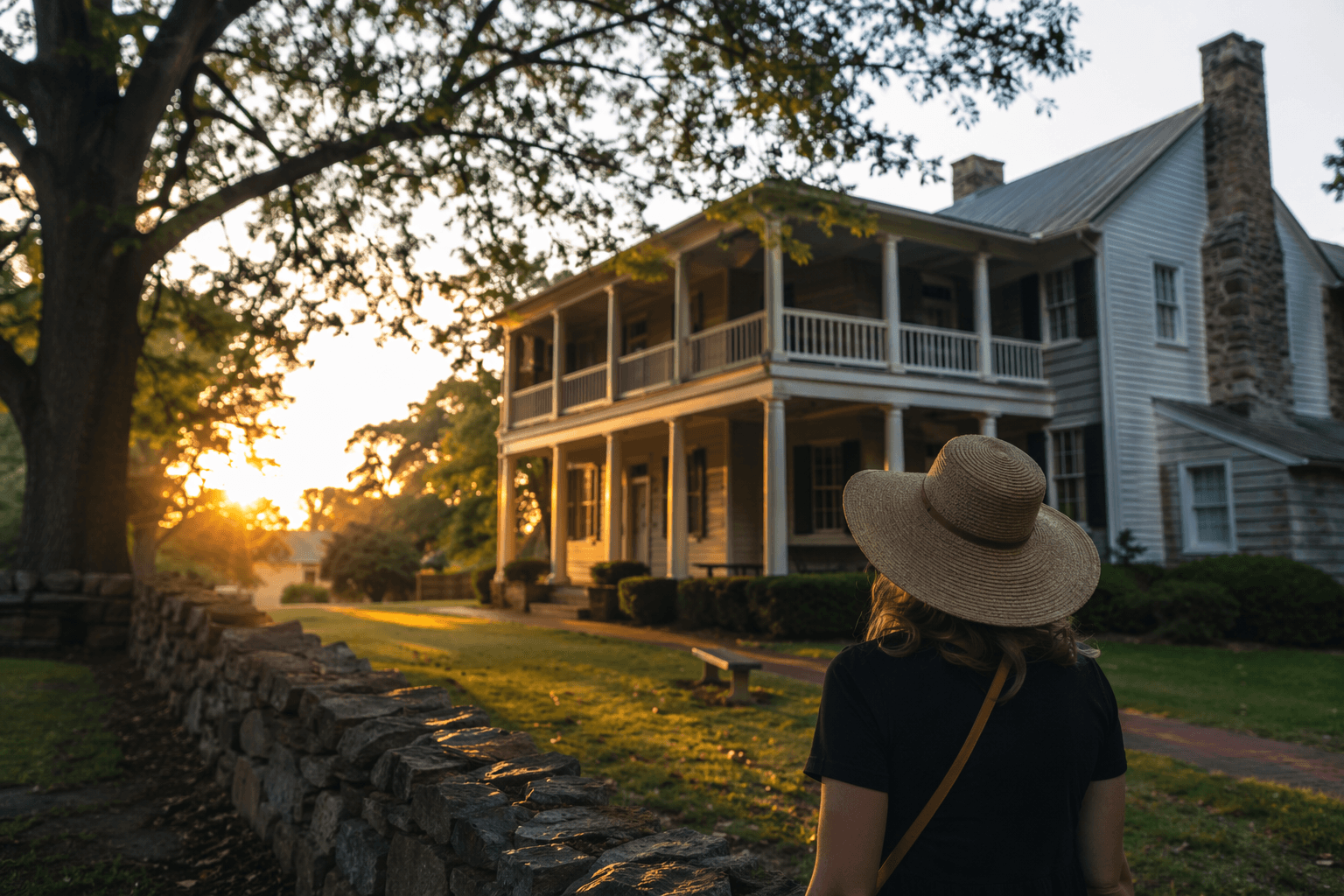
The History Walk was completed in June 2022 as a Girl Scout Gold Award project by Clara Hamilton. It consists of four plaques that move the county story from before its founding to the present.
Follow the older travel routes
The county’s earliest roads shaped many of these sites. Forsyth County was once Cherokee territory, and the Federal Road shaped travel through the region. James Vann arranged taverns in what became Forsyth County, including one at the Chattahoochee River and one in the Hightower Community on the Etowah.
The tavern system is one of the clearest reminders that Forsyth’s geography was once a travel corridor, not just a suburban address list. Chief James Vann built the Buffington/Blackburn Tavern in 1804, and the Cherokees built the Harris Cabin around 1820. Vann’s Tavern, the Buffington/Blackburn Tavern and Harnage Tavern were part of the Old Federal Road tavern system.
That history is still visible because the Buffington/Blackburn Tavern has been moved to the City of Cumming Fairground Indian Village.
Add the outlying sites if you have the full afternoon
The historical sites stretch beyond the downtown core. Bagley Hatchery, Coal Mountain Mill and Pooles Mill point to the county’s working landscape, where agriculture, milling and local production mattered as much as courthouse business. Those sites help explain how older communities formed outside Cumming and why development along today’s major corridors still runs over an earlier settlement pattern.
Brannon-Heard Hotel and Fowler House widen the picture further. One speaks to lodging and travel, the other to the domestic life that grew around a more settled county center. Put together with the Bandstand and Cumming Square, they show a county that was not built all at once, but layered site by site as travel routes, schools and local commerce took hold.
Forsyth County’s 2025 population is estimated at 282,805, up 12.5 percent from the April 1, 2020 base.
This article was produced by Prism’s automated news system from verified source data, official records, and press releases, then run through automated quality and moderation checks before publishing. The system is built and supervised by the people who set the standards it runs under. Read our full AI policy.
Did this article answer your question?