Forsyth County outdoor program helps residents learn new skills
Forsyth County is using public recreation staff to turn outdoor skills into a low-barrier service, from kayaking lessons to climbing and camps. The draw is simple: residents can try more without buying gear or starting from scratch.

Forsyth County is turning parks into more than open space. Through its Specialty Recreation division, launched in January 2025, the county is using staff time to teach residents how to kayak, climb, bike and camp in a setting built for beginners as well as more experienced outdoor users. In a fast-growing county where families are looking for affordable ways to stay active close to home, that makes the program a practical public service, not just a park amenity.
A county service built around access, not just facilities
At the center of the program is Whitman Morgan, the county’s specialty recreation manager, who works with residents on activities that can feel out of reach if you have never tried them before. He joined Forsyth County in 2016 as a program coordinator at Fowler Park Recreation Center, moved to Sawnee Mountain Preserve as outdoor recreation supervisor in 2021, and stepped into his current role in 2025. That path matters because the program is not being run as a side project; it is now part of a dedicated division that handles both outdoor recreation and therapeutic recreation.
The county’s own mission is to provide safe, clean and inclusive parks and recreation, and its parks department says it earned CAPRA accreditation by meeting 154 recognized standards. Those details help explain why the outdoor program is structured the way it is. Residents are not just handed a trail map or pointed toward a boat ramp. They are taught step by step, in a setting designed to lower the barrier for people who may not own equipment, may not know the basics, or may want to try a new activity before spending money on private lessons or gear.
Why this matters in a fast-growing county
Forsyth County describes itself as one of the fastest-growing counties in the United States, and that growth shows up in the kind of recreation families want. Newcomers often want local activities that are close, structured and predictable, especially ones that do not require a long drive or a major upfront expense. A county-led program can meet that need in a way that a more casual park visit cannot, because the instruction is built into the experience.
The program also gives the county a way to turn public land into a direct service for residents. Sawnee Mountain Preserve is not just a scenic backdrop; it is a hub for instruction, camps and outdoor access. That gives the county a stronger return on its recreation investment because residents can use the preserve for learning, not only for passive sightseeing or walking trails.
What residents can actually do
Sawnee Mountain Preserve’s adventure programs cover a wider range than many people expect from a county park system. The outdoor division offers instruction in white water kayaking, recreational canoe and kayak, rock climbing, tree climbing, mountain biking and caving. That makes the program useful for a wide spread of ages and comfort levels, from someone trying a paddle for the first time to a family looking for a weekend challenge.
The preserve’s camp listings widen the menu even further. Explorer Camps include hiking, crafts, rock climbing, tree climbing, zip-lining, habitat exploration and environmental education. That mix makes the program especially relevant for parents who want their children outside, moving and learning, rather than spending another day inside on a screen. It also means the county’s outdoor programming is not limited to one skill or one season; it is part of a larger system of activities that can be matched to different interests.
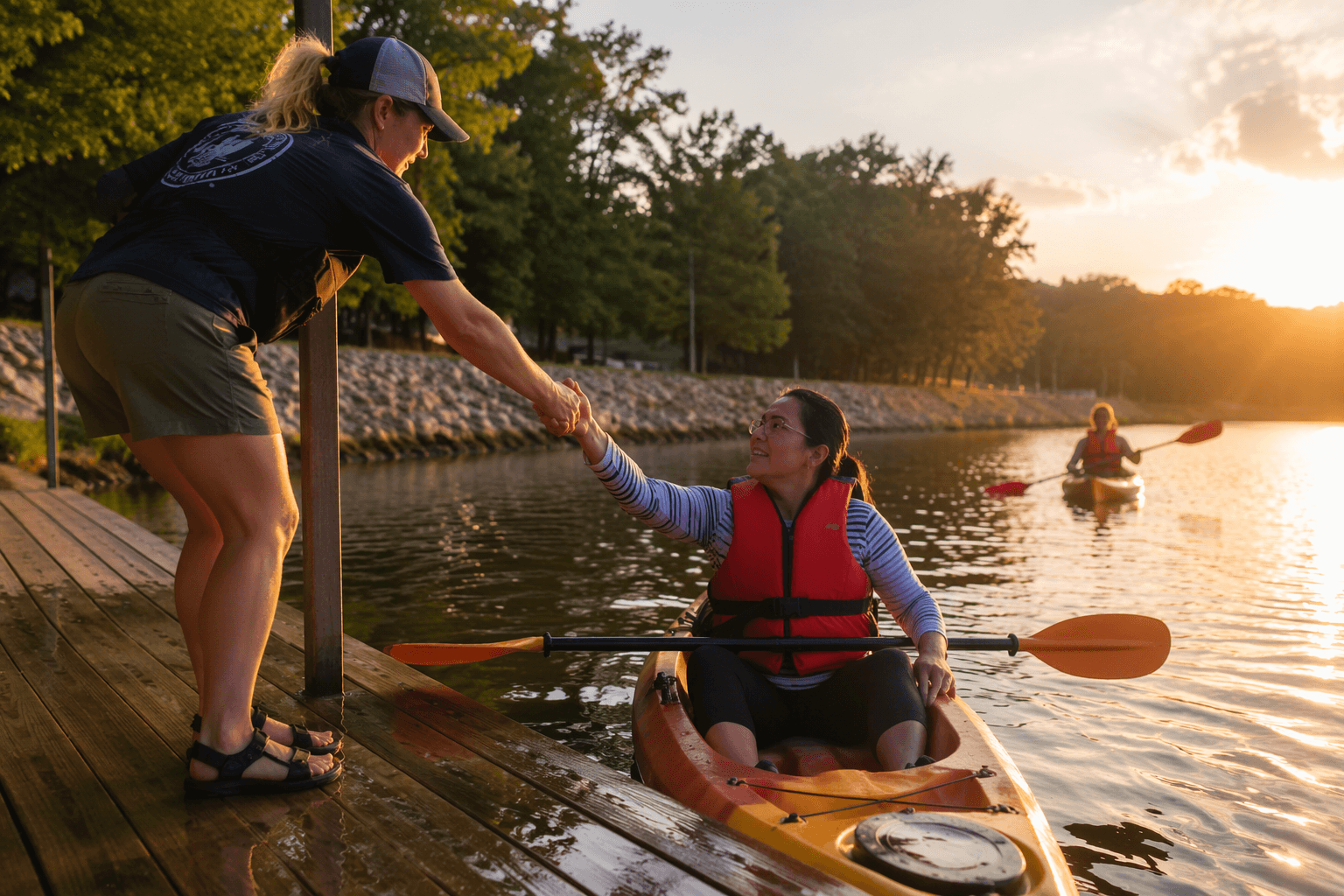
For adults, the value is just as clear. A first-time paddler can learn without buying a kayak. Someone curious about climbing can try it under supervision. A resident who wants to get more comfortable in the woods can start with guided activities instead of improvising alone. In practical terms, the county is giving people a safer entry point into activities that many private providers also offer, but often with a higher upfront commitment.
How the county keeps the program responsive
Forsyth County says it surveys participants after each program or camp and uses that feedback to refine offerings. That makes the program more flexible than a fixed schedule of classes that never changes. It also means the county can see which activities are resonating with families and which ones need adjustment.
Morgan and his team also track outdoor recreation agencies nationwide for trends and ideas that might fit Forsyth County. That matters in a field where recreation demand changes quickly. If another agency develops a format that works well for beginners, or if a new activity is gaining interest among families, the county can decide whether it belongs in Forsyth County’s mix. In a growing county, that kind of adaptation can be the difference between a program that feels current and one that feels stale.
Morgan’s own professional recognition reinforces that approach. He placed third in the instructor category in a 2025 American Canoe Association initiative aimed at encouraging instructors to teach more Level 1 and Level 2 courses and to welcome new paddlers. That lines up with the county’s broader goal: making outdoor recreation less intimidating for residents who are starting from zero.
What makes it worth the tax dollars
The most useful way to think about Forsyth County’s outdoor recreation program is as public access with instruction attached. Residents are not only being offered a place to go outside. They are being given the coaching, structure and confidence to do something new in that space. For families, that can mean one county program instead of piecing together outside lessons, equipment purchases and trial-and-error weekends.
The county’s own recreation system suggests it sees that value as part of its larger mission. Safe facilities, inclusive access and accredited standards all point to a department that wants to make public recreation usable, not just available. In a county growing this quickly, that can be one of the most concrete ways public spending shows up in daily life: a child learning to climb, a parent trying kayaking for the first time, or a family finding a local activity that feels worth repeating.
This article was produced by Prism’s automated news system from verified source data, official records, and press releases, then run through automated quality and moderation checks before publishing. The system is built and supervised by the people who set the standards it runs under. Read our full AI policy.
Know something we missed? Have a correction or additional information?
Submit a Tip