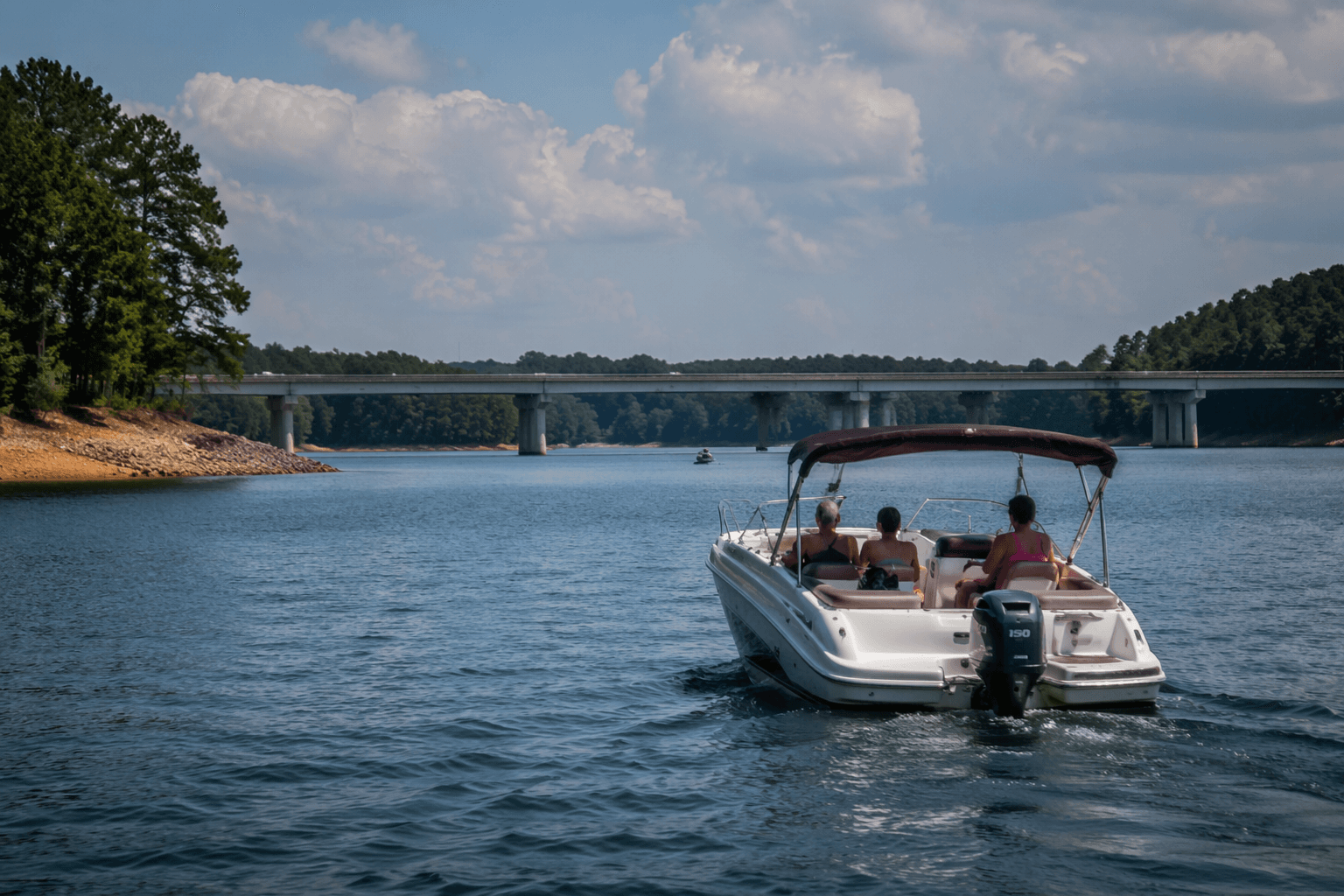
Forsyth County Tightens Tree Ordinance, Raising Fees on Developers
New tree rules hit Forsyth developers with higher fees, but residents say the updates are too little for a county projected to grow 79% by 2050.
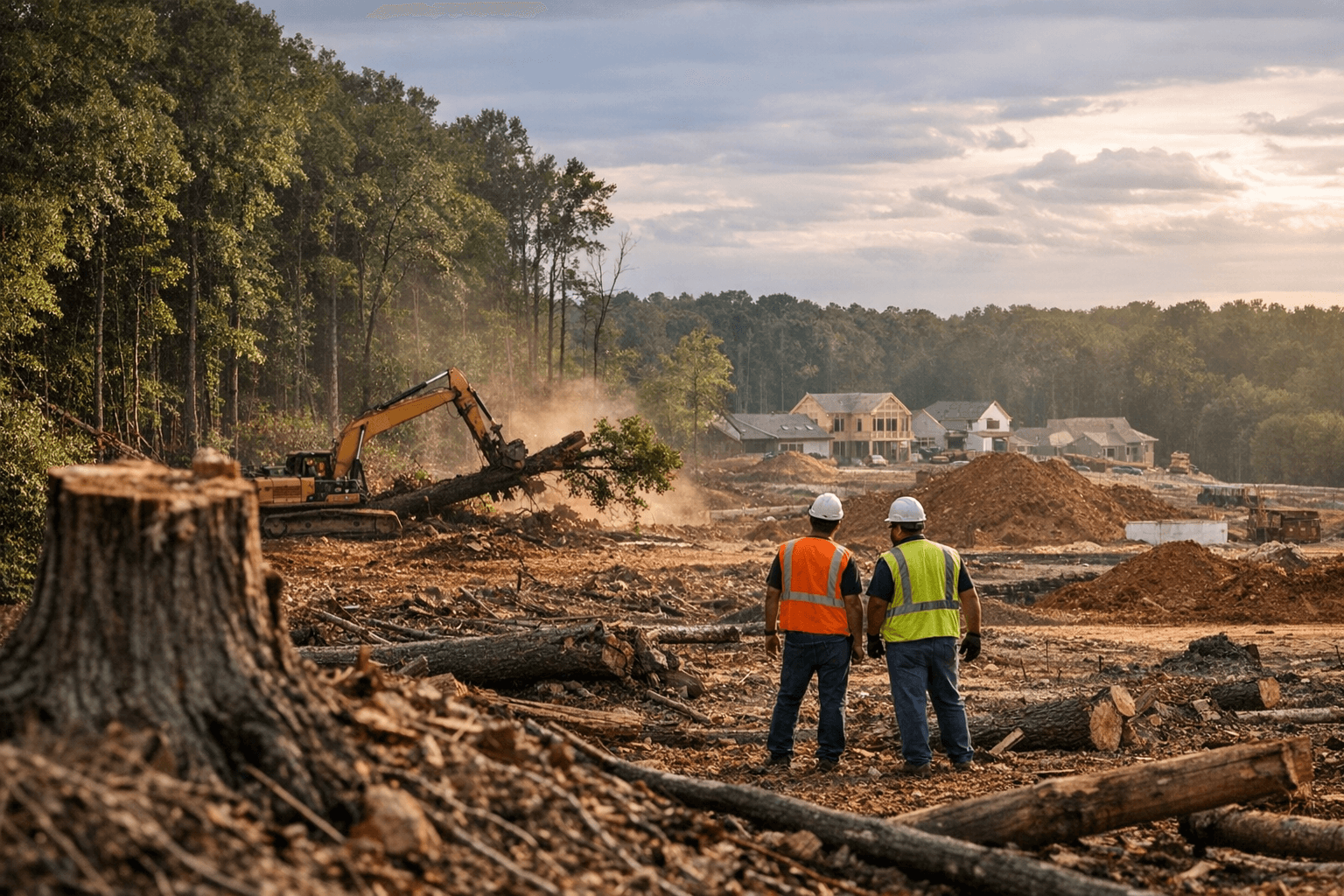
Focusing on longevity, enhanced tree protection has been a major theme," Forsyth County Planning Manager Heather Ryan told commissioners at a December work session, framing an overhaul years in the making. "These amendments are in an effort to focus on tree (health)." Commissioners approved the revisions, imposing stricter requirements and higher fees on developers. Not every resident accepted it as enough.
Some Forsyth residents say the changes don't go nearly far enough to protect trees from development, a complaint that has shadowed every iteration of the ordinance and that reflects the defining tension in one of America's fastest-growing suburban counties.
The approved revisions build on the foundation set by Ordinance 98, the Tree Protection and Replacement Ordinance formally adopted in May 2021. Under that framework, any developer seeking a Land Disturbance Permit must submit a Tree Protection and/or Replacement Plan prepared in consultation with the County Arborist, who identifies Significant Trees within designated Tree Groupings. The updated rules tighten that baseline: critical root zone sizes are being increased, planting standards raised, requirements for trees in parking lot islands strengthened, and practices around pruning, removal, and long-term maintenance made more rigorous. Contributions to the county's Tree Replacement Fund, used exclusively to plant trees on public property, are rising as well.
Those higher fees land squarely on developers, but residents pay the downstream cost in canopy loss. The Council for Quality Growth, a development advocacy organization, telegraphed the industry's resistance during the 2020 revision cycle, arguing that a proposed 10% tree preservation requirement on gross site area was "too excess" and would "devalue the land over the long-term" by effectively removing usable area from properties. That same round of revisions proposed nearly doubling the tree fund fee from $400 to $750. The current update pushes both requirements and fees higher still.
Nowhere are the stakes more visible than at Shiloh Preserve, a Forsyth County community of custom-built homes where large mature hardwoods still stand on undeveloped lots. Those trees represent exactly what the updated ordinance is designed to protect, and exactly what disappears first when Land Disturbance Permits move forward without meaningful oversight.
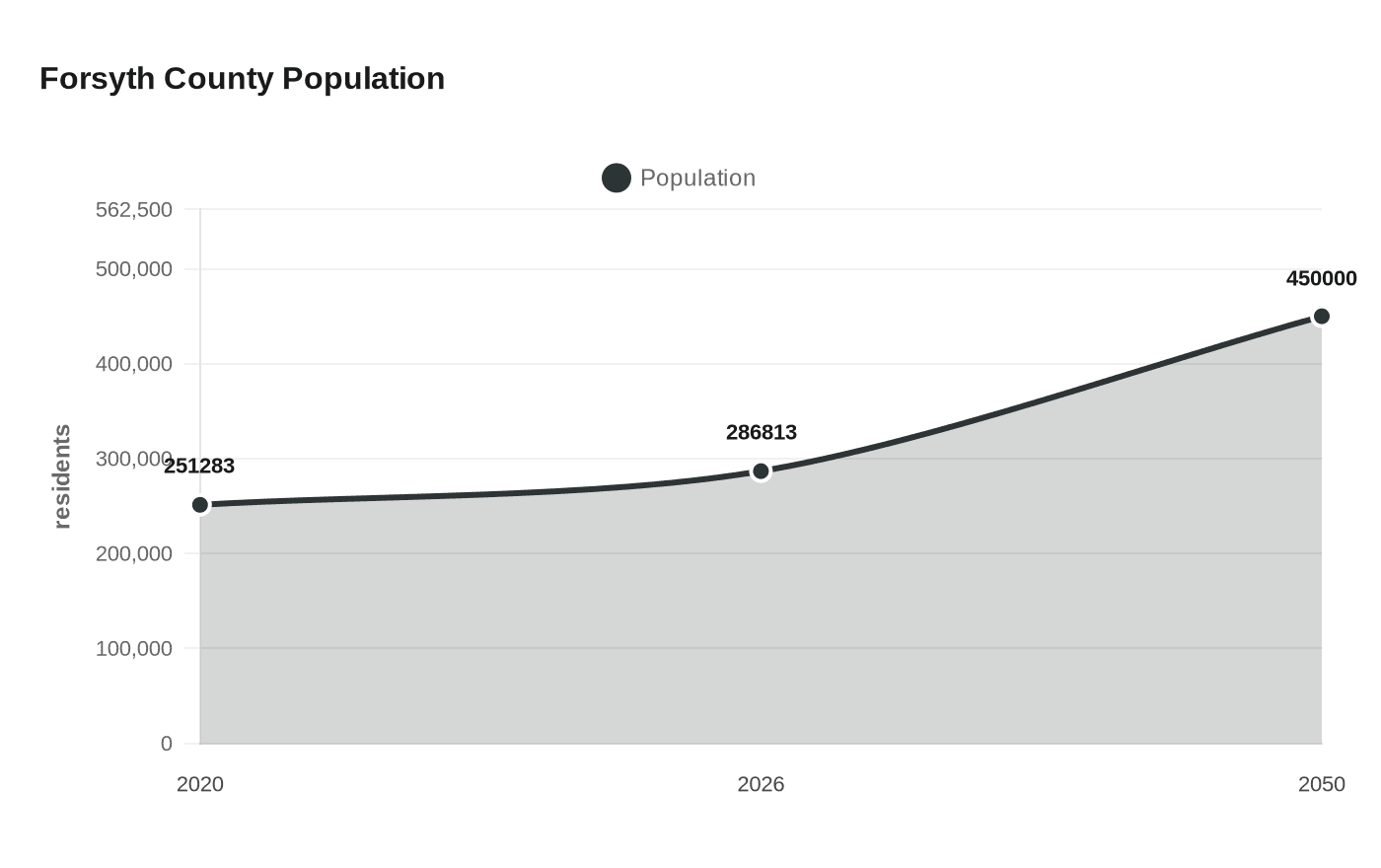
The timing reflects the county's broader growth emergency. Commissioners approved a 180-day moratorium on new residential rezonings in May 2025, extending it through at least November 11, 2025, to address what the commission itself called rampant growth. Forsyth County's population is estimated at roughly 286,813 in 2026, up from 251,283 at the 2020 census. The county added an estimated 6,700 new residents between 2024 and 2025 alone, ranking fourth in metro Atlanta's 11-county region, and projections suggest a 79% increase by 2050 that could push the population past 450,000.
Residents who believe a developer has violated the ordinance can file a complaint with the Forsyth County Planning and Community Development department, which handles permitting and enforcement. The County Arborist also conducts mandatory maintenance inspections after each growing season to verify that required plantings survive, and dead or near-dead replacement trees must be replanted within 30 days of receiving notice. The county's Tree Protection Commission holds defined oversight responsibilities under the code.
With residents already calling the current revisions insufficient, the ordinance is unlikely to be finished evolving.
This article was produced by Prism’s automated news system from verified source data, official records, and press releases, then run through automated quality and moderation checks before publishing. The system is built and supervised by the people who set the standards it runs under. Read our full AI policy.
Did this article answer your question?