Georgia's only donor care unit marks five years, 1,000 donations
A Forsyth County teen’s story helped mark Georgia’s only donor care unit reaching five years, nearly 1,000 donations, and more than 3,500 transplants.
A Forsyth County family’s decision to donate turned a private loss into lasting help for other Georgia families, and it now sits at the center of a milestone: Georgia’s only donor care unit has reached five years and helped facilitate nearly 1,000 organ donations and more than 3,500 transplants.
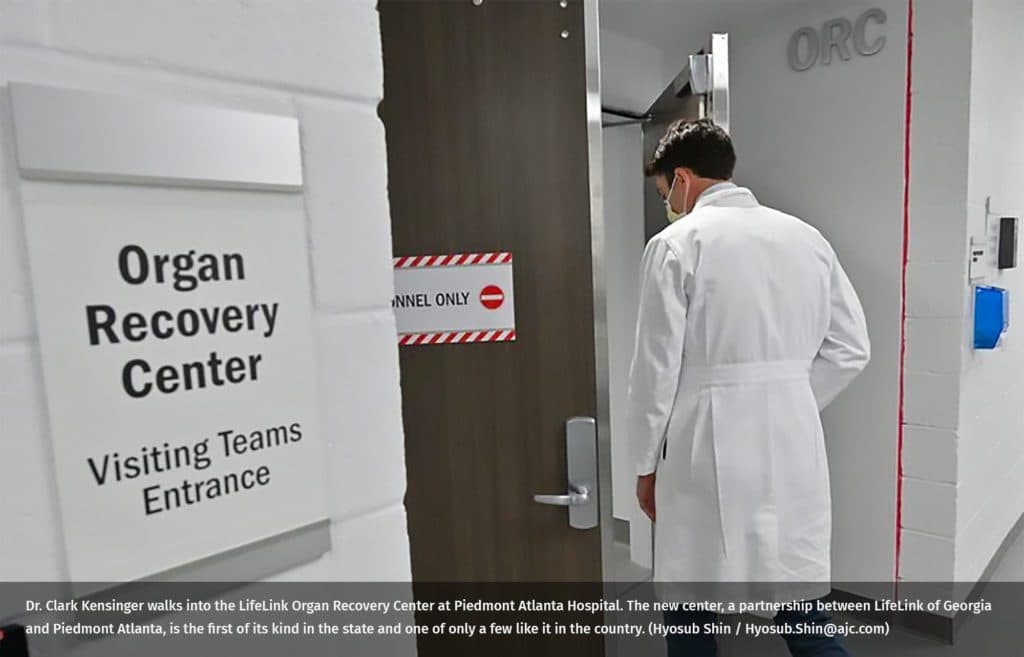
The program, run by LifeLink of Georgia and Piedmont Atlanta Hospital, was first announced on July 7, 2020 as a dedicated Organ Recovery Center at Piedmont Atlanta Hospital. LifeLink said then that it would be the first of its kind in Georgia and the fifth in the nation, built to improve donation and transplantation outcomes while increasing efficiency and reducing costs.
The unit is not a public-facing ward so much as a tightly coordinated medical operation. LifeLink staff work closely with hospital teams during donor disclosure or authorization, manage the patient clinically, and prepare for operating-room recovery. That behind-the-scenes coordination is what makes the model different from the older, more fragmented process, where timing, communication and family support could be harder to align.
For Forsyth County readers, the story lands close to home through Finley Kruchten, the teenager whose life and dreams helped frame the anniversary. His story shows how organ donation reaches far beyond Atlanta’s hospital campus and into suburban communities where families may one day face the decision to say yes. A single donor family’s choice can affect recipients across the state, including people waiting in metro Atlanta and beyond.
The need remains stark. The Health Resources and Services Administration says the Organ Procurement and Transplantation Network uses a national database to match patients waiting for transplants, and only three in 1,000 people actually become donors after death, even though 170 million are registered. That gap is why the donor-care model matters: every step has to move quickly, from authorization to recovery to matching.
Piedmont says its Atlanta transplant program has some of the nation’s best outcomes and some of the shortest wait times for liver and kidney transplants, while nearly half of its transplanted kidneys come from living donors. Dr. Clark Kensinger played a key leadership role in developing the donor care unit, helping turn what was once a new idea into a five-year fixture in Georgia’s transplant system.
For families in Forsyth County and across North Georgia, the lesson is practical and immediate: register as a donor, talk with loved ones about your wishes, and understand that organ donation is a system built on speed, trust and coordination. In Georgia, that system now has a specialized unit that has already changed thousands of lives.
This article was produced by Prism’s automated news system from verified source data, official records, and press releases, then run through automated quality and moderation checks before publishing. The system is built and supervised by the people who set the standards it runs under. Read our full AI policy.
Know something we missed? Have a correction or additional information?
Submit a Tip