Clovis police conducted DUI checkpoint funded by cannabis tax grant
Clovis police conducted a DUI checkpoint Friday night to remove suspected impaired drivers and boost traffic safety. The operation used state cannabis tax grant funding and targeted data-driven locations.
Clovis police conducted a driving under the influence checkpoint Friday night from 8 p.m. to 1 a.m. at an undisclosed location, the department announced. Officers said the checkpoint was intended to identify and remove suspected impaired drivers from the road and to reduce the risk of crashes linked to impairment.
Police said checkpoint locations are selected based on data showing incidents of impaired driving-related crashes, a practice intended to concentrate enforcement where problems are most acute. Funding for the operation came from a grant through the California Highway Patrol’s Cannabis Tax Grant Program, linking state cannabis tax revenue to local traffic safety efforts.
“Impaired drivers put others on the road at significant risk,” said Corporal Mark Bradford, traffic supervisor. “Any prevention measures that reduce the number of impaired drivers on our roads significantly improve traffic safety.” The department emphasized that impairment is not limited to alcohol; some prescription and over-the-counter medications can affect driving ability. While medicinal and recreational marijuana are legal, police reiterated that driving under the influence of marijuana remains illegal.
The department also highlighted the financial and licensing consequences for drivers charged with a DUI. Police said drivers charged with a first-time DUI face an average of $13,500 in fines and penalties and a suspended driver’s license, underscoring the personal cost of impaired driving enforcement for those stopped at checkpoints.
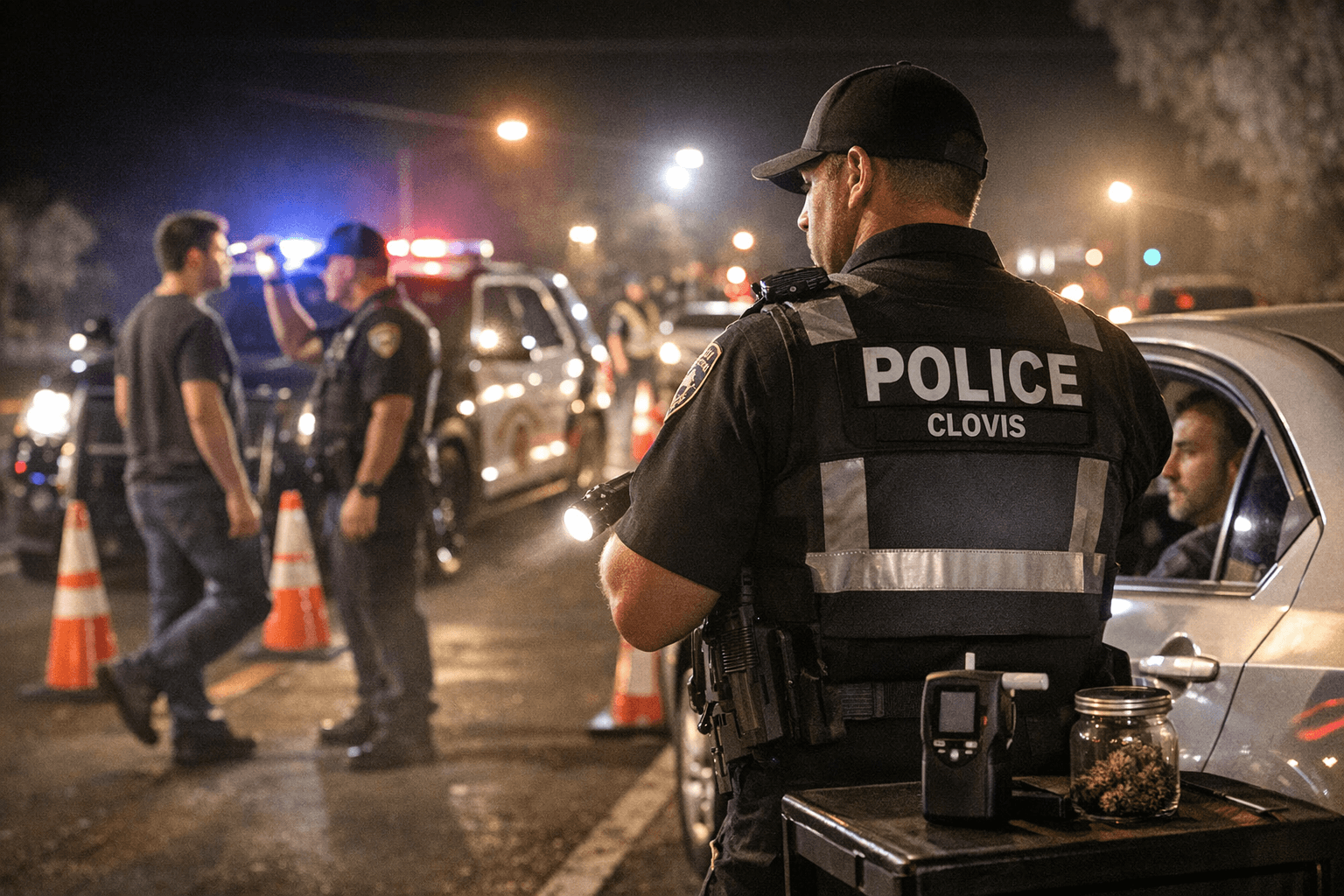
Using cannabis tax grant money for DUI enforcement has policy implications for Fresno County residents. It reflects a state-level decision to direct cannabis-related revenue toward public safety programs, and it provides a dedicated funding stream that local agencies can apply to traffic enforcement. That funding link raises questions about how enforcement priorities are set and how the effectiveness of grant-funded checkpoints will be measured against public safety outcomes.
For drivers across Clovis and surrounding Fresno County neighborhoods, the immediate impacts were practical and financial: potential traffic delays on checkpoint nights, and for those cited, steep legal and monetary consequences. The department’s data-driven selection method suggests future checkpoints will be targeted to areas with higher rates of impairment-related crashes, though officials did not release specific location data.
Residents concerned about enforcement patterns or the use of tax dollars can contact the Clovis Police Department for more information on data and grant spending. In the near term, the checkpoint serves as a reminder to arrange sober rides and consider medication effects when driving; longer term, it signals an ongoing partnership between state grant programs and local traffic safety efforts that will shape policing and road safety in the county.
This article was produced by Prism’s automated news system from verified source data, official records, and press releases, then run through automated quality and moderation checks before publishing. The system is built and supervised by the people who set the standards it runs under. Read our full AI policy.
Did this article answer your question?


