Dunlap students learn farming, business through school greenhouse program
About 100 middle-schoolers at Dunlap are raising chickens, tracking egg inventory and selling produce, turning a greenhouse into a local ag business lab.
A campus greenhouse is doubling as a small farm business
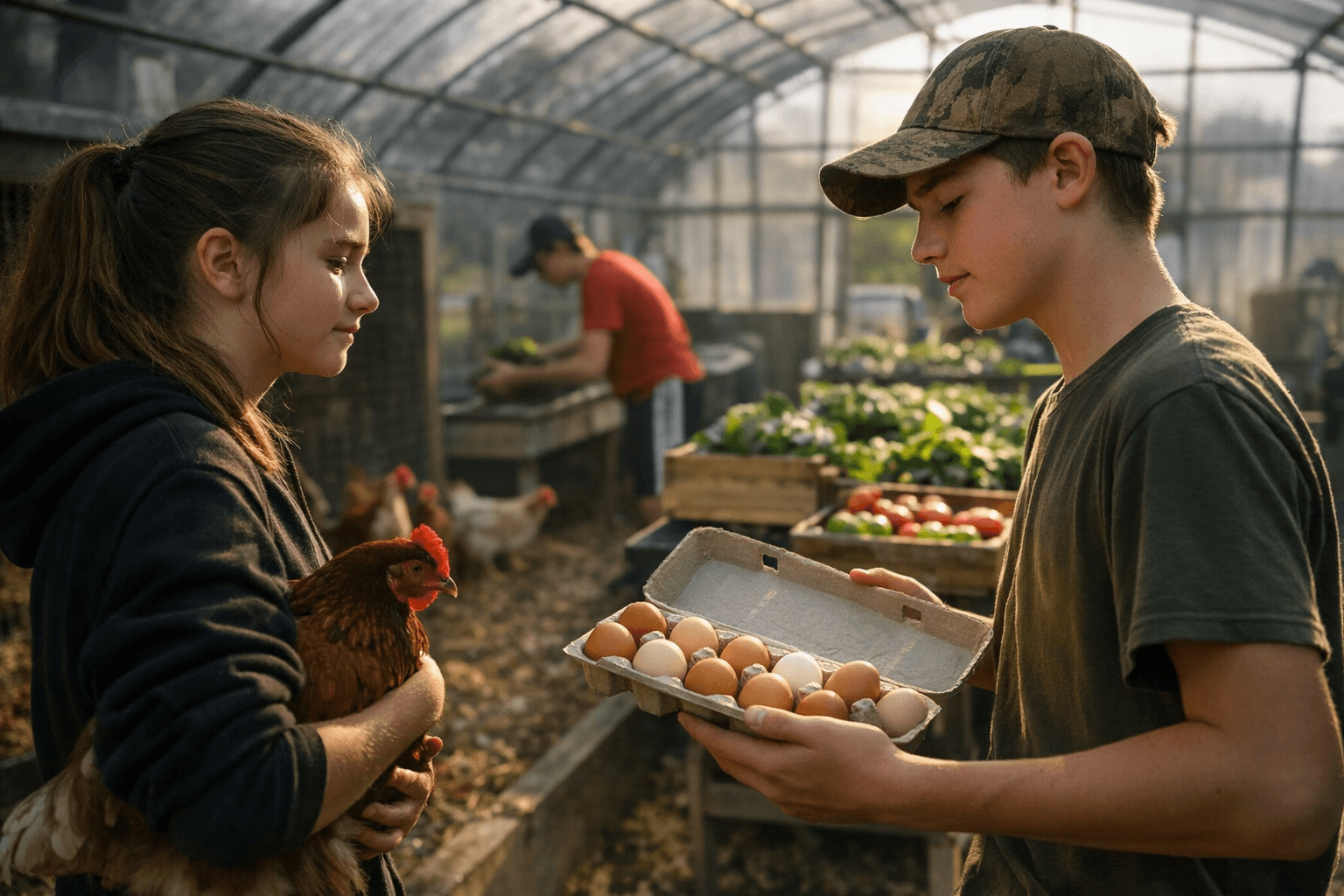
At Dunlap School, a greenhouse and a stretch of campus land are being run less like a hobby garden and more like a working agricultural business. About 100 sixth-, seventh- and eighth-graders are enrolled in the agriculture and land management elective, where they tend plants, care for chickens and learn how food moves from production to market.
That matters in a place like Dunlap, where the school sits in the mountains northeast of Reedley and serves families in Squaw Valley, Dunlap and Miramonte. Dunlap Elementary says it serves about 400 students in grades K-8 with a staff of about 20 teachers, so the elective reaches a meaningful slice of the campus and gives middle-schoolers an unusually practical look at Central Valley agriculture.
What students are actually doing
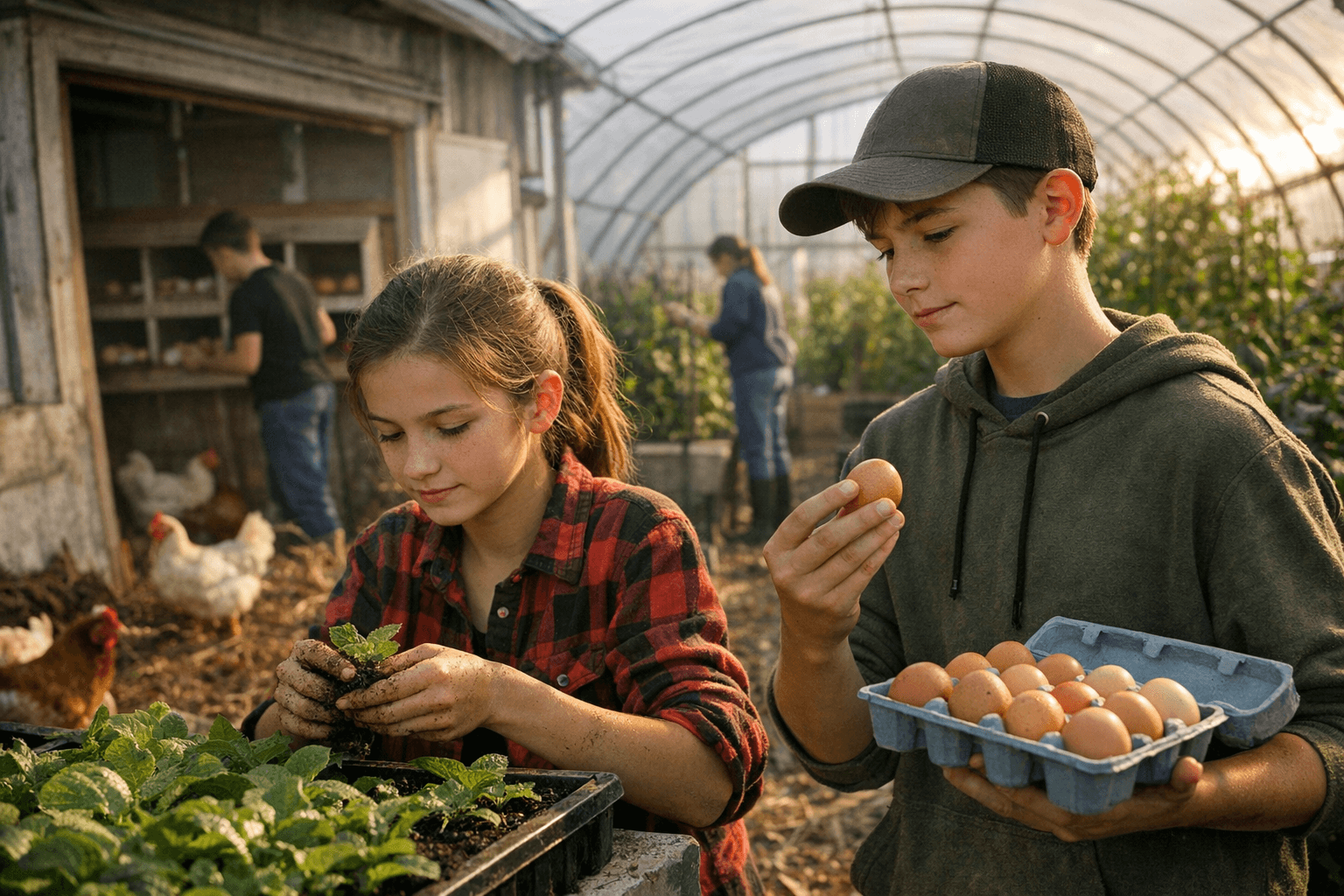
Inside the greenhouse, the work starts at the plant level and does not stop there. Students tend vegetables and other crops from start to finish, shovel bark, trim trees, plant fruits and vegetables, clean the chicken house and make sure food and water are available for nearly two dozen chickens.
That hands-on routine is what turns the program into more than a science class. Students are learning how to maintain living systems, manage daily tasks and keep an operation running, which mirrors the kind of discipline expected on local farms and in ag-related jobs across Fresno County and the wider San Joaquin Valley.
Eighth-grader Ava Morrison also helps track egg production, catalog inventory and count cartons. Those jobs matter because they teach bookkeeping in a way that feels real: if eggs are collected, counted, packed and sold, then students see how records, stock and cash flow fit together. In a region where agriculture is both a major employer and a core industry, that kind of early business fluency has long-term value.
The business lesson is as important as the farming lesson
The sharper story here is not just that students are learning responsibility. It is that they are learning how a small agricultural enterprise works. They are seeing that a farm product does not stop being useful when it leaves the greenhouse. It has to be sorted, counted, packaged, priced and sold.
That business side is reinforced by the way the school program uses its output. Eggs, plants and trees are sold at the Reedley Farmers Market, which gives students a direct view of what happens when farm goods reach a local consumer market. On a practical level, that means students can connect the work of feeding chickens and watering plants to the final step of earning revenue.
The market connection also gives the program a local economic dimension. Reedley College has advertised farmers markets on campus in recent seasons, including weekly fall schedules in 2025 and Thursday evening markets in 2024. The market has also been presented at Reedley College parking lot C off Reed Avenue from 8 a.m. to noon, making it a real commercial outlet rather than a classroom simulation.
Why the program fits Fresno County
The school’s approach makes sense in a county where agriculture is woven into daily life and jobs. Fresno County Farm Bureau says the county has 1.88 million acres of farmland, more than 350 crops and agriculture that supports about 20 percent of all jobs in the Fresno area. In other words, the students are not being trained for an abstract lesson. They are being introduced to the economic engine around them.
Kings Canyon Unified School District, which serves a 600-square-mile area in California’s San Joaquin Valley, describes the region as an agricultural engine. Dunlap sits inside that larger system, which means a school greenhouse can serve as an early pipeline into a work force that still needs farm managers, equipment operators, irrigators, packers, supervisors and small-business owners.
Principal Keith Merrihew says the program helps bring learning to life and gives students room to build confidence, career interest and STEM skills. That framing fits the broader need in Fresno County, where farms depend not only on field labor but also on people who understand systems, data and operations. A student who can track egg cartons, monitor inventory and think through pricing is already learning the language of management.
How artificial intelligence is entering a traditional field
The program also has a modern twist: students are using artificial intelligence to create prototypes for what they want the farm to look like in the future. That detail stands out because it places a century-old industry in conversation with a newer tool that is rapidly changing design, planning and production across many sectors.
For a school program, that blend of old and new is instructive. Farming still depends on soil, water, weather and daily labor, but the future of agriculture also depends on planning, visualization and the ability to adapt. By using AI for prototypes, students are practicing how technology can support agricultural decision-making rather than replace the work.
Part of a larger farm-to-school movement
Dunlap’s program also fits into a statewide pattern. California’s farm-to-school initiative is described by the governor’s office as a multi-pronged effort that benefits students, farmers, local economies and the environment. National Agriculture in the Classroom adds another layer by offering free, standards-based agriculture lesson plans for K-12 teachers, showing that the connection between farming and classroom learning is not limited to one school or one county.
What makes Dunlap notable is how directly it ties those ideas to local commerce. Students are not only hearing about agriculture in the abstract. They are raising products, counting inventory, selling at market and learning how a small operation earns trust and revenue. In a county built on agriculture, that is the kind of early training that can lead toward farm management, agricultural business and the next generation of Central Valley entrepreneurship.
This article was produced by Prism’s automated news system from verified source data, official records, and press releases, then run through automated quality and moderation checks before publishing. The system is built and supervised by the people who set the standards it runs under. Read our full AI policy.
Did this article answer your question?