Fresno County Citrus Bloom Period in District 3 Begins March 17
Fresno County's Agricultural Commissioner declared the District 3 citrus bloom period begins March 17, triggering strict pesticide notification rules to protect pollinating bees.
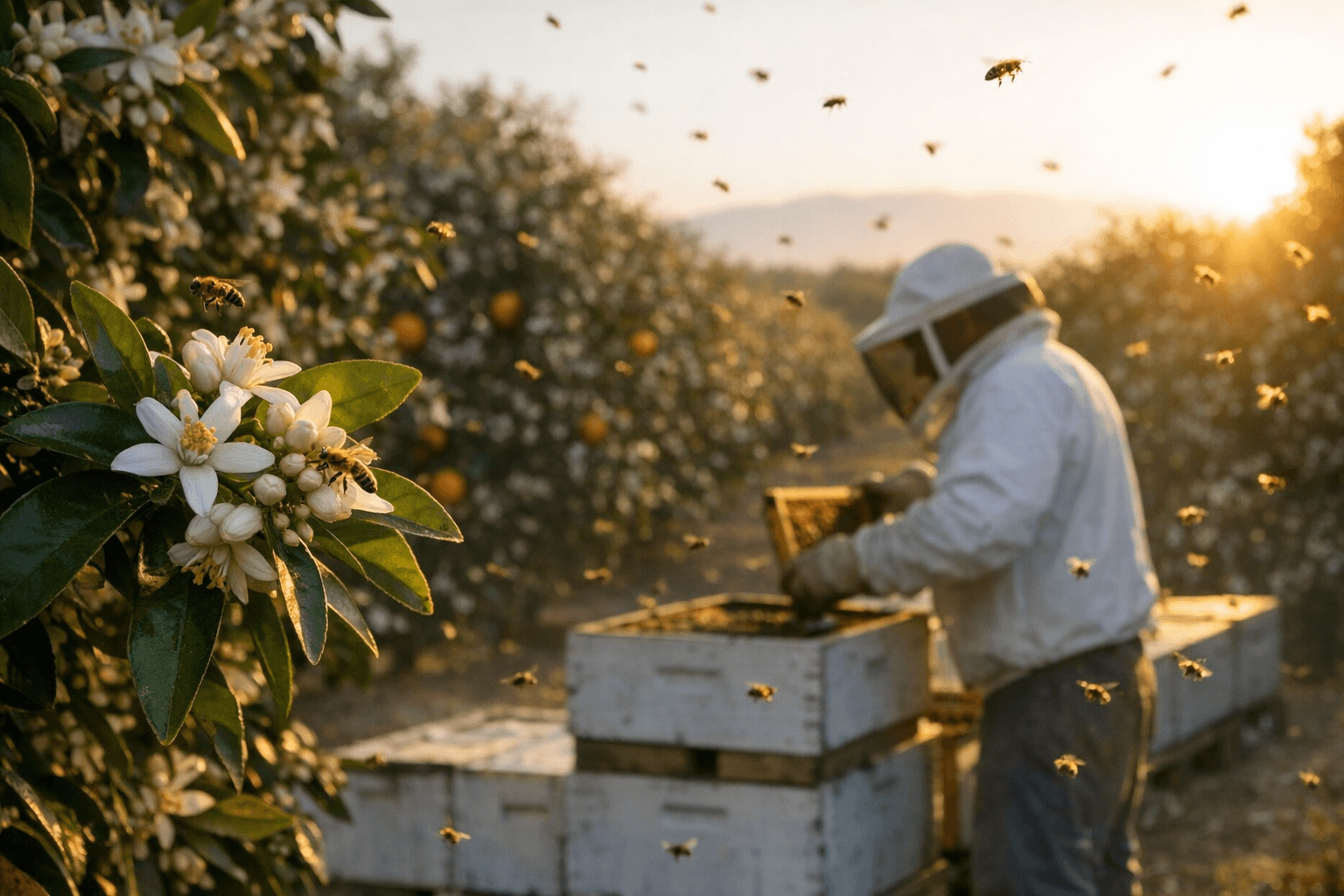
The Fresno County Agricultural Commissioner issued an official news release March 13 declaring that the citrus bloom period for District 3 will begin March 17, 2026, setting in motion a seasonal regulatory window that restricts pesticide use across a significant swath of the county's citrus-growing land.
The declaration invokes California Code of Regulations Sections 6983 and 6984, which govern citrus and bee protection areas throughout Fresno, Kern, and Tulare counties. Under state regulation, the bloom period officially begins when 10 percent of total citrus blossoms are open and ends when 75 percent of blossom petals on the north side of the trees have fallen. That window typically spans between 10 and 30 days in a given season.
The rules apply to any land within one mile of a citrus planting of one acre or more, designated under state law as a citrus/bee protection area. Those protections are active from March 15 through May 31 each year. Any person intending to apply a pesticide labeled toxic to bees during the bloom period must file a notice of intent with the commissioner at least 48 hours before the intended application. Limited exceptions exist for certain products, including methomyl (Lannate), applied when bees are inactive. Once bloom officially ends, pesticide applicators may resume applications of bee-toxic products 48 hours or more after the official close date without advance notification, continuing under those relaxed conditions through March 15 of the following year.
Growers, pest control operators, and beekeepers operating in District 3 are required to comply with the applicable regulations. California Citrus Mutual has reminded its members that compliance with Sections 6983 and 6984 is mandatory for all three groups. Crop consultants bear specific responsibility: they are required to know when bloom has been declared in their area and which products are prohibited during that period. Communication between consultants, growers, and beekeepers is considered central to protecting pollinator populations during the bloom window, particularly given the strong attraction bees have to citrus as a nectar source.
Readers in or near the district's boundaries should verify their location against the current district map, available from the Fresno County Department of Agriculture. A district boundary change recorded in 2015, when then-Commissioner Les Wright oversaw a prior District 3 declaration, removed the area between Riverbend Avenue and Academy Avenue, north of Belmont Avenue, from District 3 and folded it into District 1. Whether that boundary remains in force in 2026 should be confirmed with the county directly.
For questions about the bloom period or the citrus and bee regulations, Supervising Agricultural/Standards Specialist Dana Taniguchi can be reached at (559) 600-1931, as listed in prior Fresno County communications. California Citrus Mutual, which monitors bloom and petal-fall announcements and updates growers as the season progresses, is headquartered at 512 N Kaweah Avenue in Exeter and can be reached at 559-592-3790. The organization also maintains a GIS map on its website where growers uncertain of their district can select the Bloom Districts layer to confirm their location.
Additional bloom declarations for remaining districts in Fresno, Kern, and Tulare counties are expected in the days and weeks ahead. In 2020, then-Fresno County Commissioner Melissa Cregan declared Districts 2 and 3 in bloom by April 1, while county personnel simultaneously monitored District 4 to determine when bloom would begin there. Whether the county plans similar monitoring of other districts this season has not yet been confirmed.
This article was produced by Prism’s automated news system from verified source data, official records, and press releases, then run through automated quality and moderation checks before publishing. The system is built and supervised by the people who set the standards it runs under. Read our full AI policy.
Did this article answer your question?


