Fresno County Clerk Sets March 12 Randomized Alphabet Drawing for June Primary Ballots
Fresno County's ballot order for the June 2 primary was decided by a randomized alphabet drawing — and candidates with last names starting with Q got the best news.
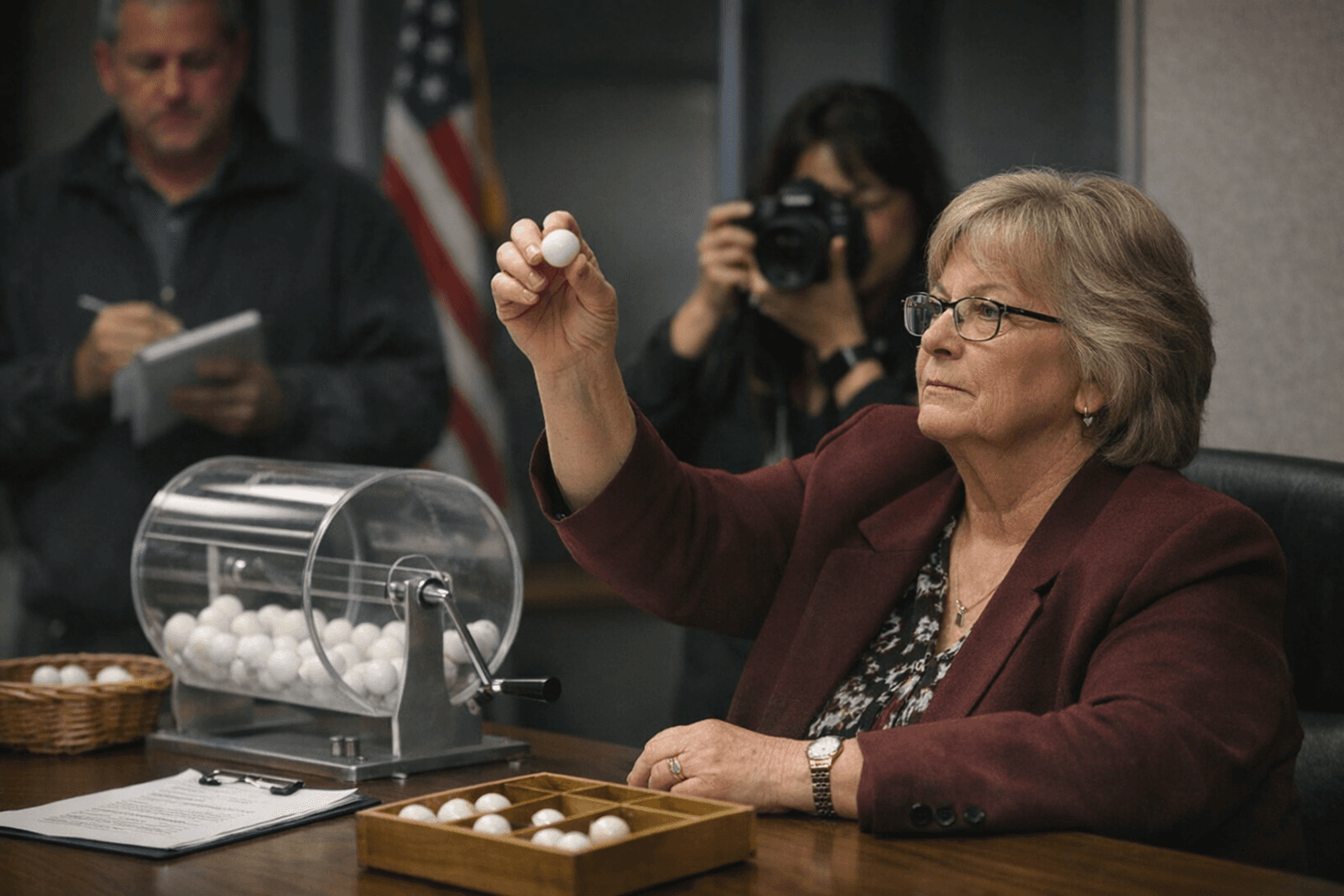
Fresno County Clerk/Registrar of Voters James A. Kus announced on March 10 that his office would conduct a randomized alphabet drawing at 11:00 a.m. on March 12 to determine the order candidates' names appear on ballots for the June 2, 2026 Statewide Direct Primary Election. The drawing, required under Elections Code section 13112, translates a randomly shuffled 26-letter alphabet into ballot placement for every race on the county's primary ballot.
The official sequence, published March 12 by the California Secretary of State's office in CC/ROV Memorandum #26057 and distributed to all county clerks and registrars of voters statewide, begins with Q and ends with I: Q, T, P, W, Z, M, Y, L, D, R, H, B, C, J, X, F, N, S, A, G, K, E, U, O, V, I. The memorandum was signed by Wesley Keller, Program Manager for Candidate Filing and Election Night Reporting, who noted the alphabet "is to be applied THROUGHOUT the candidate's entire last name."
That instruction carries practical weight when multiple candidates share the same first letter in their surname. In that case, the second letter of each surname determines placement, based on where that second letter falls in the randomized sequence. The Secretary of State's memorandum uses a concrete example: if candidates named Campbell and Carlson are competing for the same seat, their ballot order depends on whether M or R ranks higher in the randomized alphabet. In this drawing, M landed sixth and R tenth, meaning Campbell would precede Carlson.
If the tie persists through the last name, the rule extends to first name and then middle name before any further tiebreaking applies.
Beyond alphabetical ordering, California law builds in a second fairness mechanism. Under Elections Code section 13111, the candidate whose name falls first under the randomized order does not hold that top position on every ballot in the county. Instead, the top name rotates precinct by precinct so that no single candidate benefits from the first-position advantage throughout the entire jurisdiction, a practice the Yolo County Elections Office described in its own March 13 press release as "an example of fairness and impartiality in elections held in California."
The California Secretary of State, Shirley N. Weber, Ph.D., announced the drawing results publicly on the same day via the Secretary of State's official social media accounts. Yolo County, which conducted its own parallel drawing on March 12 consistent with the statewide process, published full results the following morning.
The complete text of Fresno County's March 10 press release was not available at the time of publication, and it remains unclear whether the county's 11:00 a.m. drawing produced an independent sequence or adopted the Secretary of State's published order. Fresno voters will see the effects of whichever sequence governs when sample ballots are released ahead of the June 2 primary.
This article was produced by Prism’s automated news system from verified source data, official records, and press releases, then run through automated quality and moderation checks before publishing. The system is built and supervised by the people who set the standards it runs under. Read our full AI policy.
Did this article answer your question?


