Fresno County juvenile students grow skills, confidence through school gardens
Inside Fresno County’s juvenile campus, students are growing plants and a second chance, turning garden beds into job training, discipline and a path beyond detention.
A garden class with a harder test than soil
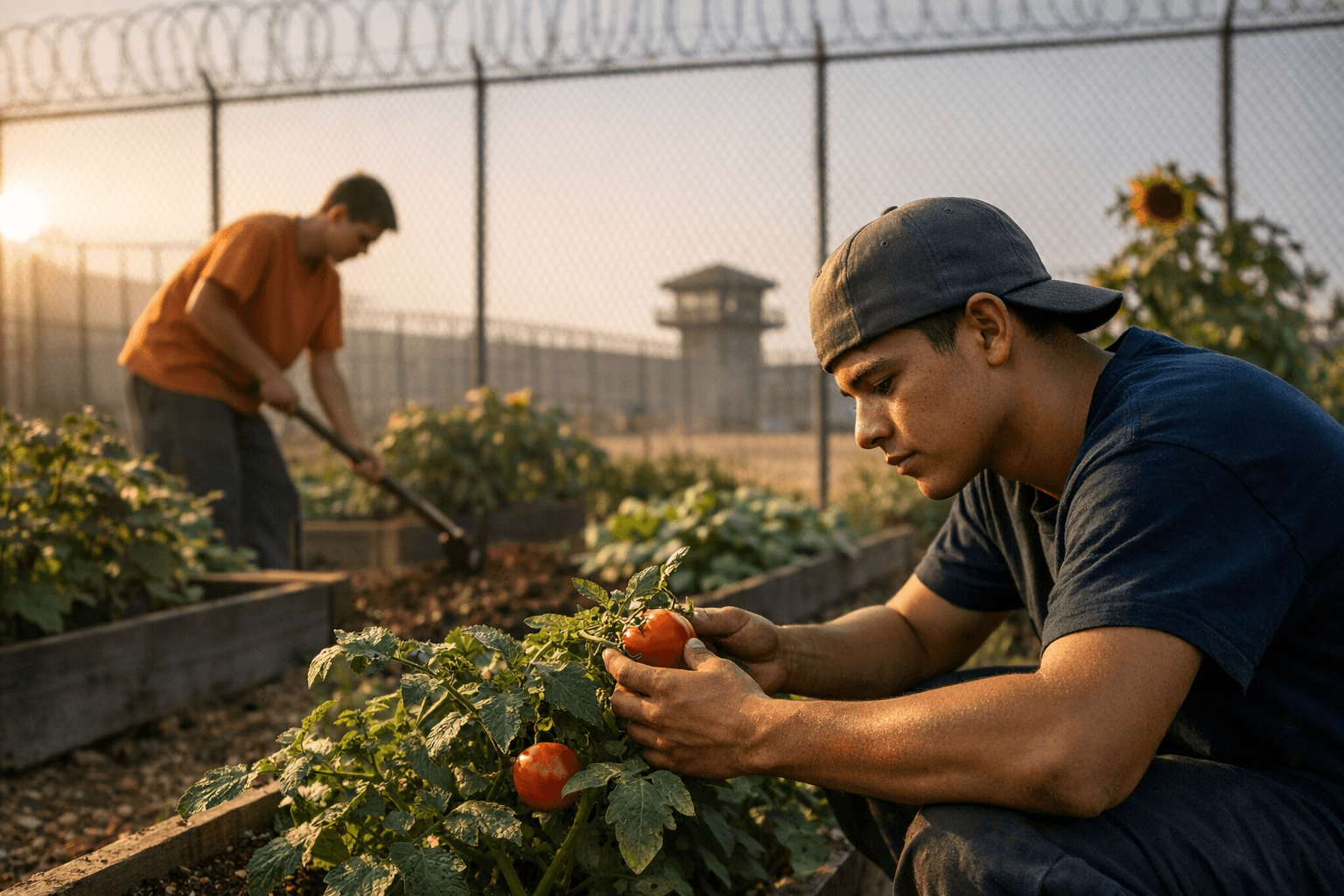
At Alice M. Worsley School on Fresno County’s Juvenile Justice Campus, students are not just tending plants. They are being asked to show up every day, stay consistent, and finish something they started, a lesson school leaders say matters as much as any academic subject.
The horticulture class is part of the campus Career Technical Education program and is built around responsibility from start to finish. Students manage their own gardens, and school officials say that simple act is meant to mirror the habits they will need after detention, whether they go into work, further schooling, or another structured setting.
What the class is trying to change
Principal Nick Moreno says many students arrive having never had something of their own that required daily care and follow-through. In that environment, a garden becomes more than a classroom project, it becomes a way to practice ownership, patience and accountability outside traditional academics.
That is why the school frames the class as rehabilitation and opportunity, not decoration. Students are learning how to care for living things, but they are also building the kind of persistence that can translate into job performance, school attendance and personal stability once they leave the juvenile system.
One student, Josiah, said the program has taught him resilience, patience and assertiveness, and he described the garden as something to look forward to each day. That reaction is part of what school staff say they hope to see: students beginning to connect effort with progress, and responsibility with a sense of control over their own futures.
Moreno has said the goal is to give students enough skills to find employment in the field, or at least leave with stronger self-confidence and the belief that they can succeed at what they choose to do. In a juvenile setting, that is a measurable aim, not just a feel-good one. It is about whether students can carry structure, follow-through and self-discipline into the next stage of their lives.
A small campus with a long institutional footprint
The class sits inside a much larger county system. Fresno County says the Juvenile Justice Campus provides state-mandated educational services to minors, and that the curriculum includes all courses needed for high school graduation. Students who meet requirements receive a Fresno County Office of Education diploma, and GED preparation is also available.
Alice M. Worsley School is an accredited juvenile court school, and county materials say it has maintained WASC accreditation for more than 20 years. That matters because it shows the campus is not operating as an informal program on the side of detention. It is a formal school with academic expectations, credentialing standards and a long record of institutional oversight.
The school profile lists Nick Moreno as principal. California Department of Education records show enrollment at 75 students, while EdData lists 2024-25 enrollment at 79 and says the school opened on January 1, 1964. Those numbers underscore how small and individualized the setting is compared with a traditional high school. In a campus that size, a student’s garden project can be watched closely, corrected quickly and tied directly to daily behavior.
How the garden connects to work and college
The horticulture program is only one piece of the broader re-entry and workforce-preparation structure at the Juvenile Justice Campus. Fresno County Probation materials also list career technical education offerings in art and design and welding, showing that the county is trying to provide multiple hands-on pathways, not just one.
Fresno City College’s Juvenile Justice Program adds another layer. Working with Fresno County Office of Education and Fresno County Probation, it offers tuition-free dual-enrollment courses to Alice Worsley high school students. That means students can earn both high school credit and college credit while still on campus, giving them a direct academic bridge to life after detention.
The college says its Juvenile Justice Program is designed to support justice-impacted youth with counseling, mentoring, academic support and personal-growth opportunities. It also works with nonprofit Focus Forward on a Pipeline to Opportunity model that supports students from incarceration through college. For a county campus that serves students in a highly controlled setting, that pipeline is one of the clearest signs that the system is trying to build transitions, not dead ends.
Why the plants matter beyond morale
The most concrete proof that the program is being tied to real-world outcomes is what happens to the plants themselves. ABC30 reported that some of the students’ plants will be sold at a silent auction in May during a luncheon, with proceeds helping support school events and post-secondary scholarships.
That detail matters because it gives the work a public result. The garden is not just producing a sense of calm or a boost in morale, it is also contributing to funding that can support future education and school programming. In a place where the county is trying to reduce the odds of repeat system involvement, that connection between work, revenue and opportunity is exactly the kind of outcome officials can point to.
The bigger test will be whether more students leave the Juvenile Justice Campus with credentials, confidence and a concrete next step. But inside Alice M. Worsley School, the structure is already in place: coursework tied to graduation, GED preparation, dual enrollment, career technical training, and a horticulture class that asks students to prove they can care for something every day. In Fresno County’s juvenile system, that is what second chance education is supposed to look like.
This article was produced by Prism’s automated news system from verified source data, official records, and press releases, then run through automated quality and moderation checks before publishing. The system is built and supervised by the people who set the standards it runs under. Read our full AI policy.
Did this article answer your question?