Fresno foundation helps train future teachers, supports local schools
Fresno’s teacher pipeline starts with college students in local schools, not just credential programs. CTFF says its fellows gain paid field experience while helping Valley campuses staff expanded-learning programs.
A Fresno-grown pipeline
The clearest sign of Fresno’s teacher pipeline is not a policy memo or a staffing chart. It is college students stepping into local classrooms, tutoring groups, leading activities and learning the day-to-day work of school life before they ever become full-time teachers.
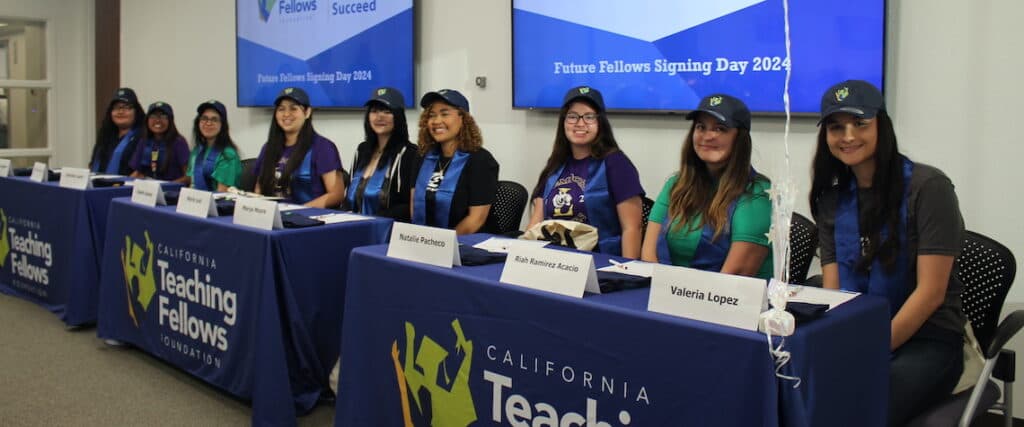
That is the role the California Teaching Fellows Foundation says it has filled in Fresno and across the Central Valley. The teaching fellows program began in 1999, the foundation was established in 2005, and CTFF says the idea grew out of Fresno State’s Kremen School of Education and Human Development, where faculty saw a need to give undergraduate students real pre-service work experience in education. Jacqueline Lopez, the foundation’s marketing and development manager, recently described the organization’s work with school districts and the way it connects future teachers to local schools.
CTFF presents itself as more than a scholarship group or a volunteer network. Its mission is tied directly to workforce development in a region where schools continue to juggle staffing needs, student demand and the long-term challenge of recruiting enough educators to stay in the profession.
How the program works in schools
CTFF says it hires college students interested in education and places them in expanded-learning programs at school districts and school sites. In that setting, fellows serve as role models, tutors and activity leaders for kindergarten through 12th grade students. The foundation says the experience gives each fellow more than 800 hours of paid field experience annually, plus 40 hours of paid professional development each year focused on California teaching standards and after-school best practices.
That mix matters because it gives aspiring teachers more than observation time. It puts them in active roles with students, under the pressures and rhythms of real school settings, while also giving districts extra help in programs that often need dependable adult staffing after the final bell. In practice, the model works as both training and service: it prepares future educators while supporting students who need academic and social support now.
CTFF says it is also recruiting college students across the Central Valley for these roles. The foundation’s own materials say the work is centered on expanded-learning programs, which means the pipeline reaches beyond a single classroom and into the wider school day where many campuses depend on consistent, trained support.
Why the need is so large
The foundation’s pitch lands in a statewide teacher shortage that is still shaping local schools. CTFF points to a warning from the Commission on California Teacher Credentials that California may need another 100,000 teachers to keep pace with teacher quality, diversity and classroom ratios.
That larger shortage helps explain why organizations like CTFF matter in Fresno County. Schools do not just need more certified teachers someday. They need a steady flow of people who are being trained now, are getting used to school culture now, and are deciding whether to stay in education long enough to fill hard-to-staff roles later.
The scale of the organization suggests the model is not just symbolic. Fresno State said in 2020 that CTFF organized internships and other activities for undergraduates studying to become teachers at eight Valley universities. ABC30 reported in 2016 that more than 1,800 fellows attended special development training at Fresno State. In 2021, the nonprofit anticipated hiring more than 500 positions for the school year across more than 50 school districts in Fresno, Merced, Madera, Kings and Tulare counties.
A nonprofit profile based on CTFF data later said about 2,000 teaching fellows were helping more than 30,000 students each month during the latest fiscal year. Taken together, those figures suggest a regional operation with real reach, not a small campus club. The strongest reading is that CTFF is helping where districts feel the pressure most, especially in support-heavy settings that need trained adults in front of students every day.
Scholarships that feed the pipeline early
CTFF is not waiting until college students are already deep into a credential program. Its scholarship track starts in high school. The foundation says the program recruits seniors who maintain at least a 3.5 GPA, selects 25 students each year and gives them a four-year, enriched cohort experience as they complete degrees and credentials.
That scholarship model matters in a county where tuition, living costs and student debt can push future teachers away from the profession before they begin. CTFF says the annual gala exists to raise funds for the mission and the scholarship program, which ties the event directly to the organization’s long-term workforce goals.
In other words, the foundation is trying to solve the teacher shortage at both ends. It supports students early enough to keep them in the education pipeline, and it gives current college students enough paid experience to see themselves in real classrooms across the Valley. That approach does not replace district hiring, but it does strengthen the local bench of future teachers.
What the gala supports and why the date matters
The foundation’s annual gala is scheduled for Friday, September 25, 2026, at Fort Washington Country Club in northeast Fresno. For anyone looking to support the organization, that event is the most visible public reminder that the teacher pipeline is built with private fundraising as well as public school partnerships.
The location also says something about the foundation’s local footprint. Fort Washington Country Club sits in northeast Fresno, but the work CTFF describes reaches far beyond one neighborhood. Its fellows are placed across the Central Valley, in districts and school sites that stretch through Fresno, Merced, Madera, Kings and Tulare counties.
That is what makes the story bigger than a fundraiser. CTFF is building a workforce pipeline that starts with high school seniors, continues through college, and ends with trained adults inside K-12 schools. For Fresno County, that means the foundation is not just helping future teachers find a path into the profession. It is helping local schools hold the line until those future teachers are ready to lead a classroom of their own.
This article was produced by Prism’s automated news system from verified source data, official records, and press releases, then run through automated quality and moderation checks before publishing. The system is built and supervised by the people who set the standards it runs under. Read our full AI policy.
Did this article answer your question?