Fresno homelessness count drops under new interview-based method
Fresno’s new survey-based homelessness count fell to 3,254, but officials say the method changed so much that year-to-year comparisons are no longer clean.
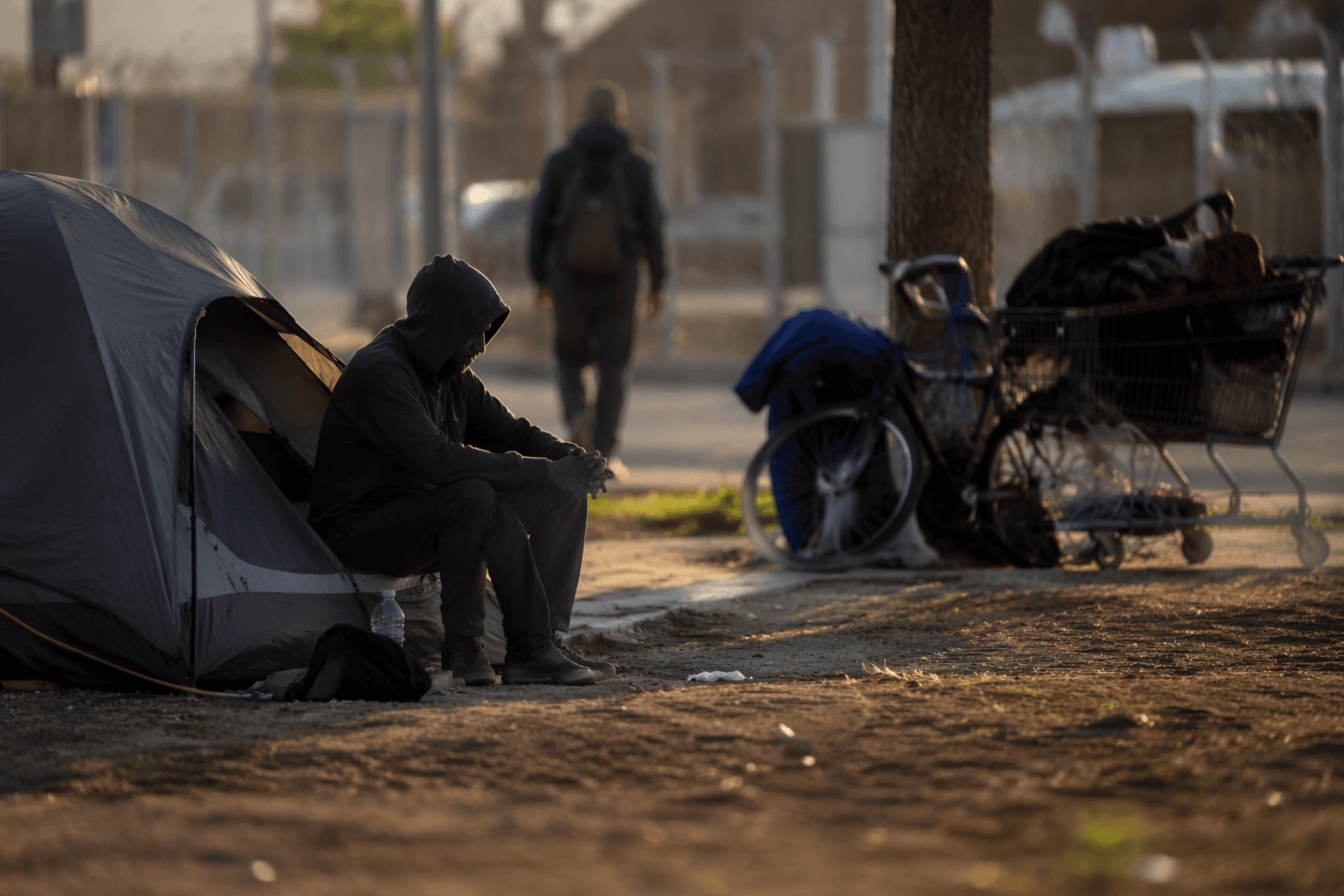
Fresno’s latest homelessness number dropped sharply under a new interview-based method, but the bigger issue in Fresno County is whether the region is measuring the same problem the same way. The Fresno-Madera Continuum of Care says its 2026 point-in-time count is built on voluntary interviews, not the old drive-by street sweep, and officials warn the new total should not be lined up directly against prior years.
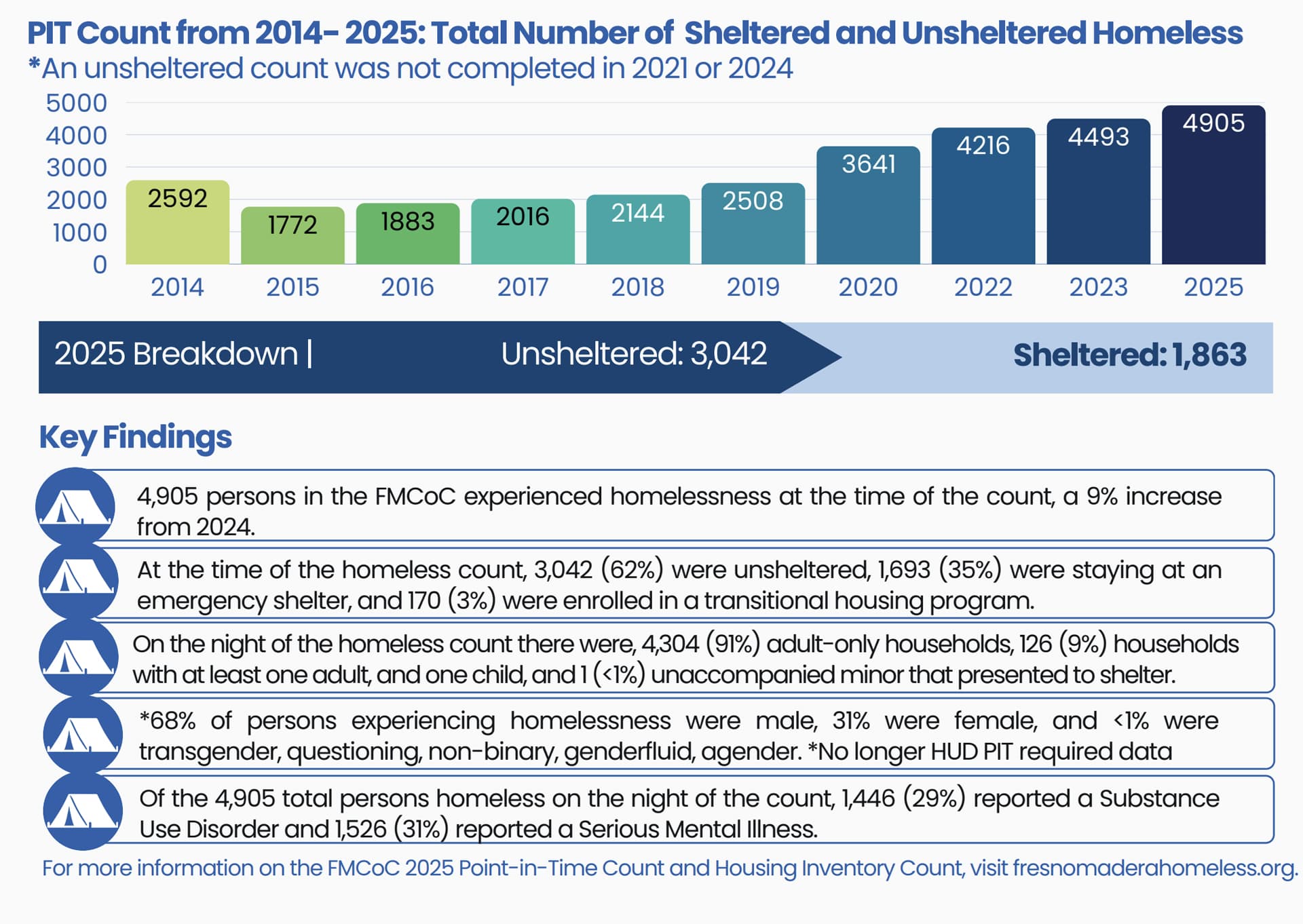
The preliminary 2026 results show 3,254 people experiencing homelessness in Fresno and Madera counties, including 1,619 unsheltered people and 1,635 sheltered people. A separate report from the June 9 press conference put the preliminary total at 3,250, with the same sheltered and unsheltered breakdown. Either way, the figure is far below the 2025 HUD-certified count of 4,905 and the 2023 total of 4,493, but the continuum says the change in method makes a simple trend line misleading.
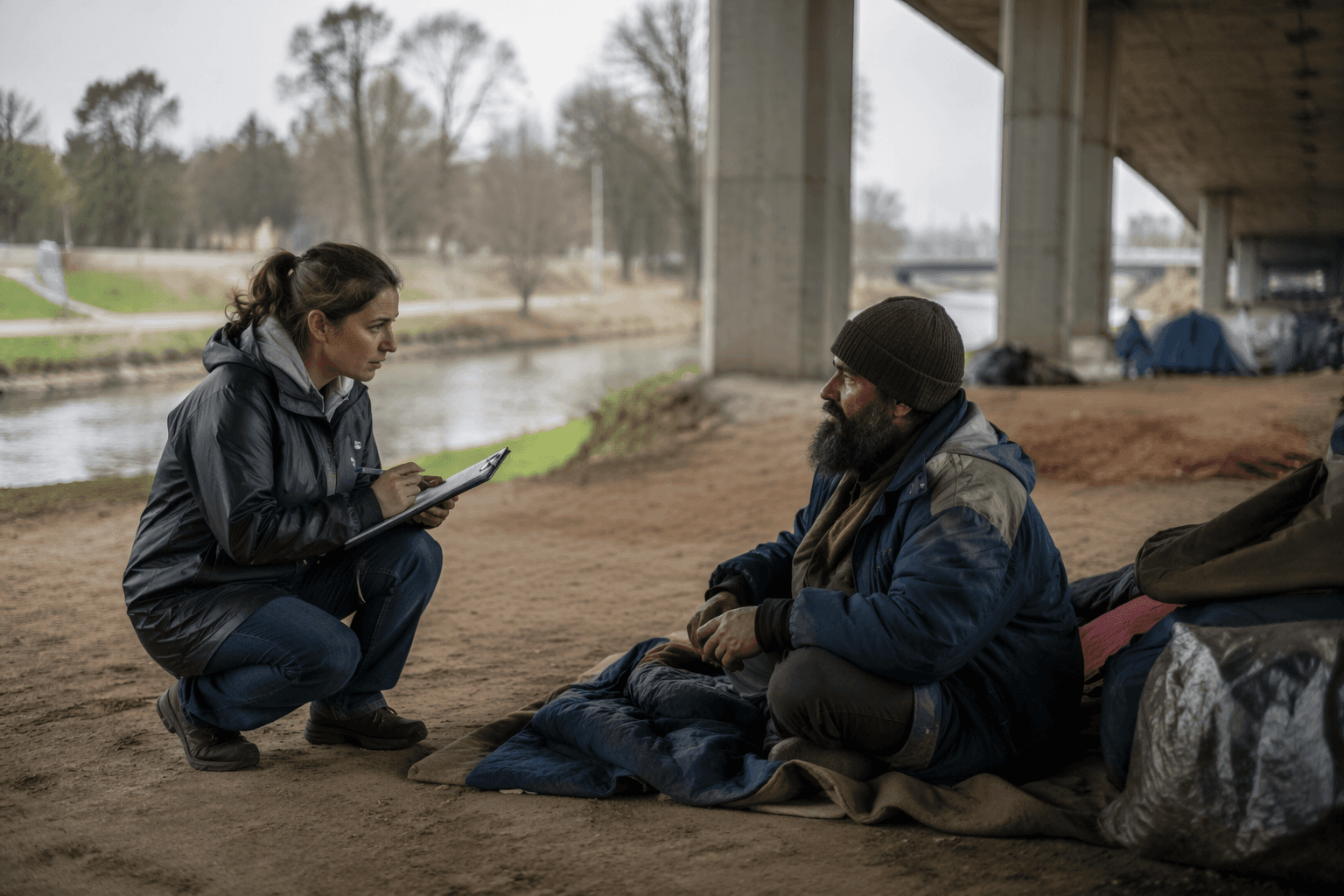
That methodological shift matters because federal rules shape how the count is done. HUD says point-in-time counts are taken on a single night in January, with sheltered homelessness counted every year and unsheltered homelessness counted every other year. The Fresno-Madera Continuum of Care’s point-in-time page now lists the 2026 preliminary summary alongside 2025, 2024 and 2023 documents, while the Fresno County data hub still tracks homelessness counts from 2015 through 2024.
The new approach asks trained volunteers to gather information about why people became homeless and what barriers they face, including substance use, mental health challenges and domestic violence. The continuum says that should improve service planning and reduce double-counting, but there is a built-in tradeoff: people who decline to answer are not included in the count at all.
That leaves local officials with a difficult public-accountability question. If the number falls, is the region seeing fewer people on the street, or just a narrower snapshot of the same crisis? Mayor Jerry Dyer said the city has effectively eliminated encampments, which he defined as 10 or more people in one location for 10 or more days, even as homelessness remains. Nathan Magsig said the deeper dive should help local organizations adjust services as needs change. Laura Moreno, the continuum’s executive director, said the change should improve the data despite its limitations.

The count also carries real consequences beyond statistics. Local agencies use it to help qualify for funding, measure whether city and county policies are working, and steer shelter and outreach decisions. City officials say that broader response includes Project Off-Ramp, HART outreach and the One Fresno housing strategy, with Project Off-Ramp Phase One providing shelter for more than 1,750 people and more than 10,500 individuals served since 2021 under Dyer’s homelessness focus. At the national level, HUD reported 745,652 people homeless on a single January night in 2025, including 266,320 living on the street, a 3% decline from 2024. In Fresno, the argument is less about whether the count changed than whether residents can trust it to explain what is actually changing on the ground.
This article was produced by Prism’s automated news system from verified source data, official records, and press releases, then run through automated quality and moderation checks before publishing. The system is built and supervised by the people who set the standards it runs under. Read our full AI policy.
Did this article answer your question?


