Fresno State study finds Central California DUI deaths twice state average
Central California’s DUI death rate hit 6.05 per 100,000 in 2023, and Fresno County’s crash data show repeat offenders, speed and late-night danger are colliding.

Fresno County is still paying for a drunk-driving problem that kills at more than twice California’s rate, and the numbers now point to the hours, habits and corridors where the danger concentrates.
Fresno State researchers said Central California’s fatal DUI crash rate reached 6.05 deaths per 100,000 people in 2023, compared with California’s 2.62. The yearlong project, backed by nearly $140,000 from the California Office of Traffic Safety, reviewed Fatality Analysis Reporting System data from 2010 through 2023 across 12 Central California counties: Calaveras, Fresno, Kern, Kings, Madera, Mariposa, Merced, San Benito, San Joaquin, Stanislaus, Tulare and Tuolumne.
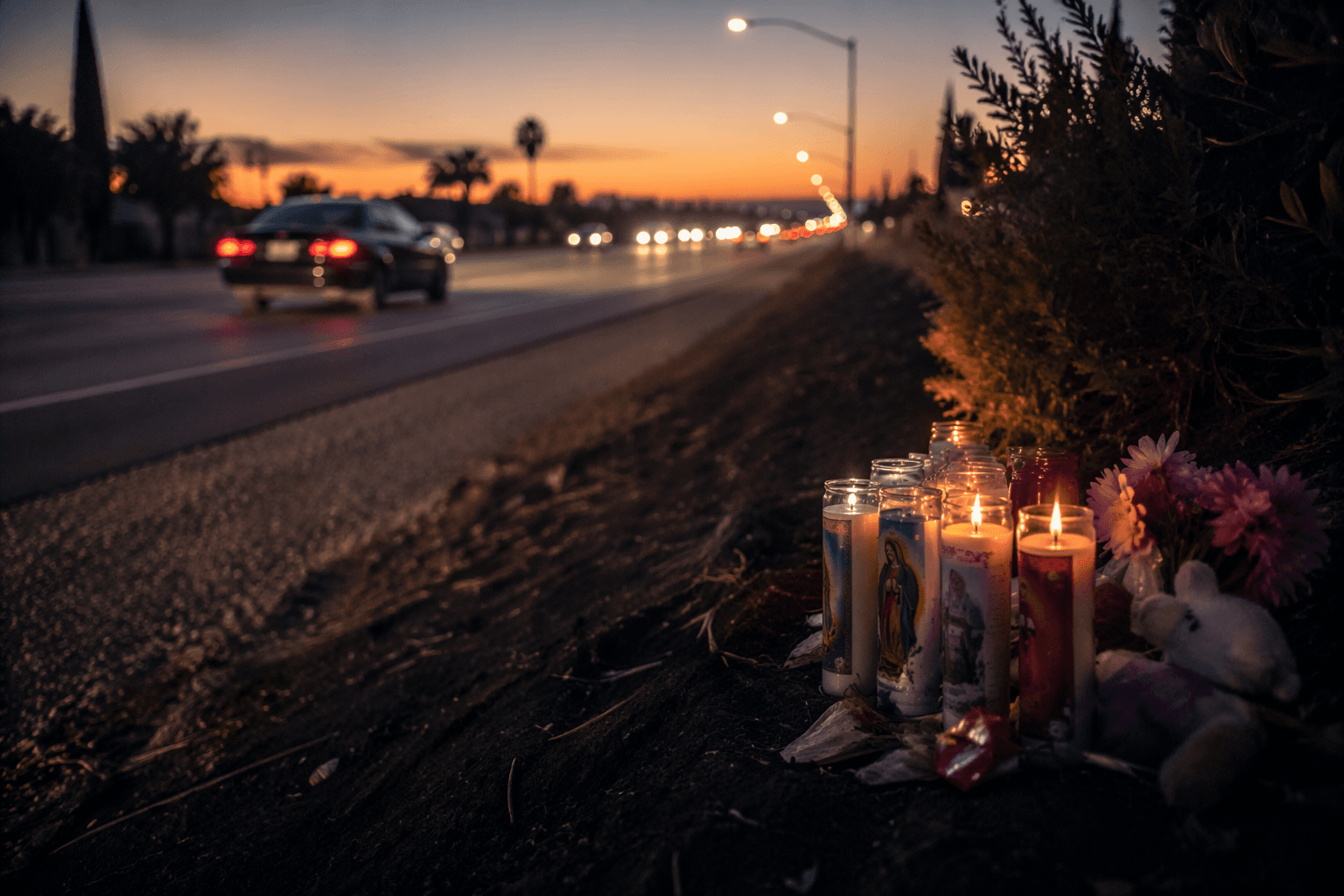
The study’s strongest warning for local leaders is not just the regional average. It is the pattern behind it. Researchers found the riskiest stretch ran from Friday through Sunday, most often between 9 p.m. and 4 a.m. About half of DUI crashes involved drivers with prior traffic violations, a sign that repeat behavior is driving many of the deadliest cases. About 34% of DUI drivers were speeding, and their average speed was about 23 miles per hour over the limit.
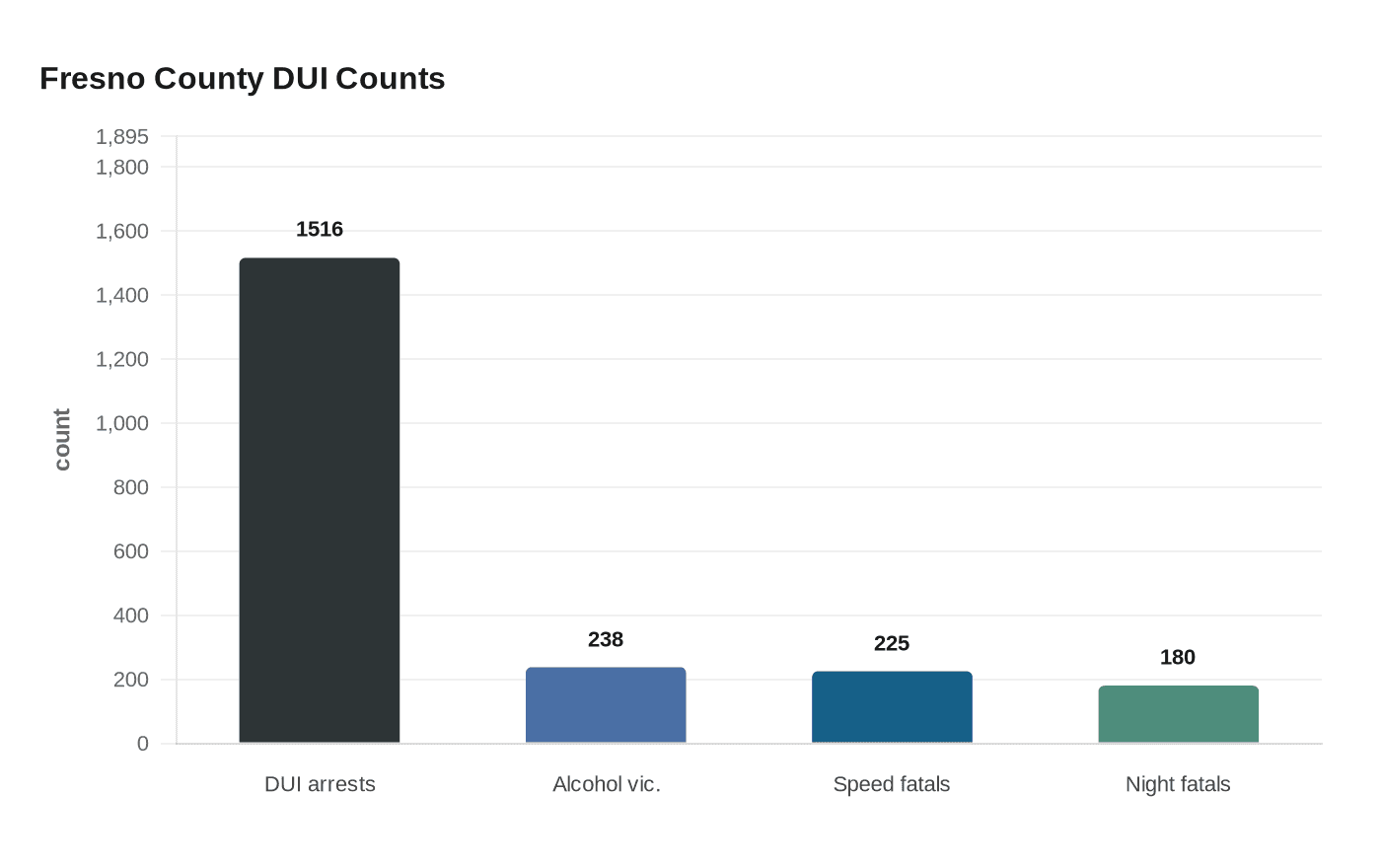
That finding lands hard in Fresno County, where the 2023 Office of Traffic Safety rankings listed 1,516 DUI arrests, 238 alcohol-involved victims killed or injured, 225 speed-related fatal and injury collisions, and 180 nighttime fatal and injury collisions between 9 p.m. and 2:59 a.m. The overlap between impaired driving, excess speed and late-night travel is already visible in the county’s own crash data.
The death of Jordan Galvez and Maddux Greene in east central Fresno put a human face on the statistics. The crash at Clovis Avenue and Shields Avenue in 2025 led to nine felony counts against Jagat Singh, including two murder counts. Court records reported he had already been convicted of DUI in 2023 and was on probation when the crash happened. For the families of Galvez and Greene, the study confirms what they said they had already lived.
Aly Tawfik, director of the Fresno State Transportation Institute, said some counties in the region may be seeing fatality rates triple or quadruple those of other California counties, including some larger cities. Alyssa Kennett, director of the Central California Public Health Consortium, said the long-term goal is to understand why the crashes are happening and where they may happen more in the future.
That work now moves into practice. Researchers are building a predictive analytics model, and a regional traffic safety task force with health departments, law enforcement, emergency medical services and community groups is reviewing the findings. For Fresno County, the test is whether those numbers lead to tougher intervention on repeat offenders, smarter enforcement at night and safer roads where the deadliest crashes keep happening.
This article was produced by Prism’s automated news system from verified source data, official records, and press releases, then run through automated quality and moderation checks before publishing. The system is built and supervised by the people who set the standards it runs under. Read our full AI policy.
Did this article answer your question?