Fresno State Women’s Swim Breaks Top 25, What It Means Locally
Fresno State’s women’s swim team earned its first-ever top-25 national ranking on January 3, 2026, a milestone that signals rising program quality and local athletic pride. This ranked list explains the key people, program strengths, and the economic and community impacts Fresno County residents should expect.
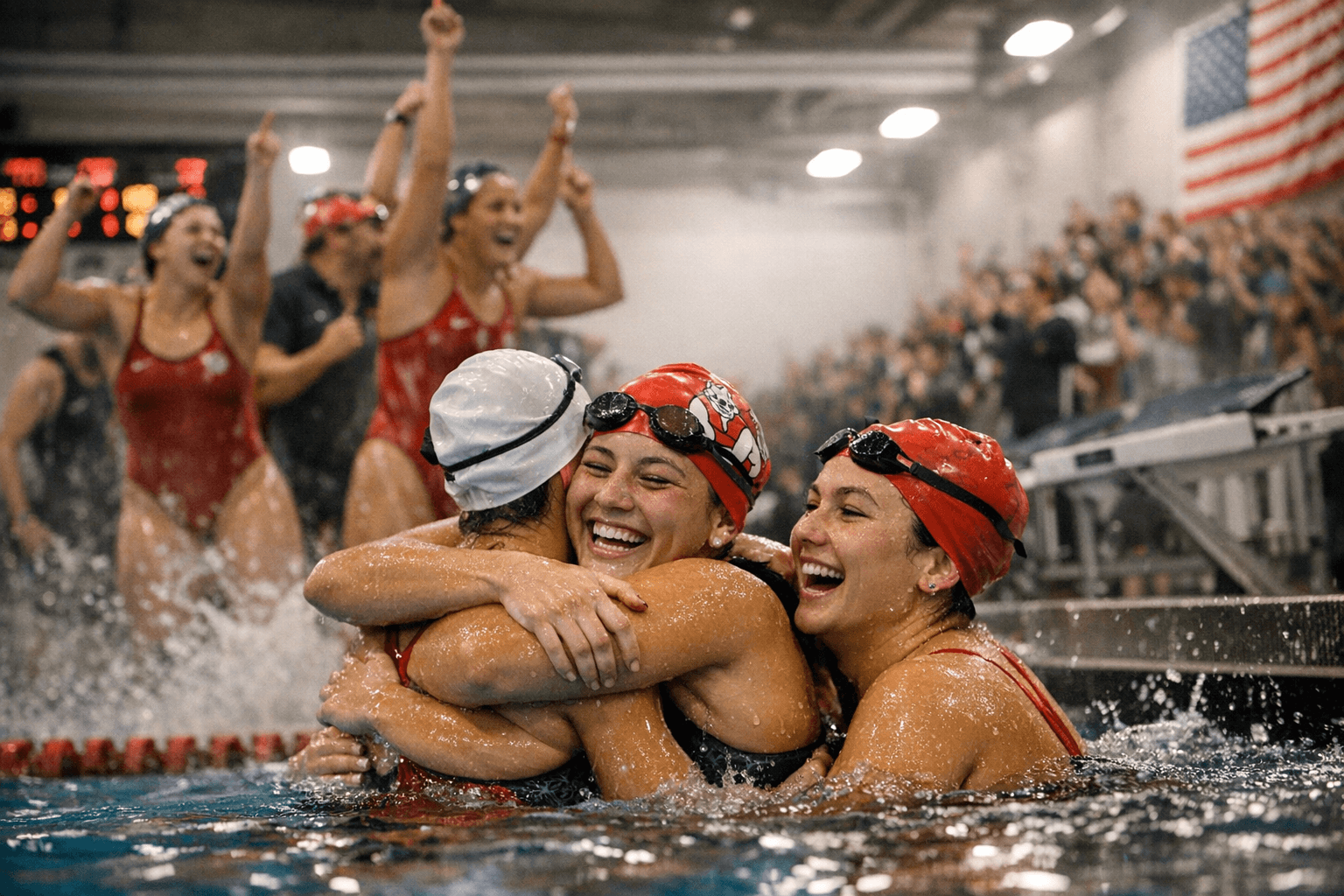
1. Top-25 National Ranking
Fresno State entering the top 25 for the first time on Jan. 3, 2026 is a historic competitive milestone that validates multi-year investment in the program. For the community, a national ranking raises the university’s profile, which is correlated with increased media attention, alumni engagement, and potential modest boosts in out-of-area applications.
2. Coach Jeanne Fleck’s Leadership
Coach Jeanne Fleck is credited with building momentum and setting NCAA-level aspirations, providing strategic direction and culture change. Strong coaching leadership is a primary driver of sustained success and affects recruiting, retention, and donor confidence in athletic fundraising.
3. Mackenzie Miller Lung, Local Returnee
Clovis East alum Mackenzie Miller Lung returned to the Valley after competing at BYU; her homecoming provides local role-model visibility and competitive experience. Transfers like Miller Lung demonstrate Fresno State’s ability to attract proven talent, which strengthens short-term performance and long-term recruiting narratives.
4. Jenna Pulkkinen’s Contributions
Jenna Pulkkinen is one of the swimmers highlighted for helping build the program’s depth and competitive results. Individual performers of her caliber raise relay prospects and make conference scoring more likely, which in turn influences meet attendance and local media interest.
5. Aliz Kalmar’s Role
Aliz Kalmar is another key swimmer contributing to the team’s upward trajectory, adding depth across events and race situations. Consistent performers like Kalmar help the team convert dual-meet wins into measurable progress toward conference standings and postseason qualification.
6. Depth in the Breaststroke Events
The roster’s depth in breaststroke events is a distinct competitive edge, as multiple scorers in one stroke can translate to conference titles and NCAA heat placements. Stroke-specific depth improves relay flexibility and multiplies scoring opportunities at championship meets.
7. Possibility of Scoring at the NCAA Level
Coaches and athletes have described the possibility of scoring at the NCAA championships, a step from presence to podium contention; NCAA scoring typically rewards top-16 finishes across events. Scoring at nationals would be a breakthrough metric that elevates recruiting leverage and national perception.
8. Record-Challenging Ambitions
The team is pursuing record-challenging goals, seeking to lower program and conference marks, benchmarks that quantify progress. Pursuit of records signals higher performance standards that tend to attract elite-level recruits and increase spectator interest.
9. Program Momentum and Culture Shift
Fresno State’s momentum represents a cultural shift from regional competitor to national contender, driven by recruitment, coaching, and athlete development. Culture change is self-reinforcing: success attracts resources and talent, which in turn produce more success.
10. Local Recruiting Pipeline (High Schools)
The program’s ties to local high schools, exemplified by Clovis East, strengthen the county’s athlete development pipeline and keep top talent rooted in Fresno County. Strong local recruitment reduces travel costs for families and can bolster community pride and attendance.
11. Transfer Market Impact
The BYU-to-Fresno State transfer case shows the program’s appeal in the transfer market; attracting transfers accelerates competitiveness. In the post-transfer portal era, timely recruitment of experienced athletes can be a cost-effective path to quick performance gains.
12. Facilities and Training Resources
Competitive performance reflects the quality of aquatic facilities and training infrastructure; upgrades can have spillover benefits for community programming and local swim clubs. Facility investments also create modest construction and operations employment and recurring revenue through rentals and events.
13. Strength and Conditioning Support
Strength, conditioning, and sports-science support underpin faster swims and injury reduction, making ancillary staff investments critical. These support systems also contribute to athlete longevity and academic balance, improving graduation rates tied to university metrics.
14. Academic Support and Student-Athlete Outcomes
Emphasizing academics ensures student-athletes meet graduation and retention targets, protecting institutional eligibility and reputation. Strong academic outcomes help maintain Title IX compliance and preserve the broader economic value of athletic programs to the university.
15. Title IX and Women’s Sports Visibility
This milestone adds to visibility for women’s sports on campus, reinforcing Title IX objectives and potentially influencing resource allocation. Increased attention to women’s athletics can drive more equitable funding and broader community engagement.
16. Local Economic Impact of Success
A higher-ranked team can increase meet attendance and local spending on hotels, dining, and retail during larger invitationals and championships. Even modest upticks in visitor dollars per meet accumulate, especially if the program hosts regional events.
17. Alumni Engagement and Fundraising Potential
Athletic milestones tend to stimulate alumni donations and booster club activity; a top-25 ranking is a tangible narrative for fundraising campaigns. Improved fundraising supports scholarships, travel budgets, and facility upgrades that perpetuate success.
18. Youth Swimming and Club Growth
Visibility from a top-25 program inspires enrollment in youth swim programs and high school teams across Fresno County, strengthening the long-term talent pipeline. Greater youth participation supports local swim clubs economically through memberships and meets.
19. Media Coverage and Market Implications
Local and regional media coverage of the ranking increases the university’s brand value and can translate into broader fundraising and enrollment marketing opportunities. Media attention also benefits local advertisers and sponsors associated with the team.
20. Conference Play Stakes
Improved national standing raises the stakes in conference play, with potential impacts on scheduling, travel budgets, and strategic preparation for league championships. Conference success is often the proximate path to NCAA qualification and scoring opportunities.
21. Long-Term Program Trajectory
Sustaining a top-25 presence requires institutional commitment across recruiting, scholarship allocation, and operational budgets, factors that determine whether this is a one-off milestone or a new normal. Long-term trajectory affects municipal perceptions of the university and its role in community identity.
22. Regional Rivalries and Competitive Landscape
The ranking reshapes regional rivalries and recruiting competition with nearby programs, influencing where top prospects choose to swim. Strong local rivalries can increase meet attendance and media interest, benefiting the county’s sports economy.
23. Scholarship Allocation and Financial Planning
Athletic scholarships and financial aid strategies will be central to maintaining competitiveness, requiring careful budget planning by athletic administrators. Scholarship decisions have direct implications for roster composition and the academic mission balance.
24. Performance Measurement and Analytics
Adoption of data-driven training and race analytics supports marginal gains that separate top-25 teams from others; investment in analytics yields competitive returns. Analytics also inform coaching decisions and resource allocation, improving cost-effectiveness.
25. What Fresno Residents Should Watch Next
Residents should track conference meets and the NCAA qualification period this season to gauge whether the ranking translates into postseason scoring and larger events hosted locally. The Jan. 3, 2026 ranking is the opening data point; subsequent performances will determine economic and community impact over the next 12–24 months.
This article was produced by Prism’s automated news system from verified source data, official records, and press releases, then run through automated quality and moderation checks before publishing. The system is built and supervised by the people who set the standards it runs under. Read our full AI policy.
Did this article answer your question?