Fresno studies toll and carpool lanes for busy highways
Fresno's highway study pits faster trips against higher costs, with toll lanes promising the most mobility but also the biggest price tag on SR 41, 168 and 180.
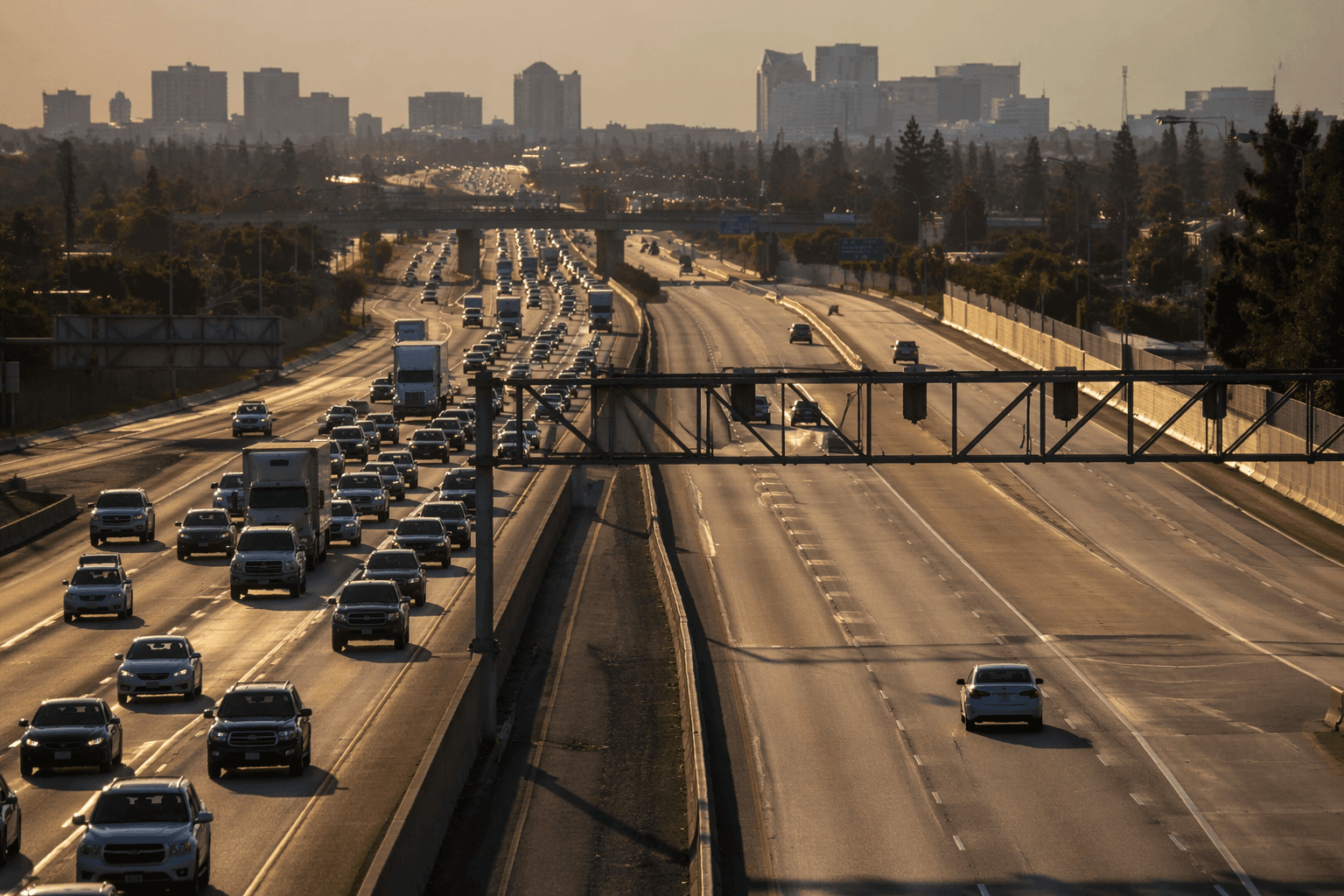
Fresno’s next freeway debate is really a question of who pays, who saves time, and which tradeoffs the region is willing to live with. A managed-lanes study for the Fresno-Clovis area says toll lanes, carpool lanes, truck-only lanes, and lane conversions would each change congestion on the valley’s busiest corridors in different ways, with no single option solving every problem cleanly.
What the study is testing
The Fresno Council of Governments is looking at managed lanes on State Route 41, State Route 168, and State Route 180, while also pointing back to Caltrans’ State Route 99 corridor plan. In Fresno COG’s framing, managed lanes include express lanes, HOV lanes, HOT lanes, clean air vehicle lanes, and park-and-ride lanes, all aimed at reducing congestion, lowering vehicle miles traveled, improving safety, and helping the region meet federal air-quality standards in a non-attainment area.
That matters in a county where the Fresno-Clovis metropolitan area has more than 700,000 residents and depends on four major corridors to move commuters, freight, and goods across the core of the Valley. Fresno COG’s materials make clear that this is not a construction project yet. It is a planning process built around public outreach, modeling, and board review.
What would help drivers, and what would cost them
The clearest pocketbook-and-power divide in the study is between speed and price. The strongest travel-time gains came from adding toll or carpool lanes, which would move the most people and vehicles through the corridors and keep trips fastest. Toll lanes also scored well on safety and could create a maintenance funding stream, but they came with the highest price tag of the options being studied.
The emissions picture points in a different direction. The best air-quality result would come from converting existing lanes rather than adding new ones. That makes lane conversion the most aggressive policy tool in the group, because it can lower emissions without necessarily expanding the freeway footprint, but it also raises hard questions about taking space away from general traffic.
Truck-only lanes sit in a separate lane of the debate. Caltrans says managed lanes can rely on access control, vehicle eligibility, tolling, or combinations of those strategies, and its guidance notes that truck-only lanes have already been studied elsewhere in California, including a feasibility study on State Route 60 in Southern California. In Fresno, the concept now has a place in the modeling toolbox, but it remains a study idea rather than a buildout plan.
The cost, the scale, and the time frame
A Fresno Bee update on June 12 reported that a study prepared for Fresno COG found it feasible to add new toll lanes on highways 41, 180 and 168. The phased proposal would add 25.1 miles of toll lanes by 2049 at an estimated cost of about $2.54 billion.
Those numbers explain why this debate is as much about finance as it is about traffic. A $2.54 billion program would demand a long runway, multiple approvals, and a durable funding strategy. Even with feasibility on paper, the proposal would still have to clear the realities of politics, environmental review, and regional priorities before any shovels could hit the ground.
Fresno COG’s own request for proposals shows how seriously the agency has been building the case behind the scenes. The managed-lanes study was formally launched on January 14, 2025 and funded through SB1 with $210,572 set aside for feasibility work. That is a modest planning budget compared with the scale of the proposed buildout, but it shows the region is still in the information-gathering phase.
Why Fresno’s model matters
One reason this study has more weight than a generic traffic discussion is that Fresno COG has upgraded the technical tools behind it. The agency updated its transportation activity-based model in October 2024 and again in November 2025, adding managed-lanes and truck-restriction capabilities.
That means Fresno now has a better way to test how toll lanes, carpool lanes, truck restrictions, and lane conversions might affect commuting patterns, freight movement, and emissions across the region. In a county where every freeway decision ripples into Fresno, Clovis, and surrounding communities, the modeling matters because it helps separate wishful thinking from what the network can actually support.
Who decides, and how residents can still shape it
Fresno COG is a voluntary association of 16 local governments that was formalized through a Joint Powers Agreement in 1969. That structure matters because it puts the managed-lanes issue in the hands of city and county officials working through a regional body, not a single mayor, supervisor, or state agency acting alone.
The process has also included public outreach. Fresno COG said a public survey and a virtual community meeting were part of the managed-lanes effort, and a managed-lanes public meeting was scheduled for February 18, 2026 at 6 p.m. That keeps the proposal squarely in the planning phase, where residents can still push on the hardest questions: whether tolls would hit some drivers harder than others, whether carpool incentives would meaningfully change behavior, and whether truck-focused lanes would improve freight movement enough to justify the cost.
For Fresno County, the practical choice is not whether congestion exists. It is whether the region wants to pay for faster trips through tolling, reserve space for higher-occupancy travel, prioritize freight, or convert existing lanes to chase emissions reductions. The study shows each option carries a different winner and a different loser, and any real decision will have to be made in public, by the institutions that control the region’s freeway future.
This article was produced by Prism’s automated news system from verified source data, official records, and press releases, then run through automated quality and moderation checks before publishing. The system is built and supervised by the people who set the standards it runs under. Read our full AI policy.
Did this article answer your question?


