Mayor Dyer Endorses Citizen-Led Transportation Tax to Fix Fresno Streets
Mayor Jerry Dyer endorsed a citizen-led transportation tax at a Fresno Area Hispanic Foundation breakfast to address $1.2 billion in deferred street repairs and improve local pavement conditions.
Mayor Jerry Dyer publicly endorsed a citizen-led transportation tax proposal at the Fresno Area Hispanic Foundation breakfast on Jan. 21, 2026, framing the measure as a practical response to the city’s backlog of street and sidewalk repairs. The proposal, backed by the coalition Transportation for All, would focus on local streets and aim to raise Fresno’s pavement condition index to the city target of PCI 70.
Dyer presented the endorsement in a state-of-the-city style address that stressed deferred maintenance totals of roughly $1.2 billion for streets and about $300 million for sidewalks within Fresno, figures he contrasted with a $1.5 billion estimate for countywide deferred street and sidewalk maintenance. Those numbers underpinned his call for renewed or replacement Measure C language that prioritizes neighborhood streets rather than larger regional projects alone.
A citizen initiative requires a different pathway to the ballot than a government-sponsored tax. Organizers will need roughly 22,000 valid signatures to qualify, and if placed before voters the measure would need only a simple majority to pass. That threshold contrasts sharply with the two-thirds vote required for a tax placed on the ballot by the city or other government bodies. The signature and voting rules shape strategy: citizen proponents argue that the simple-majority route is more attainable, while city officials weigh the risk of competing measures and voter confusion.
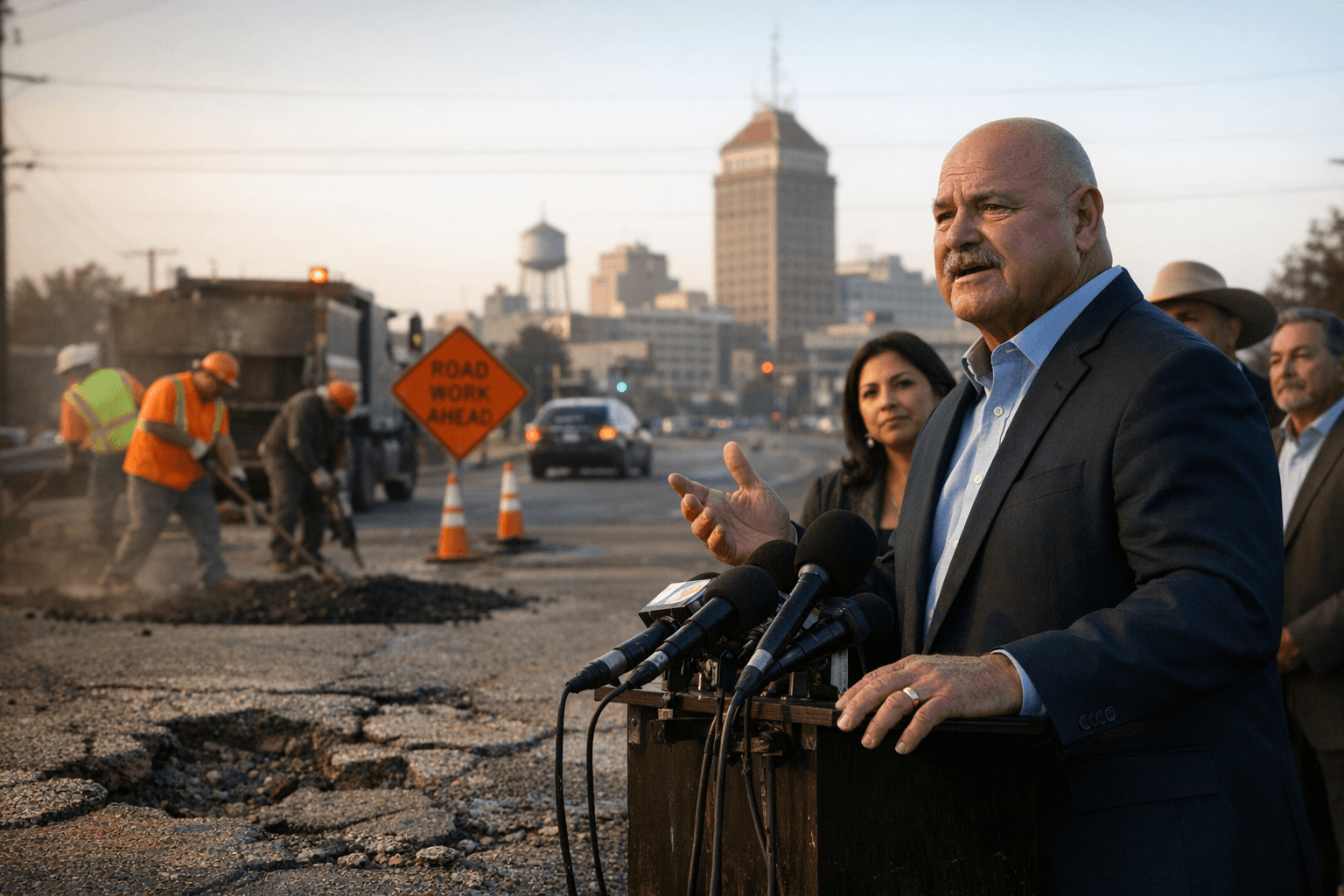
Dyer said he prefers a single ballot measure and indicated willingness to work with different groups to try to unify proposals, signaling the administration’s interest in avoiding fractured campaigns that could dilute support. The mayor’s public backing lends political heft to Transportation for All, and could influence fundraising, volunteer recruitment, and endorsements ahead of signature gathering.
Beyond transportation funding, Dyer used the breakfast to highlight other municipal priorities and projects, including lower crime trends, the Beautify Fresno initiative, the Youth Job Corps, downtown investments, ongoing infrastructure projects and preliminary talks about a potential soccer stadium. Local elected officials and candidates attended the event, underlining the political salience of a tax campaign that would touch neighborhoods across Fresno.
For residents, the immediate implications are concrete: if organizers gather the necessary signatures and voters approve the measure, dedicated sales tax revenue could be steered toward pothole repairs, sidewalk fixes and efforts to lift PCI scores. The choice of a citizen-led path also changes campaign dynamics by lowering the vote threshold but requiring an intensive signature drive. Expect activists, neighborhood groups and the mayor’s office to be active in the coming weeks as they try to shape a single, unified measure that can win at the ballot box and begin addressing years of deferred maintenance.
This article was produced by Prism’s automated news system from verified source data, official records, and press releases, then run through automated quality and moderation checks before publishing. The system is built and supervised by the people who set the standards it runs under. Read our full AI policy.
Did this article answer your question?


