Sanger schoolhouse turned restaurant preserves century-old Fresno County history
A Sanger schoolhouse built in 1890 now pays for its own preservation, serving diners, students and event guests just off Highway 180. Its old classrooms, auditorium and playground still shape the business.
A landmark that still has a job
The School House Restaurant and Tavern survives because it is more than a museum piece. In Sanger, the century-old Frankwood School has found a second life as a working restaurant, and that business model is what keeps the building standing, active and maintained.
That is the economics of preservation in Fresno County: a historic property is far more likely to endure when it generates revenue. At 1018 S. Frankwood Ave., about 20 miles east of Fresno and roughly 15 to 20 minutes from the city on Highway 180, the schoolhouse now earns its keep through dinner service, private events and culinary training. The result is a rare local example of adaptive reuse that protects history without locking it behind a rope.
From rural school to dining destination
Frankwood School began in 1890 and was rebuilt in 1921 into the brick schoolhouse that still defines the site today. It kept serving students until 1958, when it was absorbed into the Centerville School District along with six other schools. That ended its original purpose, but not its local importance.
The building later became a restaurant known as the Sherwood Inn, which one account says operated for close to 30 years. Many longtime residents still associate the property with that era, when the site functioned as a western steakhouse and saloon. By the time Ryan Jackson and Michelle Jackson stepped in, the schoolhouse had sat vacant for nearly 10 years.
Local accounts say Kelly Brooks bought the property in October 2010 to keep it from being demolished. About two years of remodeling followed, and the Jacksons opened School House Restaurant and Tavern in January 2012. That sequence matters: without a buyer willing to see value in the structure itself, the schoolhouse could easily have been replaced by something far less memorable.
Inside the building, the history is still visible
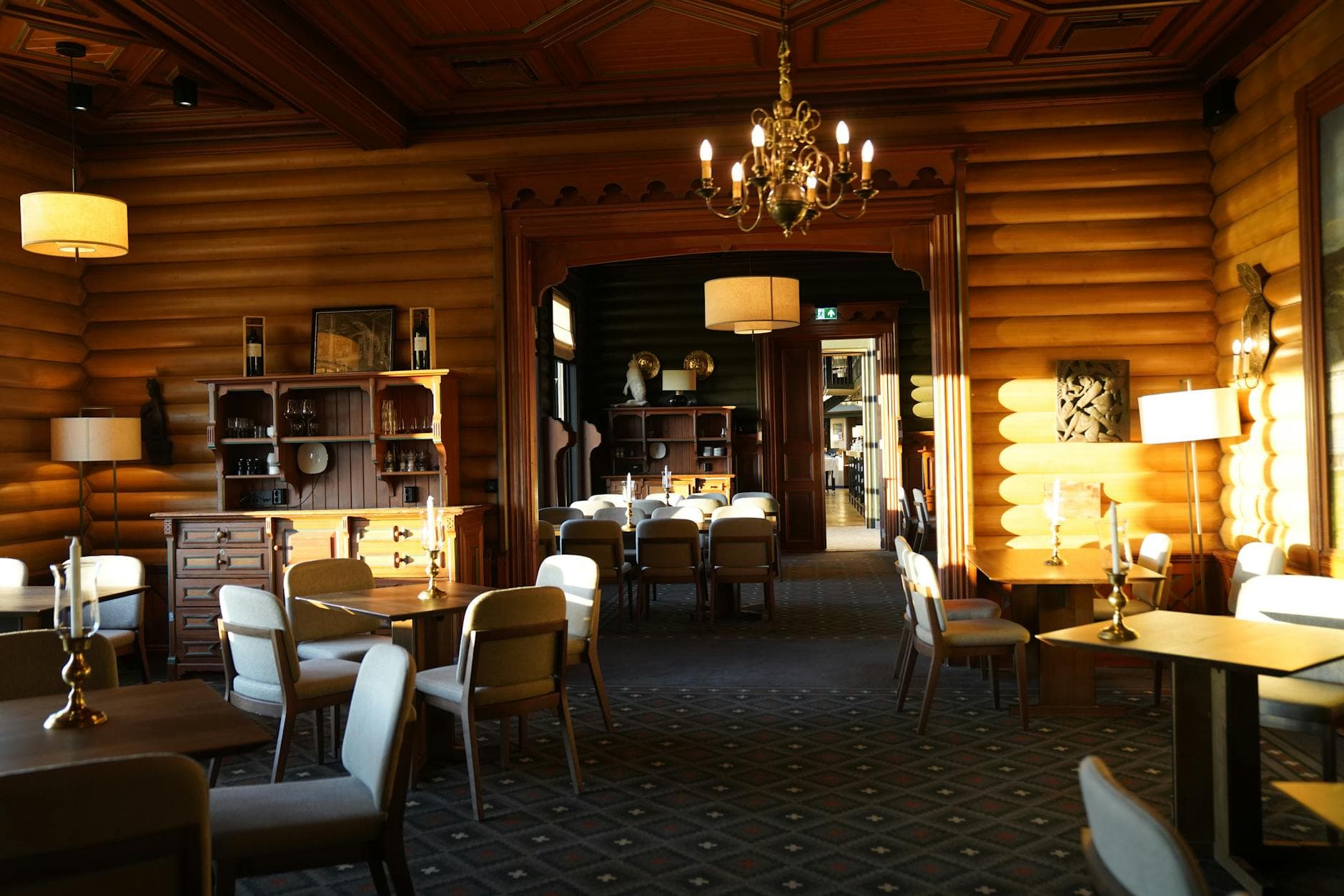
The biggest reason the School House works as a preservation story is that the architecture has not been erased. Guests still eat in the former school auditorium, which now serves as the main dining room. The north wing, once filled with classrooms, now holds the tavern and a private dining room.
Pieces of the old school remain part of the experience. Desks, chairs, photographs, old class pictures, lockers, water fountains and slate chalkboard pieces used as platters all help the room feel grounded in its original life. Even the former playground has been repurposed, now serving as patio space for weddings, birthdays and other special events.
That reuse is practical as well as sentimental. A large footprint like this would be expensive to maintain if it sat empty, but event space helps support the cost of preserving a complex historic property. One patio area is described as seating up to 250 guests, giving the restaurant a scale that can absorb both daily dining and bigger gatherings.
Why the menu matters as much as the walls
Ryan Jackson did not set out to become a restaurateur. He started by cooking for friends and family, then fell in love with the work after taking a restaurant job in college. That background shows up in the kitchen’s approach, which leans on local farms and handmade ingredients rather than shortcuts.
The restaurant describes its food as house-made New American cooking built around seasonally fresh local ingredients. Jackson says the kitchen grinds its own meat and makes its own ketchup, mayonnaise, barbecue sauce and gravies from scratch. One signature dish mentioned in reporting is the Dean’s List Meatloaf, which uses a cabernet mushroom gravy that reinforces the restaurant’s emphasis on care, labor and craft.
That matters economically. Scratch cooking takes more time and skill, but it also creates a distinct identity that helps a remote destination restaurant compete for attention. In a county with no shortage of dining choices, authenticity becomes part of the value proposition. Here, the menu is tied directly to the building’s identity: the food is not just served in history, it helps pay for keeping history intact.
A teaching kitchen with local reach
The School House also functions as a training ground. Students from Clovis High School’s culinary program have been able to learn in the kitchen, connecting food education with a tangible piece of Fresno County history. Reporting has also described the restaurant as a “teaching kitchen” for up-and-coming chefs, which gives the property a broader civic role than most independent restaurants.
That educational function is important because it turns preservation into a living pipeline. Instead of treating the schoolhouse as a static landmark, the Jacksons have made it a place where future workers can learn hospitality, kitchen discipline and food preparation inside a building that once educated children. The symbolism is strong, but so is the utility: the kitchen creates value by training people, not just feeding them.
A destination beyond Sanger
The biggest challenge, Jackson says, has been convincing people the restaurant is not too far away. That hurdle is real, but the setting also gives the business part of its appeal. The restaurant sits near the foothills, along the route toward Kings Canyon National Park and Sequoia National Park, which helps make it a natural stop for travelers moving between Fresno and the mountains.
It also draws guests well beyond Sanger and Reedley. Visitor guides and travel writeups have emphasized its farm-to-fork appeal and event business, suggesting that the schoolhouse has become more than a neighborhood restaurant. It is a destination with a recognizable story, and that story helps market the place as much as the menu does.
What makes the preservation model work
The School House Restaurant and Tavern offers a useful template for other threatened Fresno County landmarks. Its success depends on several parts working together: a building with enough character to attract guests, a kitchen capable of producing a distinctive meal, and event space that generates steady revenue. Preservation alone did not save the schoolhouse. Preservation plus commerce did.
That is the lesson for other historic properties in the county. A building like Frankwood School can survive if it becomes useful again, whether as a restaurant, venue or hybrid civic space. The Sanger schoolhouse shows that adaptive reuse is not just about nostalgia. When the business model works, local history stays visible, usable and financially supported, and a former classroom can keep serving the community long after the last school bell rang.
This article was produced by Prism’s automated news system from verified source data, official records, and press releases, then run through automated quality and moderation checks before publishing. The system is built and supervised by the people who set the standards it runs under. Read our full AI policy.
Did this article answer your question?