Where Fresno County's most infamous convicted killers are now
California still has 573 condemned inmates, and Fresno County’s most notorious murder cases show how sentencing, parole, and prison policy keep echoing long after the crimes.
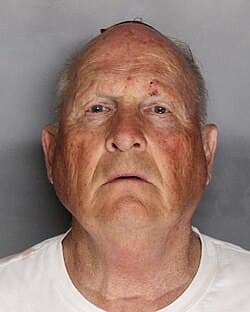
The case files are old. The consequences are not.
California’s condemned-inmate system still holds 573 people as of May 18, 2026, and Fresno County’s most infamous murder cases remain part of that reality. The names that still carry the most weight here, Joseph James DeAngelo, Marcus Wesson, Douglas Stankewitz, Johnnie Malarkey, David Weidert, and Buford Jonathan King, each ended up in a different legal place, but all of them continue to shape how Fresno residents think about punishment, parole, and public safety.
A county defined by high-profile violence
Fresno County’s record stretches across at least three decades of killings that became local and statewide touchpoints, from a deadly robbery and a bus stop shooting to a fatal inheritance scheme and a family mass murder. The crimes that made the biggest imprint were not isolated headlines. They became tests of whether the courts, the prison system, and state officials could deliver finality, or whether each case would keep resurfacing through appeals, parole hearings, and public anger.
That is why a roundup of where these men are now matters beyond grim curiosity. It is not just about who is incarcerated and who is not. It is about which sentences still carry real force, how California manages condemned prisoners, and whether Fresno County families can ever reach a lasting end to cases that changed their neighborhoods forever.
The defendants and the legal end states of their cases
Here is where the major names stand in the public record:
- Joseph James DeAngelo is the best-known historical touchpoint on the list. As the Golden State Killer, also known as the Original Night Stalker and the Visalia Ransacker, he was tied to murders, rapes, and burglaries across California between 1974 and 1986. His case remains one of the most notorious reminders that the region’s crime history reaches well beyond a single county line.
- Marcus Wesson was convicted in Fresno of nine counts of first-degree murder and 14 sex crimes after the 2004 family mass murder that shocked the county. His case stands out because it combined homicide with sexual violence inside a family setting, turning a single prosecution into one of Fresno’s darkest courtroom records.
- Douglas Stankewitz was identified in 2019 by death-penalty advocates as California’s longest-serving death-row prisoner. His continued place in the system shows how some capital cases in California remain unresolved in practical terms for decades, even when the underlying convictions are long settled.
- Johnnie Malarkey confessed in 1998 to seven murders at Carrillo’s Club in Fresno, along with other killings. The Carrillo’s Club case was described as Fresno County’s worst mass murder, and its aftermath still defines how locals talk about catastrophic violence in the city.
- David Weidert became a point of public criticism when Governor Gavin Newsom declined to block his release in a parole case. The backlash around Weidert shows how parole decisions can trigger the same public debate years after the original sentence, especially when families and victims’ advocates believe the punishment did not match the harm.
- Buford Jonathan King of Yokuts Valley was sentenced in May 2026 to life without parole for killing three men in Fresno and Tulare counties between 2011 and 2016. Prosecutors initially charged the case as serial murder, which underscores that the county is still dealing with violent crime patterns that resemble the older cases, even in the present day.
Why California’s condemned system still matters
The backdrop for these cases is California’s condemned-inmate structure, which has changed significantly over time. CDCR says condemned housing historically placed men at San Quentin State Prison and women at Central California Women’s Facility. That old model no longer describes the whole system, because the condemned-inmate transfer program has moved previously condemned housing into general population settings at other institutions.
That shift matters for Fresno readers because it changes where condemned prisoners live, how they are managed, and how visible death-row punishment is to the public. The state still has hundreds of condemned inmates, but the geography of death sentences is no longer anchored to a single, iconic unit in the way many Californians once assumed. In practical terms, the system is more dispersed, more bureaucratic, and easier for the public to lose sight of even when the underlying cases remain unresolved.
What Fresno County keeps reliving through these cases
For Fresno County, these names are not just entries in a crime archive. They keep returning through anniversaries, parole fights, sentencing decisions, and renewed media attention whenever a new case, like King’s, reminds residents that serial or mass violence has never been confined to the past. That is especially true in a county that has seen everything from a deadly robbery to a bus stop shooting to a fatal inheritance scheme tied to notorious convictions.
The enduring public-safety lesson is that the punishment does not end when a verdict is read. For DeAngelo, Wesson, Stankewitz, Malarkey, Weidert, and King, the legal outcomes tell different stories, but together they reveal the same institutional question: whether California’s sentencing and prison systems can deliver proportionate punishment, durable security, and enough transparency for the public to trust the result. In Fresno County, that question is still alive every time one of these cases comes back into view.
This article was produced by Prism’s automated news system from verified source data, official records, and press releases, then run through automated quality and moderation checks before publishing. The system is built and supervised by the people who set the standards it runs under. Read our full AI policy.
Did this article answer your question?


