Goochland Courthouse Green buildings reveal county’s early recordkeeping history
Two Courthouse Green buildings preserve Goochland’s earliest records and civic memory, from land books in 1728 to a restored jail museum with canal-era roots.
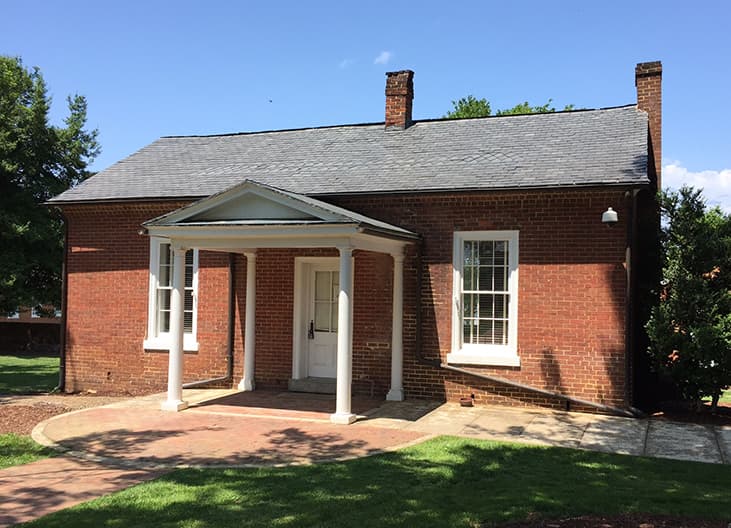
On Goochland County Courthouse Green, the Old Clerk’s Office and the Old Stone Jail do more than sit beside the courthouse. They hold the county’s earliest paper trail, its shifting approach to public storage, and a rare physical record of how local government worked before modern filing systems.
A small square with a long record trail
The Old Clerk’s Office, built around 1847, was the first official building on the Courthouse Green to house county records. Before that, Goochland’s papers were kept in a building William Miller constructed near his home, a reminder that the county’s earliest government was still organized around the clerk’s household as much as around the courthouse square itself. Miller served as Goochland County clerk from 1791 to 1846, spanning the long period when records moved from a private setting into a more formal public space.
That shift matters because Goochland’s surviving record trail runs back to the county’s beginning. The Library of Virginia lists Goochland as formed in 1728, and the county’s record room still identifies land records and wills from 1728, with marriage licenses from 1730. Birth records begin in 1853 and run through 1877 in the record room’s listing, giving researchers a clear map of what survives and where to look.
The point is not just that old papers exist. It is that the county kept enough of them to preserve property history, family history, and the legal chain behind land ownership. In a county where deeds, wills, and marriages shaped how farms, homes, and estates passed from one generation to the next, the Old Clerk’s Office stands for the move from personal custody of records to a more durable public archive.
What still remains on the Courthouse Green
The Goochland County Historical Society, founded in 1968, identifies the Old Clerk’s Office as part of the county’s museum landscape and says it is still used today as a meeting space. That continued use gives the building a practical role rather than leaving it as a sealed relic. It remains part of civic life on the Green, even as its original job of safeguarding records has long since shifted elsewhere.

For residents who want to trace family names, titles, or old property boundaries, the county’s Circuit Court Clerk’s Office record room is the place where the paper trail continues. Land records are listed from 1728, wills from 1728, and marriage licenses from 1730. Put differently, the Old Clerk’s Office helps explain why those records matter, while the record room shows that the county still treats them as working documents, not dead history.
That distinction is why preservation here feels useful, not decorative. The Green is not only a place to admire old masonry. It is a place where the county’s legal memory, from the earliest surviving land books to later vital records, remains organized enough to be used.
The Old Stone Jail and the canal-era county
The Old Stone Jail adds another layer to the story. Historical-society material dates it to about 1825, although some state and tourism references place it closer to 1833. Either way, it belongs to the early nineteenth century, when the James River and Kanawha Canal was being extended westward along the James River and river stones were hauled up the hill to the site for construction.
That canal connection gives the jail a direct link to the county’s transportation history. It also explains why the structure feels so tied to place. The building is not just a jail that happened to survive. It was built from the same landscape that shaped Goochland’s movement of goods, stone, and labor.
The Goochland Board of Supervisors allowed the historical society to adapt the jail in 1980 for use as a museum and library. It then served as the society’s first headquarters from 1980 to 1997, which kept the building active during the years when preservation in many rural counties depended on volunteer leadership and limited space. The jail was restored and reopened in 2016, and its exhibits now cover law enforcement and prison life from 1825 to the 1950s.
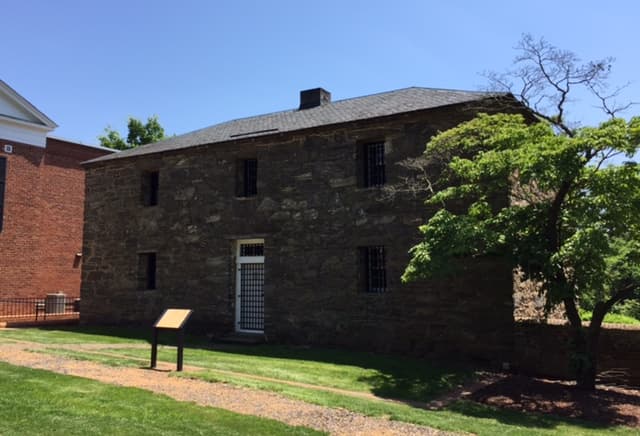
That restoration changed the building’s purpose without erasing its original meaning. The historical society says the original cells, iron bars, and fittings were removed after the jail was no longer used for incarceration, and later work aimed to return the structure to an earlier appearance. Today, the building helps visitors understand both the realities of punishment and the county’s decision to keep the structure in public view.
Why the square still matters
The courthouse square itself is listed in the Virginia Landmarks Register and the National Register of Historic Places, and the Virginia Department of Historic Resources says the square includes three contributing buildings and one contributing site. The courthouse was completed in 1826 and is attributed to Dabney Cosby, Sr., with Valentine Parrish as an assistant. The same state record notes that other early structures on the square include the stone jail, a brick clerk’s office, and a brick wall built to keep wandering cattle out.
That mix of buildings is what makes the square read as a working archive of county government. The courthouse represents judicial authority, the clerk’s office represents recordkeeping, and the jail represents enforcement. Together, they show how Goochland organized law, property, and public order in the early republic and into the nineteenth century.
The county tourism office says the Courthouse Green is widely considered to contain the most well-preserved Jeffersonian courthouse in Virginia, and that claim helps explain why these two smaller buildings still matter. They are not side notes to the courthouse. They are the structures that show how the courthouse square actually functioned, and they preserve the evidence that residents still use when they research land, family, and local history today.
This article was produced by Prism’s automated news system from verified source data, official records, and press releases, then run through automated quality and moderation checks before publishing. The system is built and supervised by the people who set the standards it runs under. Read our full AI policy.
Did this article answer your question?