Goochland Middle School students code drones in hands-on STEM lesson
Mr. Beasley’s students did more than fly drones. They coded flight paths, practiced physics, and saw why STEM skills matter before high school.

A drone lesson that turned code into motion
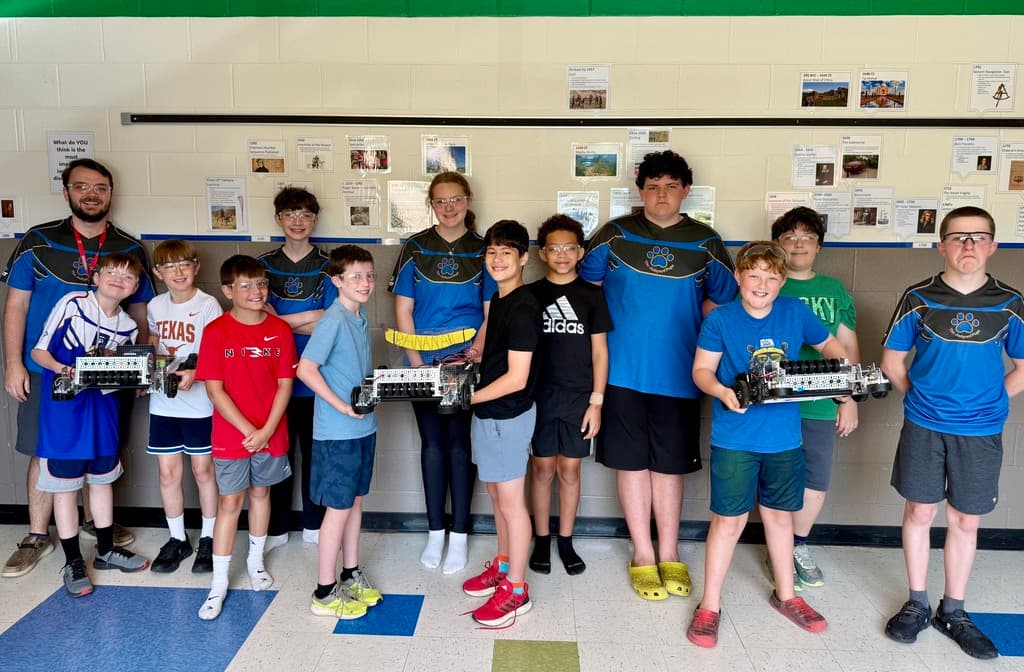
Mr. Beasley’s Technology Foundations class at Goochland Middle School did not just watch a drone hover and drift. Students built the flight path themselves, then tested it in real time, turning lines of code into a machine that moved through the air with purpose.
That is what makes the lesson stand out for Goochland families. The work was hands-on, but it was also analytical: students had to think through physics, air resistance, and precise navigation while they figured out how to make the drone do what they wanted. In one class period, abstract STEM concepts became something students could see, adjust, and improve.
The school’s live feed described the lesson as happening “last week,” and the post was still visible in late April, making it clear this was a recent example of classroom learning in action rather than a recycled showcase. The energy around the activity mattered too. The school said students were collaborating to solve problems and cheering one another on as their code came to life, the kind of environment that builds confidence along with technical skill.
Why the lesson matters before high school
The biggest value of the drone project is timing. Goochland Middle School is showing students that career readiness does not have to wait until high school, when course schedules and long-term planning often become more visible. Middle school is the point when many students begin deciding whether math, science, and technology feel relevant to their lives.
This lesson makes that connection immediate. Students were not learning coding in the abstract, they were using it to move a real device. They were not hearing about physics as a textbook idea, they were dealing with the way air resistance and movement affect a drone in flight. That kind of experience can shift STEM from something theoretical to something useful.
It also gives parents a clearer picture of what “future-ready” learning looks like in practice. A student who can troubleshoot a drone, refine a code sequence, and understand why a flight path fails is building habits that matter well beyond one class period. Those habits include persistence, problem-solving, and comfort with technology that may open doors later in school and work.
The career pathways behind the classroom project
Drones are no longer just a novelty. They are used in aviation, engineering, agriculture, emergency response, surveying, and media production, which means the skills students touched in Mr. Beasley’s class connect to real industries already operating in Virginia and beyond.
That makes the lesson more than a fun activity. A middle school student who learns the basics of coding a drone today may be more likely to recognize those same tools later in career and technical education, robotics, or advanced STEM classes. The path from one classroom project to a future profession is not automatic, but experiences like this help students see that the path exists.

The practical value is especially important in a county where families care about opportunity close to home. When students can connect a classroom challenge to careers in fields such as surveying or emergency response, the lesson feels less like a one-day exercise and more like an introduction to what skilled work can look like in Virginia.
How Goochland’s STEM identity supports lessons like this
The drone project also fits a larger pattern in Goochland County Public Schools. The division says it is one of 15 Virginia School Divisions of Innovation, a state designation for districts that design alternatives to traditional instruction to improve learning and promote college and career readiness.
That matters because it shows the drone lesson is part of a broader instructional philosophy, not an isolated experiment. GCPS also says all five of its schools are Apple Distinguished Schools, another signal that technology integration is not limited to one classroom or one teacher. The district has built a systemwide identity around digital tools, innovation, and practical learning.
At Goochland Middle School specifically, Beasley has already been highlighted for other hands-on STEM work, including computer science lessons using Roversa robots and ramp experiments designed to measure acceleration. Those examples suggest the drone activity is part of a longer pattern of applied learning in his classroom, where students are asked to build, test, and revise instead of only reading about concepts.
That same emphasis lines up with support from the Goochland Education Foundation. The foundation says its vision is to provide and expand innovative educational experiences for GCPS students, and Goochland Middle School was named in a 2024 GCPS article as a recipient of strategic innovation grants for innovative learning experiences. For families, that support helps explain how schools can keep offering projects that require materials, planning, and teacher time.
What this could open next in Goochland schools
The drone lesson may also point toward what comes next for Goochland County schools. The county has publicly discussed capital plans that include expansion and enhancements to the existing middle and high school complex, with more space for CTE and STEM instruction. That kind of planning suggests local leaders see facilities and program capacity as part of the same long-term strategy.
If those plans continue to move forward, students could see more room for technical pathways that build on lessons like the one in Mr. Beasley’s class. A stronger middle school STEM foundation makes it easier for students to step into high school coursework with confidence, whether their interests lean toward engineering, coding, aviation, or another applied field.
The larger message is straightforward: Goochland is treating career exposure as something that should start early, and the drone lesson shows how that works in practice. Students are not only learning how to make a machine fly. They are learning how to think like problem-solvers, and that may be the most valuable flight path of all.
This article was produced by Prism’s automated news system from verified source data, official records, and press releases, then run through automated quality and moderation checks before publishing. The system is built and supervised by the people who set the standards it runs under. Read our full AI policy.
Did this article answer your question?