Dashcam Captures Lightning Striking Tree on Silver Lake Road, Clip Goes Viral
A car's dashcam caught lightning obliterating a roadside tree directly ahead on Silver Lake Road during March 31 storms, and the footage is now circulating internationally.
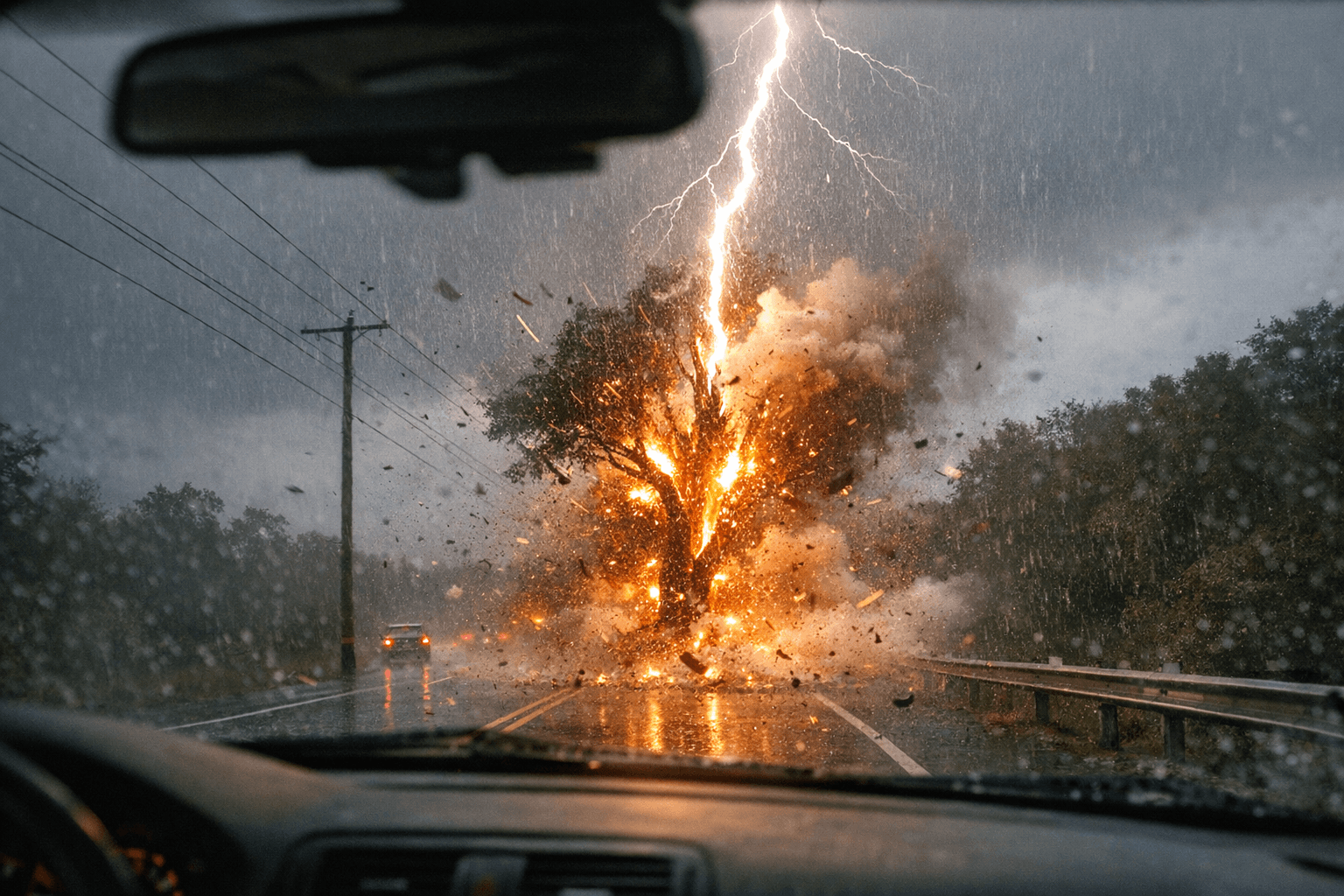
The flash arrived with no warning. Dashcam footage recorded on Silver Lake Road during a severe storm on March 31 shows a lightning bolt slamming into a tree directly in the path of a moving vehicle, a split-second strike so close it left almost no margin between the car and the impact point. The clip spread rapidly beyond Grand Traverse County, drawing international attention within days and putting a familiar local road at the center of a global conversation about severe weather.
What makes the footage particularly striking is its timing. Michigan's deadliest lightning season runs from June through August, when more than 80 percent of the state's lightning-related injuries and deaths historically occur. A near-road strike on March 31, weeks before the region's peak storm season, is a jarring reminder that dangerous electrical activity is not limited to summer afternoons. Michigan recorded 7.2 million lightning pulses and 1.3 million flashes in 2024, totaling 23.37 strikes per square mile statewide. Grand Traverse County, with its dense tree canopy and open lake-effect corridors, sits squarely inside that exposure zone.
Silver Lake Road, which runs through Grand Traverse County near the Secor intersection west of Traverse City, is a heavily wooded corridor. The mature trees lining its shoulders are precisely the kind of elevated, isolated targets that attract ground-to-cloud discharges in active storms. The footage captures the reality of that hazard at point-blank range.
For drivers caught on roads like Silver Lake during a lightning storm, the National Weather Service draws a clear line: a hard-topped metal vehicle provides genuine protection, but only when windows are fully closed and occupants avoid contact with metal surfaces inside the cabin. Rubber tires offer no protection on their own. The NWS recommends reducing speed immediately, pulling off into a safe area when conditions allow, and avoiding the use of electronic devices, including radio communications, while sheltering inside a vehicle. Critically, drivers should remain in the vehicle for at least 30 minutes after the final clap of thunder before stepping outside, a threshold that most people underestimate.
Lightning kills approximately 20 people in the United States each year and injures hundreds more, with the majority of those cases involving individuals who delayed seeking shelter. The March 31 clip, now circulating well beyond Northern Michigan, compresses that risk into about two seconds of footage, the length of time it takes a bolt to find a target on a road you might drive every day.
This article was produced by Prism’s automated news system from verified source data, official records, and press releases, then run through automated quality and moderation checks before publishing. The system is built and supervised by the people who set the standards it runs under. Read our full AI policy.
Did this article answer your question?


