Dozens Protest U.S. Policy and Venezuela Crisis in Traverse City
Dozens of residents gathered at Rotary Square on January 5 to protest recent events in Venezuela and related U.S. foreign policy and immigration enforcement actions. The demonstration, organized by Traverse Indivisible, highlighted humanitarian concerns and signaled growing local engagement on international issues with domestic consequences.
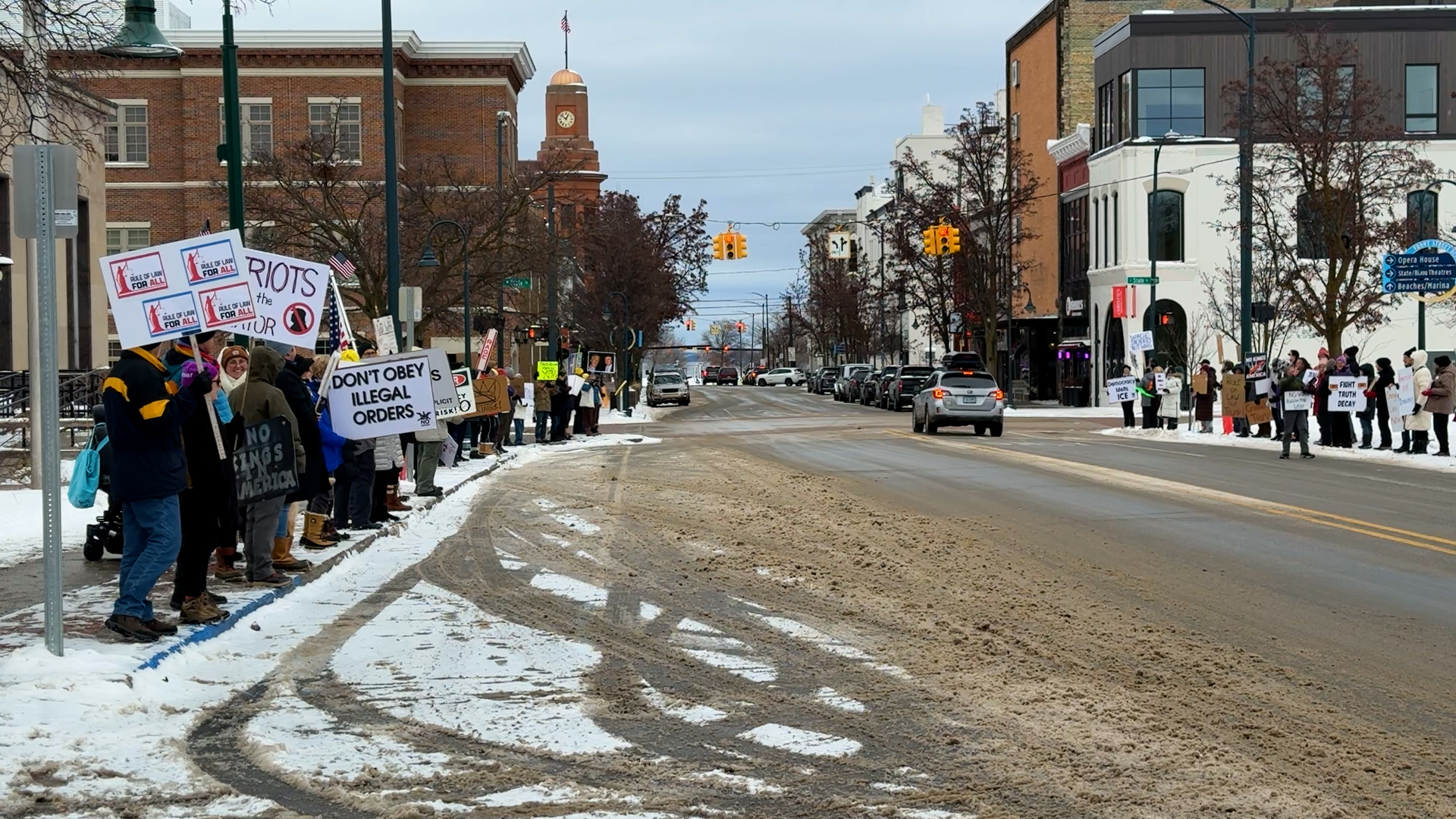
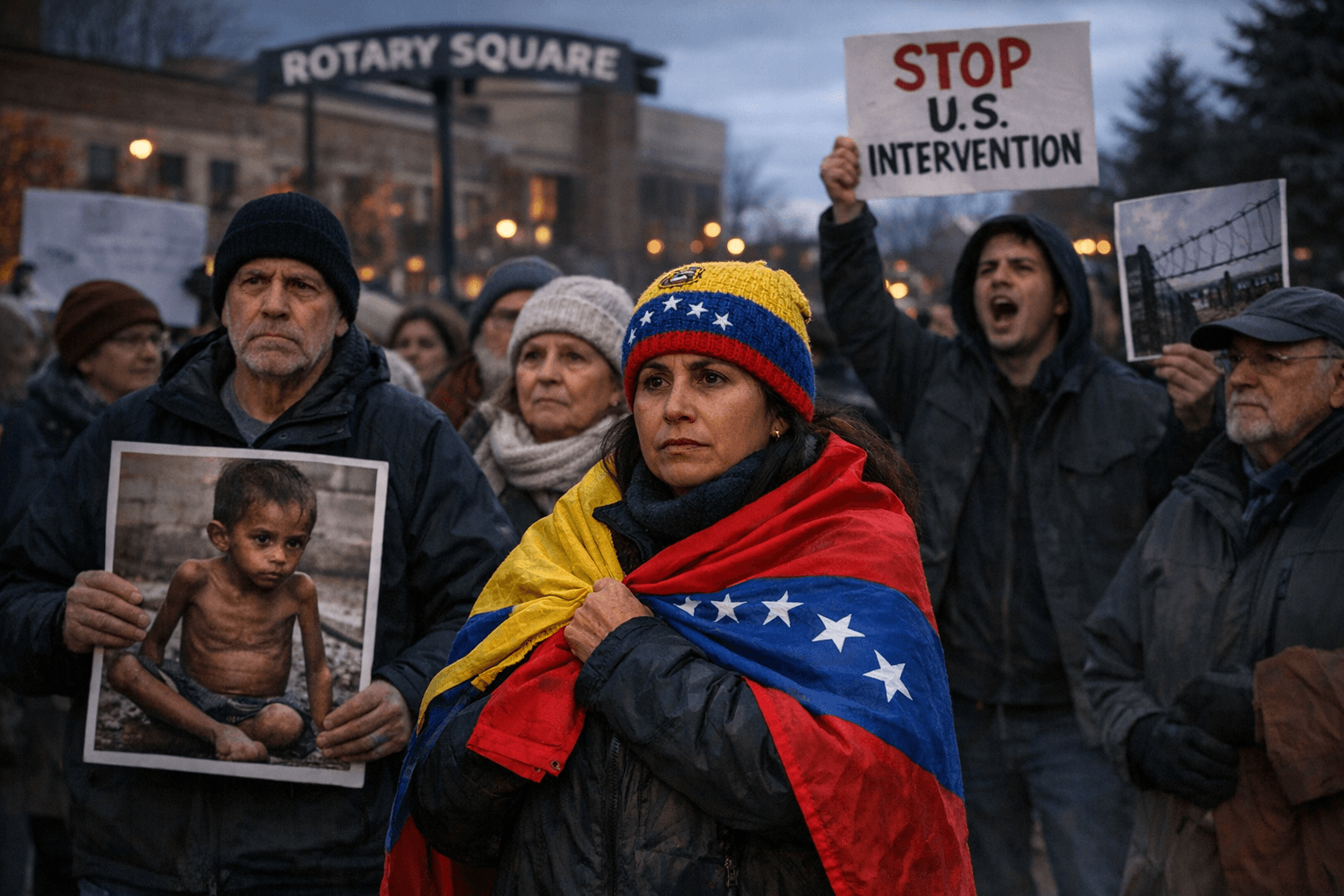
On the afternoon of January 5, dozens of people assembled at Rotary Square in downtown Traverse City to voice opposition to recent developments in Venezuela and to U.S. foreign policy and immigration enforcement tied to the crisis. Organizers with Traverse Indivisible convened the demonstration to elevate humanitarian concerns and urge policy changes at higher levels of government, as protesters braved cold weather to attend.
Participants spoke about the human cost of conflict and migration policies that they say exacerbate displacement and hardship. Organizers described the gathering as an "Emergency Response Protest Against War in Venezuela." The event drew a cross section of residents who framed their presence as both an expression of solidarity with people affected abroad and a call for U.S. policy that prioritizes humanitarian assistance and more measured immigration enforcement.
Local protests like this one matter to Grand Traverse County because foreign policy and enforcement decisions at the federal level can produce direct local effects. Migration flows create demand for social services, legal assistance and school and health resources; humanitarian crises can spur local fundraising, volunteer efforts and constituent inquiries to county and state elected officials. The demonstration signals a constituency attentive to how national policy translates into local needs and priorities.
Institutionally, the protest underscores the role of civic organizations and grassroots groups in shaping agenda items at public meetings and campaigns. County commissioners and municipal leaders do not set foreign policy, but they do respond to constituents regarding emergency preparedness, social services and coordination with state agencies. Local advocacy can influence the tone of public debate, place pressure on state legislators and mobilize voters around broader platforms that include migration and humanitarian policy.
This gathering also contributes to political engagement patterns in the county. Public demonstrations can sharpen issue salience ahead of elections, motivate volunteer networks, and increase communication between residents and officials. For residents seeking to translate concern into action, county meeting schedules, contact information for local representatives and participation in civic organizations are available through official county channels.
As the humanitarian situation in Venezuela and attendant policy debates continue, local activists in Grand Traverse County have made clear they intend to keep these issues on the community agenda. Residents who wish to follow developments or voice concerns are encouraged to contact their county commissioners and state representatives and to participate in upcoming public forums.
This article was produced by Prism’s automated news system from verified source data, official records, and press releases, then run through automated quality and moderation checks before publishing. The system is built and supervised by the people who set the standards it runs under. Read our full AI policy.
Did this article answer your question?


