Eater Names Traverse City a Top 15 Food Destination for 2026
Local readers will learn why Eater picked Traverse City as a top food destination and which local chefs, farms, wineries, and events are driving that rise.
1. Eater’s national nod
Eater placed Traverse City on its list of the Top 15 Food Destinations for 2026, putting our small lakeside community in the company of global spots such as Milan and Scotland’s Isle of Skye. That single line of coverage accelerates name recognition, drawing national food media attention that translates into more visitors, reservations, and media-driven economic lift for downtown restaurants and tasting rooms.
2. A strong agricultural backbone
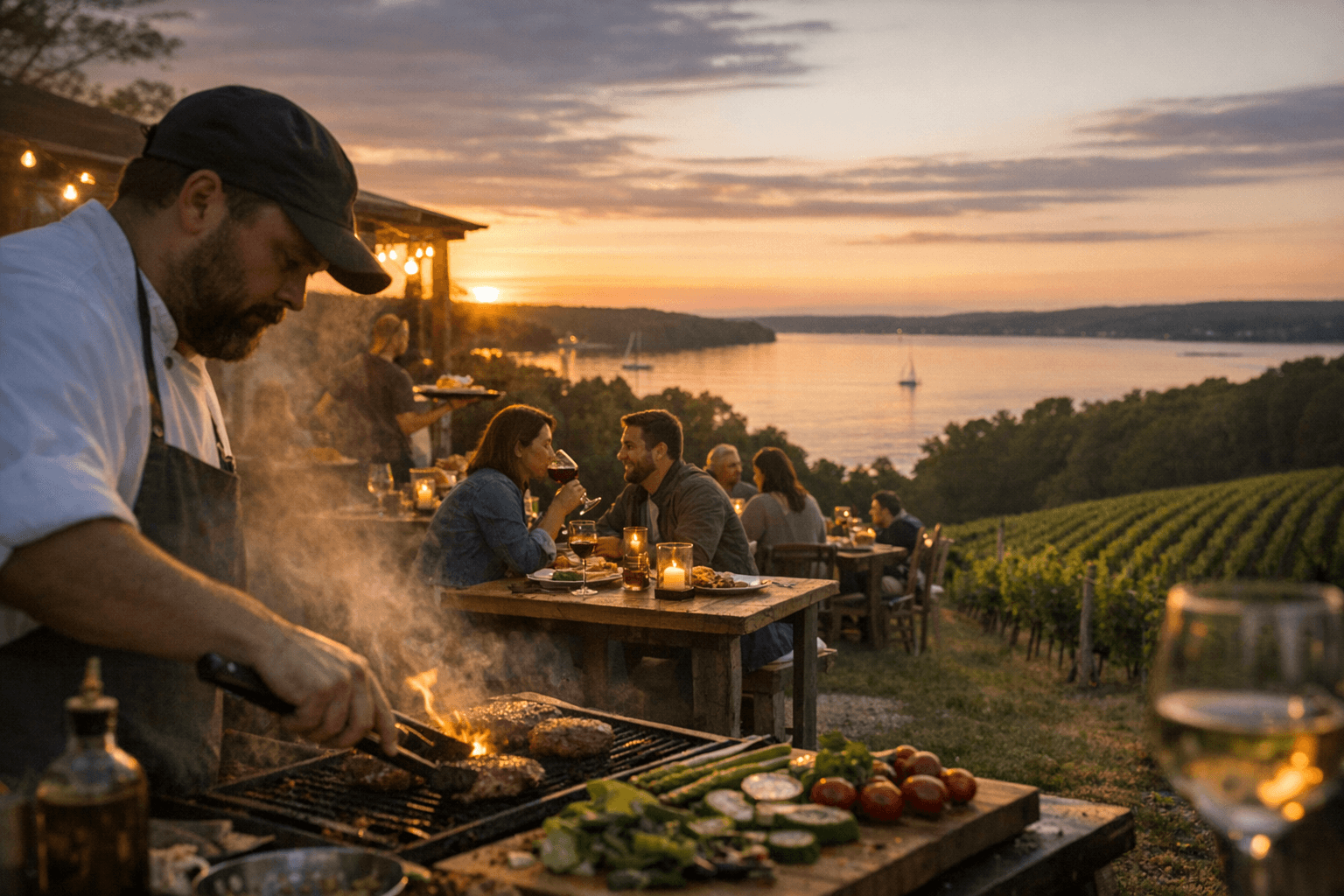
The region’s prime fruit-growing land, especially cherry and apple orchards, underpins the local menu cycle and creates seasonally driven tourism. Chefs and restaurateurs lean on that reliable output to craft tasting menus and farm dinners that extend stays and spending in the county.
3. Biodynamic viticulture and Bos Wine’s profile
Bos Wine was singled out in the reporting for its biodynamic practices, and owner references appear as both David Bos and Dave Boss in coverage; Bos Wine’s methods were brought from California by the owner after managing over 500 acres of vineyards there. Bos Wine’s marketing director, Alaina Leech, captured the philosophy plainly: “It’s not what we’re taking out from the environment. It’s what are we adding back in,” a framing that differentiates local viticulture and attracts consumers seeking terroir-driven, sustainable wines.
4. Small farms and foraging traditions
Traverse City’s food system is characterized by small-scale farms and active foraging, which supply restaurants with hyper-local ingredients that change weekly. That variety supports intimate supply chains and culinary experimentation, making the dining scene both resilient and distinctive compared with large urban markets.
5. Collaborative producer-chef networks
Eater highlighted a collaborative culture where “farmers review seed lists with cooks before placing orders, fishermen meet restaurant owners to hand off buckets of smelt, and neighbors knock on kitchen doors to share fresh favas.” Those day-to-day interactions speed procurement, lower transport costs, and create menu items that literally reflect the landscape, increasing visitor goodwill and repeat business.
6. Chef migration and an emerging market
Coverage notes chefs and wine pros are relocating from major cities to this “lakeside Arcadia,” a trend industry observers describe as Northern Michigan becoming an emerging market attracting talented chefs from around the country. This inflow raises local labor quality, sparks new concepts, and increases payroll and service-sector demand in Grand Traverse County.
7. Modern Bird’s outsized influence
Modern Bird, opened in 2022 by Andy Elliott and Emily Stewart after their move from Chicago, has become a regional bellwether: a New York Times nod as one of the 50 best U.S. restaurants and a James Beard semifinalist amplified local dining demand. Andy Elliott summed up the resource that differentiates us: “The produce up here is incredible, as good as anything I’ve had in Spain, France, and Italy,” a claim that feeds both culinary credibility and reservation-driven revenue.
8. The Cook’s House as a local institution
The Cook’s House has showcased locally grown Michigan products since 2008 and its chef-owners Jennifer Blakeslee and Eric Patterson were the only Michigan semifinalists to advance to the finalist stage of the 2025 James Beard Awards. Patterson’s rooted perspective, “We’re building on the backs of First Nations peoples that used the wild rice that is up here”, ties menu development to local heritage and strengthens cultural tourism narratives.
9. New and planned chef projects energize the scene
Upcoming projects such as Umbo, planned by James Beard nominee and Top Chef runner-up Sarah Welch with husband Cameron Rolka (Mink chef), signal continued reinvestment from chefs with national profiles. New openings extend the visitor season, diversify dining options, and provide fresh marketing hooks for tourism promotions.
10. Awards, national press, and reputational momentum
Beyond the Eater listing, Modern Bird’s NYT recognition and multiple James Beard placements (Modern Bird semifinalist; The Cook’s House finalist) create cumulative reputational returns. National press lifts not only headline restaurants but also downtown foot traffic, hotel bookings, and ancillary spending at wineries, farms, and specialty food shops.
11. Food tourism and event strategy
Traverse City Tourism is actively “leaning into” the foodie narrative to celebrate the full ecosystem of restaurants, wineries, bakeries, and breweries, not just headline winners. The inaugural Traverse City Food & Wine event “packed the downtown,” drew nationally known chefs, and sent visitors to farms and agritourism destinations, showing how coordinated events convert media coverage into measurable tourist itineraries.
12. Menu‑to‑vine storytelling and tasting experiences
Local restaurants and wineries are packaging menu pairings that tell a winemaking and culinary story, for example, seared duck breast with corn polenta paired with a 2022 gamay noir, or warm blueberries in puff pastry with a nostalgic 2020 sweet riesling. Those curated experiences increase per-guest spending and extend the value chain for local vintners like Black Star Farms and Bos Wine.
13. Sourcing economics and operating logic
The cost and quality advantages of proximate sourcing are integral to the region’s model: “If you can buy things that are down the road from you, quality-wise, it just makes complete sense,” says Eric Patterson. Shorter supply chains lower spoilage, support same-day menus, and allow chefs to charge a premium for freshness, a financial logic that helps small restaurants maintain margins.
14. Cultural heritage and regional flavor formation
Regional flavor is more than product; it’s rooted in community practices. Patterson’s observation, “What grows together goes together and eventually becomes the flavor of that region”, frames how culinary identity forms, and that distinct identity is the product on sale when visitors arrive, supporting brand differentiation for Traverse City’s hospitality sector.
15. Practical next steps for residents and businesses
The Eater designation is both recognition and opportunity: residents can support local farms, book a tasting at Bos Wine or Black Star Farms, and join the upcoming Food & Wine event when it returns this August to capture the tourism uplift. For businesses, lean into provenance storytelling, partner with farmers and fishermen, and highlight awards and media mentions, those tactics convert attention into sustainable economic activity and help solidify Traverse City’s new status as a genuine dining powerhouse.
This article was produced by Prism’s automated news system from verified source data, official records, and press releases, then run through automated quality and moderation checks before publishing. The system is built and supervised by the people who set the standards it runs under. Read our full AI policy.
Did this article answer your question?