Grand Traverse County nature reserve blends trails, restoration and learning
More than 500 acres of trails, paddling spots and an outdoor classroom make the Natural Education Reserve a close-to-home escape for Grand Traverse County families.
Grand Traverse County’s Natural Education Reserve gives residents a public landscape that works as both a recreation area and a living restoration site. Spread across more than 500 acres in the Boardman-Ottaway river valley, the reserve is close to Traverse City and built for everyday use, with trails, river access, learning spaces and family-friendly stops that make it useful in every season.
A river valley that is still being restored
The reserve sits in a part of the county that was once dammed, and that history now shapes the experience on the ground. Instead of treating the valley as a finished park, the county is restoring habitat while keeping the land open for walking, exploring and watching the river corridor come back to life.
That balance gives the place its value as a public asset. It is large enough to feel like a destination, but still practical for people who want a simple outing without paying for entertainment or driving far from Traverse City. The result is a county landscape where conservation, recreation and daily use overlap in the same footprint.
The Boardman River Nature Center is the main entry point
For most visits, the Boardman River Nature Center is the easiest place to start. The county describes it as a good stop for people of all ages, and the features around it show why families keep coming back. Behind the center sits a nature playscape, and an accessible path leads to a small amphitheater tucked into the woods.
That setup matters because it makes the reserve approachable for short visits as well as longer ones. Younger children have a place to climb and explore, older kids can follow the path into the trees, and groups can gather at the amphitheater without needing a full-day plan. The site works as a low-cost outing that does not require specialized gear or a major time commitment.
The reserve’s educational role is built into that same gateway. The Grand Traverse Conservation District runs summer camps, field trips and specialized classes there, turning the nature center into an outdoor classroom as much as a trailhead. That mix of recreation and instruction gives local schools, families and youth programs a place where learning happens in the landscape itself.
Trails, trailheads and places to pause
One of the reserve’s strongest practical features is access. The county says there are multiple trailheads with parking on both the east and west sides of the river, which makes it easier to approach from different directions and reduces the chance that a single lot or entrance determines the whole visit. For residents coming from Traverse City or elsewhere in the county, that flexibility makes the reserve easier to fit into a quick afternoon or a seasonal routine.
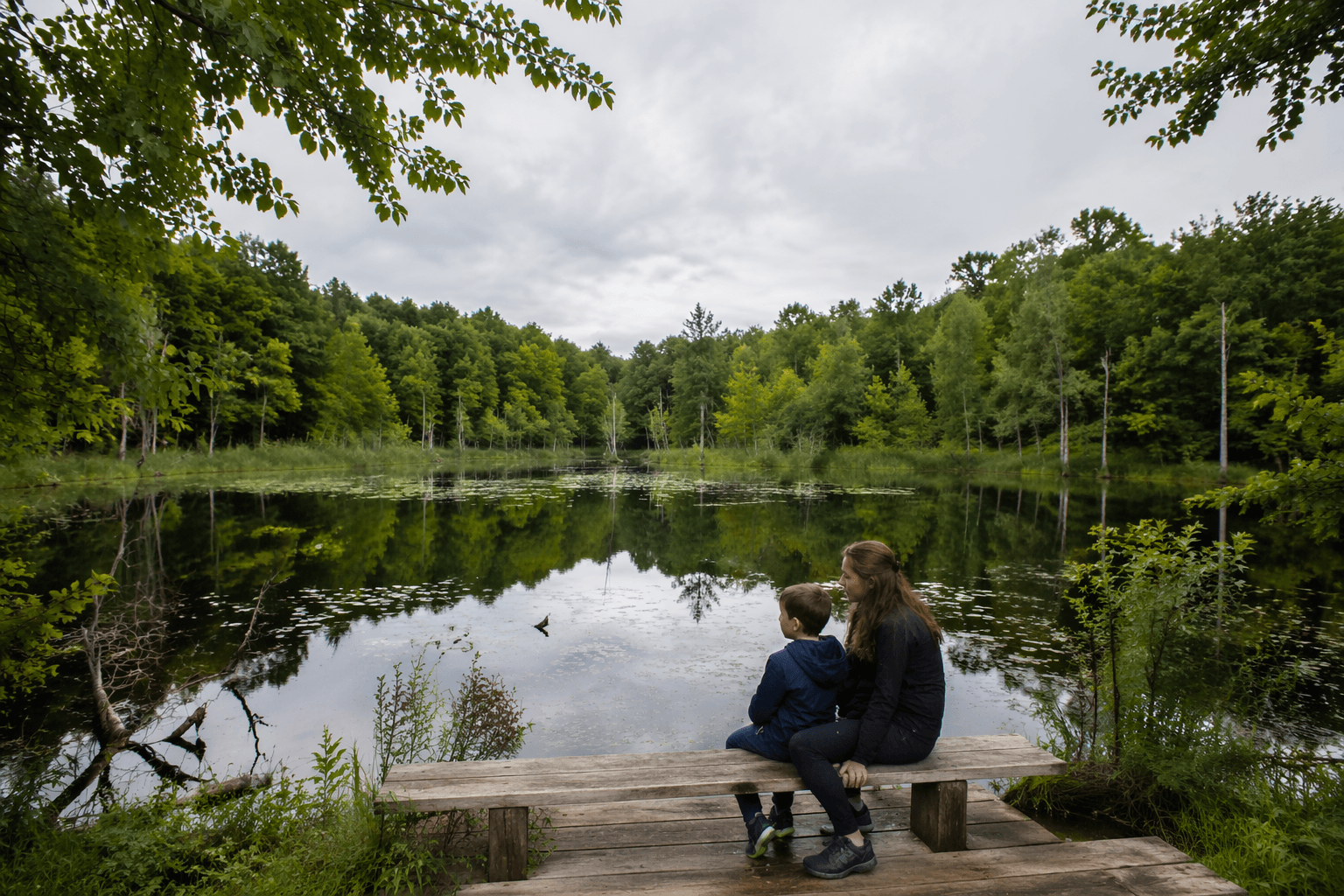
Jack’s Landing adds another layer of usefulness. It is a popular stop for picnics and paddlers, which makes the reserve more than a walking destination. Families can bring lunch, people on the water can use it as a stopping point, and the site gives visitors a place to rest before heading back onto the trail or river.
The reserve also supports repeat visits because the experience changes with the season. Spring brings new water and active restoration, summer fills the trail network with walkers, campers and paddlers, and fall makes the river valley a destination for shorter hikes and picnic stops. Even in colder months, the accessible layout and multiple access points keep it useful as a nearby public place rather than a one-season attraction.
Meyer Farm and the Great Lakes Incubator Farm broaden the experience
On the east side, Meyer Farm and the Great Lakes Incubator Farm add a different kind of public value. Their presence ties the reserve to sustainable agriculture and local food education, expanding the site beyond trails and river views. The summer farmstand gives visitors a tangible way to connect the land to what grows on it.
That combination is unusual for a county recreation area. In one place, visitors can see river ecology, trail restoration and local agriculture all working together. For families, that means a visit can include walking, learning and buying fresh produce without leaving the same public landscape.
Why this reserve belongs on the local map
The Natural Education Reserve stands out because it solves several needs at once. It gives Grand Traverse County a large trail network, a restored river valley, an accessible nature center, paddling and picnic access at Jack’s Landing, and an agricultural education component through Meyer Farm and the Great Lakes Incubator Farm.
For households looking for affordable recreation close to Traverse City, that combination is hard to match. The reserve is not just a place to pass through. It is a place to return to, whether the goal is a short walk, a class, a picnic, a paddle or a look at how a county can keep land open while restoring what was lost in the river corridor.
This article was produced by Prism’s automated news system from verified source data, official records, and press releases, then run through automated quality and moderation checks before publishing. The system is built and supervised by the people who set the standards it runs under. Read our full AI policy.
Did this article answer your question?


