Grand Traverse County Parks, Trails, and Birding Spots Worth Exploring
Grand Traverse Commons' 500-acre west-side campus rivals any birding destination in northern Michigan, and it's just one of several overlooked outdoor gems across the county.
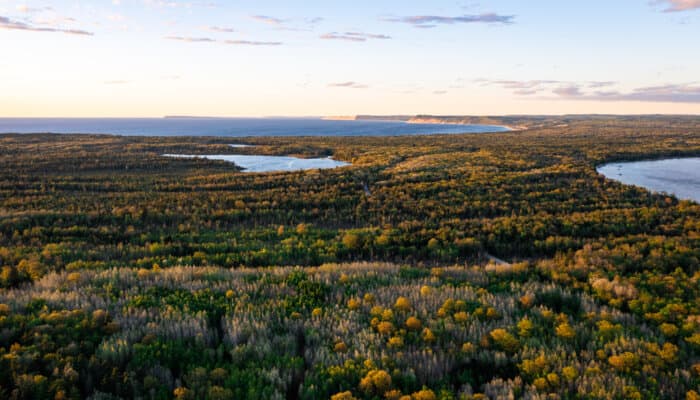
Few corners of northern Michigan pack as much ecological variety into a single county as Grand Traverse. From the mudflat edges of Old Mission Peninsula to the sprawling trail network of Grand Traverse Commons, the region offers birders and outdoor enthusiasts a range of habitats that shift dramatically with the seasons. This guide draws on resources from Grand Traverse County Parks & Recreation to highlight the parks, trails, and birding areas most worth your time, whether you live here year-round or are passing through during cherry blossom season.
Old Mission Lighthouse Park
About 20 minutes from downtown Traverse City, Old Mission Lighthouse Park sits at the tip of Old Mission Peninsula and delivers two distinct birding experiences within a single visit. The exposed mudflats along the shoreline attract a spectacular variety of sandpipers and plovers, especially during spring migration, when shorebirds moving north funnel through the peninsula's narrow geography in concentrated numbers. Step back from the water and the habitat shifts entirely: the park's interior trails are home to large numbers of forest birds, including pewees, phoebes, Red-Headed Woodpeckers, Black-Throated Green Warblers, and both Warbling and Red-Eyed Vireos. The combination of shorebird staging and woodland species makes this one of the more productive single-stop outings in the county, particularly from late April through early June.
Visitors should note that specific details including parking locations, official trail distances, and any entrance fees are best confirmed with Grand Traverse County Parks & Recreation before making the trip, as those details were not available at publication.
Grand Traverse Commons
On Traverse City's west side, the most productive birding in the city is concentrated on the 500-acre campus of the Grand Traverse Commons, a former state psychiatric hospital that has been reimagined over decades into one of the region's most ecologically rich public spaces. Its miles of trails shift the birding calendar forward and backward depending on when you visit: winter brings redpolls, grosbeaks, and waxwings working the tree lines, while spring delivers what birders here describe as a huge selection of migrating warblers moving through the canopy in waves. Summer nesters include flycatchers, warblers, vireos, cuckoos, hummers, and several species of woodpeckers, and the campus carries a well-earned reputation as one of the area's best spots for viewing orioles and Indigo Buntings. Herons, hawks, and the occasional owl round out a species list that rewards repeated visits across the year.
The accessibility of the Commons for beginning birders is worth emphasizing. As one description of the site puts it, "even casual birdwatchers will enjoy a chance to see some of the many lovely birds that make their own 'spring break' stops in Traverse City and then (like visitors) often settle in to stay." No specialized equipment or deep field knowledge is required to have a rewarding morning on these trails.
Traverse City's Bayshore
The Bayshore area in Traverse City rounds out the core set of in-county birding locations. Waterfronts like the Bayshore draw a different category of species than wooded or agricultural habitats, and the interface between Grand Traverse Bay and the city's developed shoreline creates productive transition zones that are worth exploring seasonally. Specific habitat descriptions, species checklists, and access details for the Bayshore were not available in the research materials compiled for this guide; visitors planning a trip should contact Grand Traverse County Parks & Recreation or check local birding groups for current conditions and species reports.
Regional Resources Worth Knowing
Two additional birding destinations fall outside Grand Traverse County but are relevant for anyone based in Traverse City willing to extend their range.
The Sunset Coast Birding Trail runs through Antrim, Charlevoix, and Emmet counties, the trio of northern Michigan counties that border Grand Traverse to the north and northeast. The trail links multiple sites across that corridor, and birders who have exhausted local options or who are planning multi-day trips into the region will find it a useful framework for expanding their itinerary. A full trail guide with specific stops and species highlights is available through the trail's organizers; the details available in the research notes for this piece were limited to the trail's county coverage.
Otis Farm Bird Sanctuary in Hastings is a longer drive into southwestern Michigan, sitting within Barry County rather than anywhere near Grand Traverse, but it merits inclusion for birders willing to travel. The sanctuary covers 128 acres of rolling fields, mature forests, and expansive marshland, and the combination of those habitats supports more than 165 species of birds, including several rare and endangered species. Over 1.4 miles of trails thread through the property. Michigan Audubon members have access to an additional amenity: a cabin on the sanctuary that sleeps 12 and rents for $25 per night. Anyone planning a visit should confirm current cabin availability, booking procedures, and whether the rate structure has changed through Michigan Audubon directly.
Seasonal Quick Reference
The species lists across these sites break down usefully by season for planning purposes:
- Winter: redpolls, grosbeaks, and waxwings at Grand Traverse Commons
- Spring migration: sandpipers and plovers at Old Mission's mudflats; waves of migrating warblers at Grand Traverse Commons
- Summer nesters: flycatchers, warblers, vireos, cuckoos, hummingbirds, and multiple woodpecker species at Grand Traverse Commons
- Year-round or broad-season: herons, hawks, and owls at Grand Traverse Commons; pewees, phoebes, Red-Headed Woodpeckers, Black-Throated Green Warblers, Warbling Vireos, and Red-Eyed Vireos along Old Mission's interior trails
- Notable target species: orioles and Indigo Buntings at Grand Traverse Commons
A Note on Verification
Several details in this guide, including official trail mileages, parking and access rules, entrance fees, and current cabin rental rates at Otis Farm, require confirmation with managing agencies before a visit. Grand Traverse County Parks & Recreation is the primary contact for county-managed sites. For Michigan Audubon properties and the Sunset Coast Birding Trail, those organizations maintain their own up-to-date contact information and trail resources. Given how quickly land management arrangements and facility details can change, a quick call before driving out to any of these sites is time well spent.
The variety on offer here, from shorebirds staging on windswept peninsula mudflats to winter finches working the old asylum grounds on Traverse City's west side, reflects just how much ecological ground Grand Traverse County covers in a compact area.
This article was produced by Prism’s automated news system from verified source data, official records, and press releases, then run through automated quality and moderation checks before publishing. The system is built and supervised by the people who set the standards it runs under. Read our full AI policy.
Did this article answer your question?


