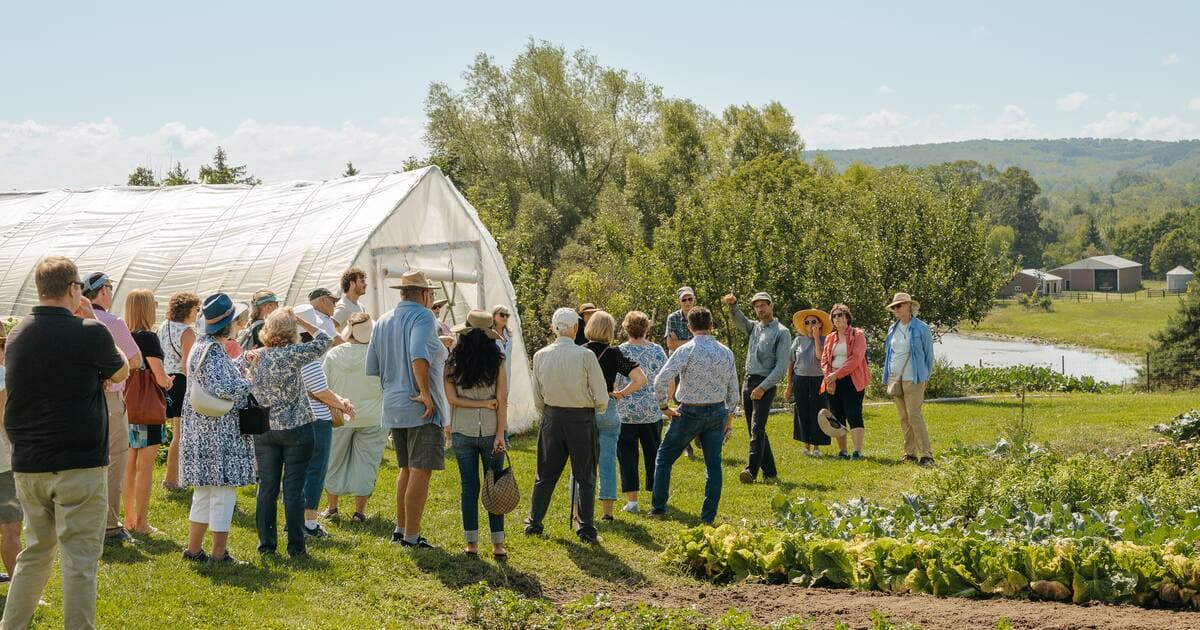
Historic Barns Park blends history, recreation and community use in Traverse City
A 56-acre former hospital farm near downtown Traverse City now powers recreation, events and education, showing how preservation can turn old land into civic value.
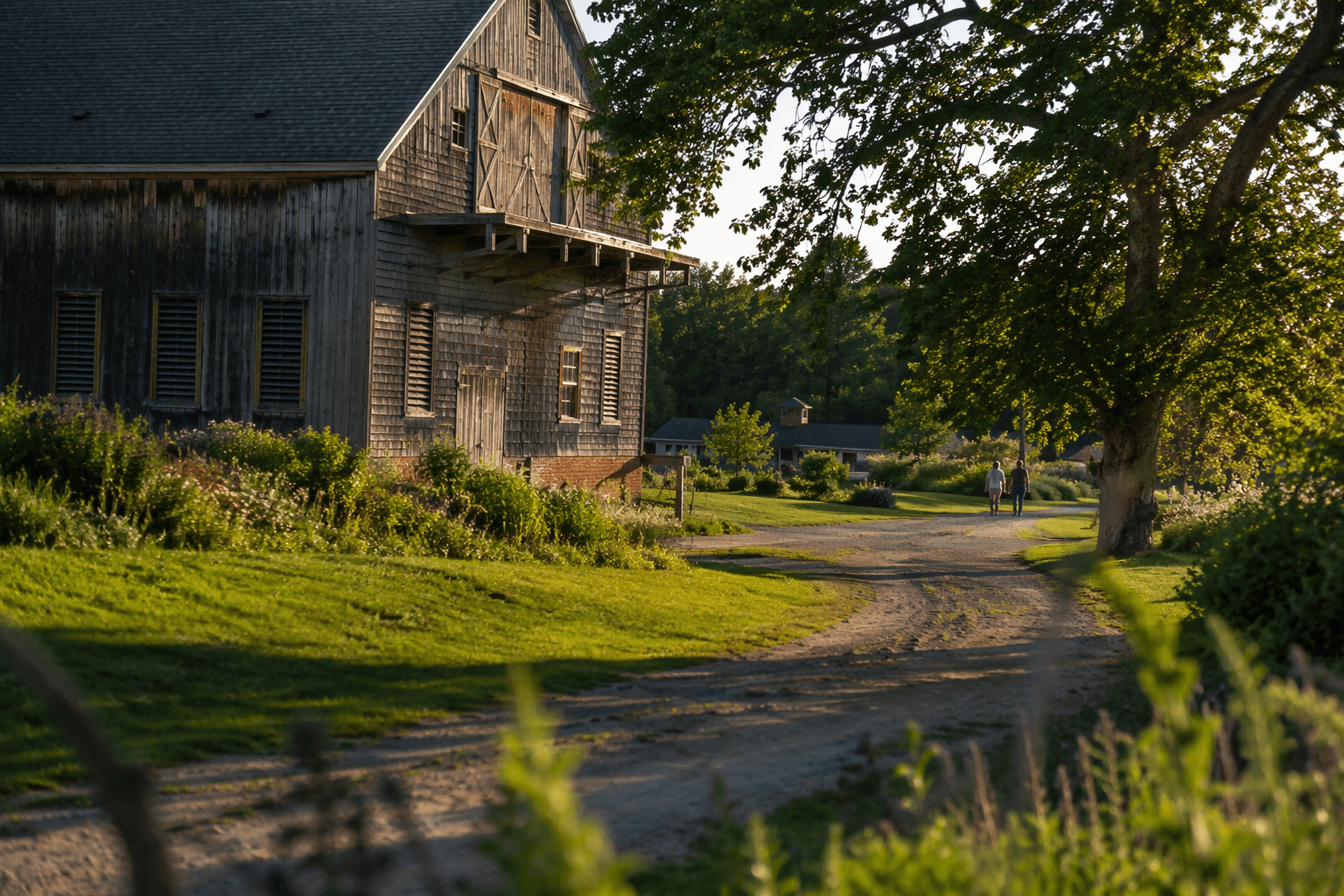
Historic Barns Park turns a former state-hospital farm into one of Traverse City’s most practical public assets. The 56-acre site sits in the Grand Traverse Commons, about a mile from downtown Traverse City, and it still carries the imprint of the land that once fed patients and employees of the Traverse City State Hospital. Today, the same ground supports recreation, horticulture, community events and preservation work that keeps the property active instead of frozen in time.
From hospital farm to shared landscape
The park’s history starts with an institutional landscape that was never meant to be purely ornamental. Garfield Township planning materials describe the Grand Traverse Commons campus as beginning as northern coastal moraine forest, with farm operations established as part of the campus history from 1880 to 1968. That long agricultural chapter matters because it explains why Historic Barns Park feels less like a manicured greenspace and more like a working piece of county history.
One of the clearest reminders of that past is the Cathedral Barn. A 2015 feature identified it as Barn No. 204 and described it as about 150 feet long and 38 feet wide, built in 1932. By 2019, Atlas Obscura was calling it an “event cathedral,” a phrase that captures how a utilitarian farm structure was adapted into something more civic and ceremonial without losing its original frame.
How the park is managed
Historic Barns Park is not run like a conventional city park, and that is part of why it has been able to evolve. SEEDS Ecology & Education Centers describes the site as a 56-acre parcel within the Grand Traverse Commons in Traverse City that is being redeveloped into a regional hub for public recreation, community events, agriculture, horticulture and environmental design. The property is owned by a municipal Recreational Authority, which gives the site a public mandate even as it relies on nonprofit partners to make the place function day to day.
Three groups help carry that work: SEEDS Ecology & Education Centers, TC Community Gardens and The Botanic Garden at Historic Barns Park. That partnership gives the site a mix of stewardship, programming and garden-based use that would be hard to maintain through city parks operations alone. The result is a hybrid model that keeps the land public while adding the kind of management structure needed to preserve old buildings and support frequent use.
What happens there now
The park’s role has widened far beyond a single restored barn. The Cathedral Barn can hold approximately 175 people for seated events and about 200 for standing receptions, which makes it large enough for weddings, gatherings and community functions without turning it into a massive commercial venue. That scale is part of the appeal: it can host income-producing events while remaining legible as a historic space.
The Botanic Garden at Historic Barns Park adds another layer of use with speakers, presentations, demonstrations and make-and-take classes. Many of those programs are discounted for members, which helps keep participation within reach for people who want more than a venue rental experience. The original renovation vision also included farmers markets, art shows, musical performances, wedding receptions and other gatherings, showing that public use was always intended to be broad rather than narrowly decorative.
The money and decisions that made it work
The transformation did not happen by accident, and it was never cheap. In December 2011, a fundraising report said the Grand Traverse Regional Community Foundation had collected more than $800,000 in pledges and donations toward a $1.5 million campaign to renovate the barns in the southeast corner of the Grand Traverse Commons. That early money mattered because it signaled that the barns were worth saving before the restoration was fully assured.
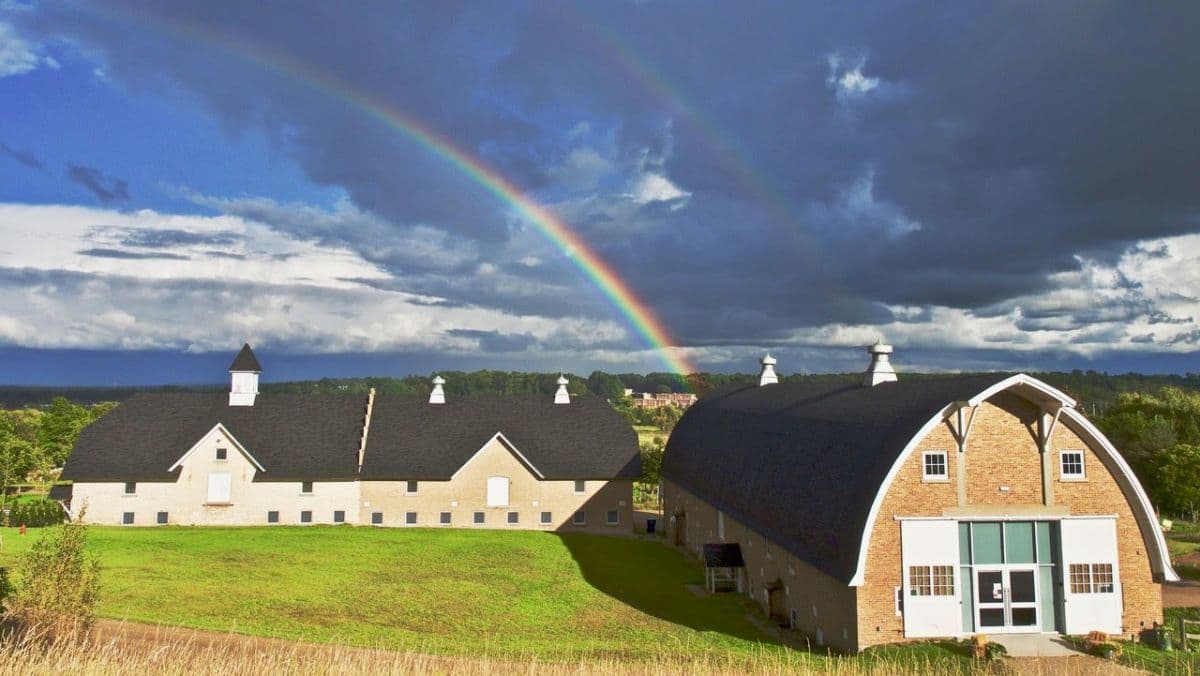
Community resistance also shaped the outcome. A 2018 township publication said opposition helped stop demolition plans and stressed that no single person or municipality could claim sole credit for the restoration. That detail matters in a county where so many valuable properties are caught between development pressure and preservation goals. Historic Barns Park survived because residents, institutions and local leaders kept treating it as a shared asset rather than a disposable relic.
The investment has continued. In October 2024, The Ticker described a $5 million-plus expansion that included modernizing Barn 206 into a new Botanic Garden education center, Cathedral Barn improvements, a two-story connecting tower with common lobbies and universal elevator access, and water infrastructure upgrades. Barn 206 itself was first built in 1894, and in May 2026 CNHI reported that renovations were complete and the Debra J. Edson Family Education Center was opening. In February 2026, the City of Traverse City and Charter Township of Garfield Recreational Authority also issued a request for proposals for event facility management at Historic Barns Park, a sign that rental operations are being tied directly to the site’s long-term preservation funding.
Why the model matters in Grand Traverse County
Historic Barns Park is useful because it shows how a large historic property can serve more than nostalgia. It offers green space, event capacity, educational programming and a visible reminder of the county’s institutional past, all on land that stays publicly anchored through a municipal Recreational Authority and nonprofit stewardship. That combination gives Traverse City a local example of adaptive reuse that protects heritage while producing civic, cultural and economic value.
For Grand Traverse County, the bigger lesson is practical: preservation works best when it is paired with investment, flexible management and uses that keep people coming back. Historic Barns Park does that by turning a former hospital farm into a place where history still earns its keep.
This article was produced by Prism’s automated news system from verified source data, official records, and press releases, then run through automated quality and moderation checks before publishing. The system is built and supervised by the people who set the standards it runs under. Read our full AI policy.
Did this article answer your question?