January Sky Shows: Wolf Moon, Jupiter Opposition, Beehive Cluster
Grand Traverse County skywatchers saw the Wolf Moon on Jan. 3 and can look forward to Jupiter at opposition on Jan. 10, with additional highlights through the month including the Beehive Cluster and a Moon-Saturn conjunction on Jan. 23. These events offer low-cost outdoor recreation, educational opportunities for local schools and families, and potential modest boosts to nighttime visits at parks and waterfronts when weather permits.
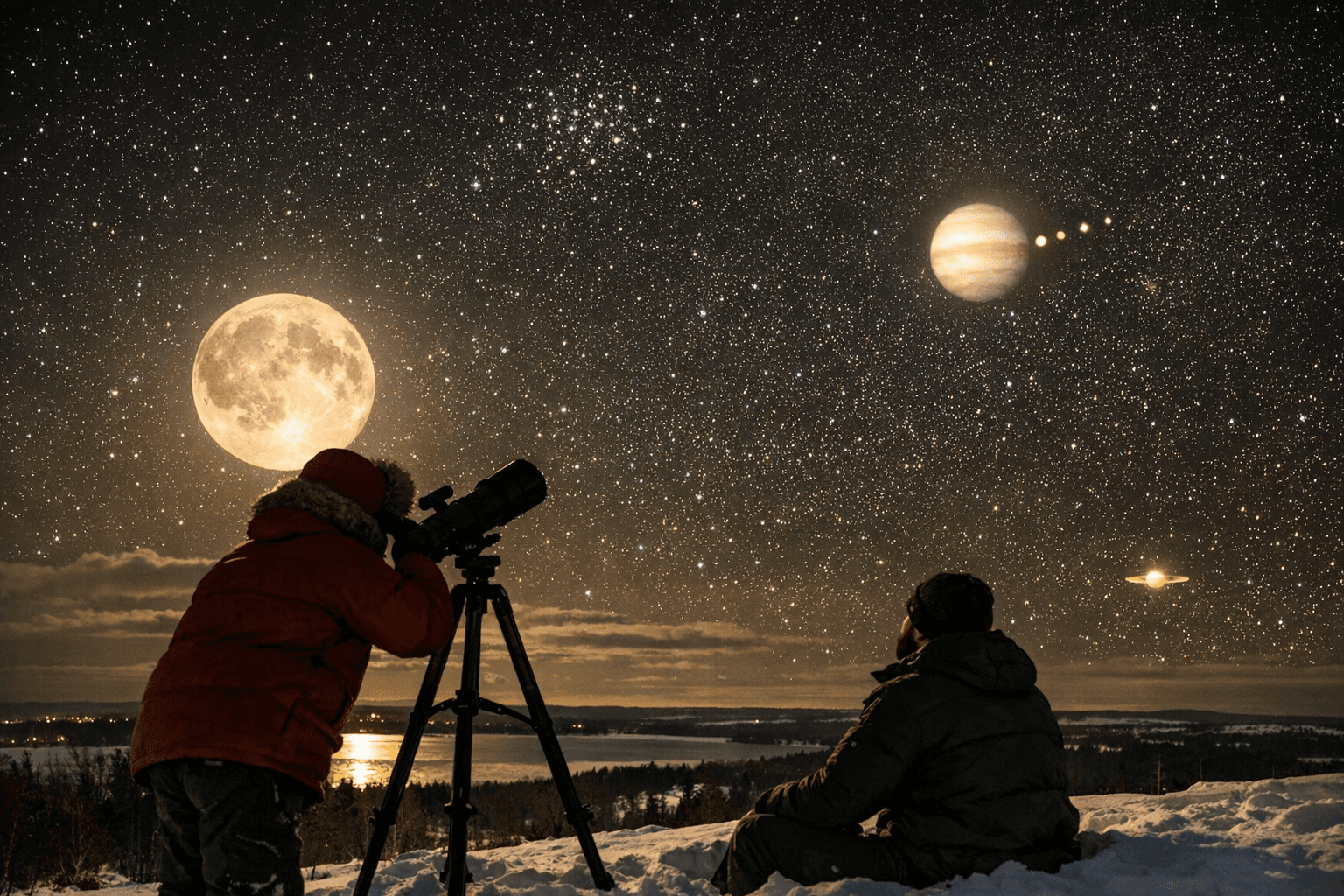
The full moon known as the Wolf Moon rose over Grand Traverse County on Saturday, Jan. 3, marking the first full moon of 2026. With clear skies, the moon’s brightness made it easy for casual viewers to spot familiar lunar features without optical aid, and it served as an accessible evening event for families and photographers.
Looking ahead, Jupiter will reach opposition on Jan. 10, the point in its orbit when the planet and Earth are aligned on the same side of the Sun. At opposition Jupiter will be at its brightest for 2026; for local observers the planet will be easiest to spot in the eastern sky around 8 p.m. Eastern Time in the constellation Gemini. Opposition nights are the best time for amateur astronomers and backyard observers to see cloud bands and, with modest telescopes, several of Jupiter’s largest moons.
The Beehive Cluster, Messier 44, is visible throughout January in the eastern night sky shortly after sunset and is expected to be most prominent mid-month. This open star cluster is bright enough to be seen with binoculars and presents an appealing target for casual stargazers looking for a simple post-sunset object. Later in the month, the Moon will pass near Saturn on Jan. 23; observers should look west around 7 p.m. Eastern Time to catch the conjunction.
For Grand Traverse residents these celestial events are practical opportunities for low-cost outdoor activity during winter. Clear nights can draw people to dark-sky sites, lakeshore parks and local overlooks, which supports small-scale spending at nearby restaurants and retailers and provides educational moments for schools and community groups. Conversely, cloud cover and typical Michigan winter weather will limit viewing on some nights, so checking local forecasts and sky conditions is essential.
Longer-term, recurring predictable events like full moons and planetary oppositions underline the value of preserving dark skies through careful outdoor lighting policy. Reduced light pollution not only improves stargazing but can benefit wildlife and strengthen niche tourism tied to astronomy. For now, residents can mark their calendars for Jan. 10 and Jan. 23, step outside on clear evenings, and enjoy winter’s celestial lineup.
This article was produced by Prism’s automated news system from verified source data, official records, and press releases, then run through automated quality and moderation checks before publishing. The system is built and supervised by the people who set the standards it runs under. Read our full AI policy.
Did this article answer your question?


