Munson Healthcare Donates $10,000 to Boost Permanent Supportive Housing in Northwest Michigan
About 250 people are unhoused in the greater Grand Traverse area right now. Munson Healthcare just gave $10,000 to the organization working hardest to change that.
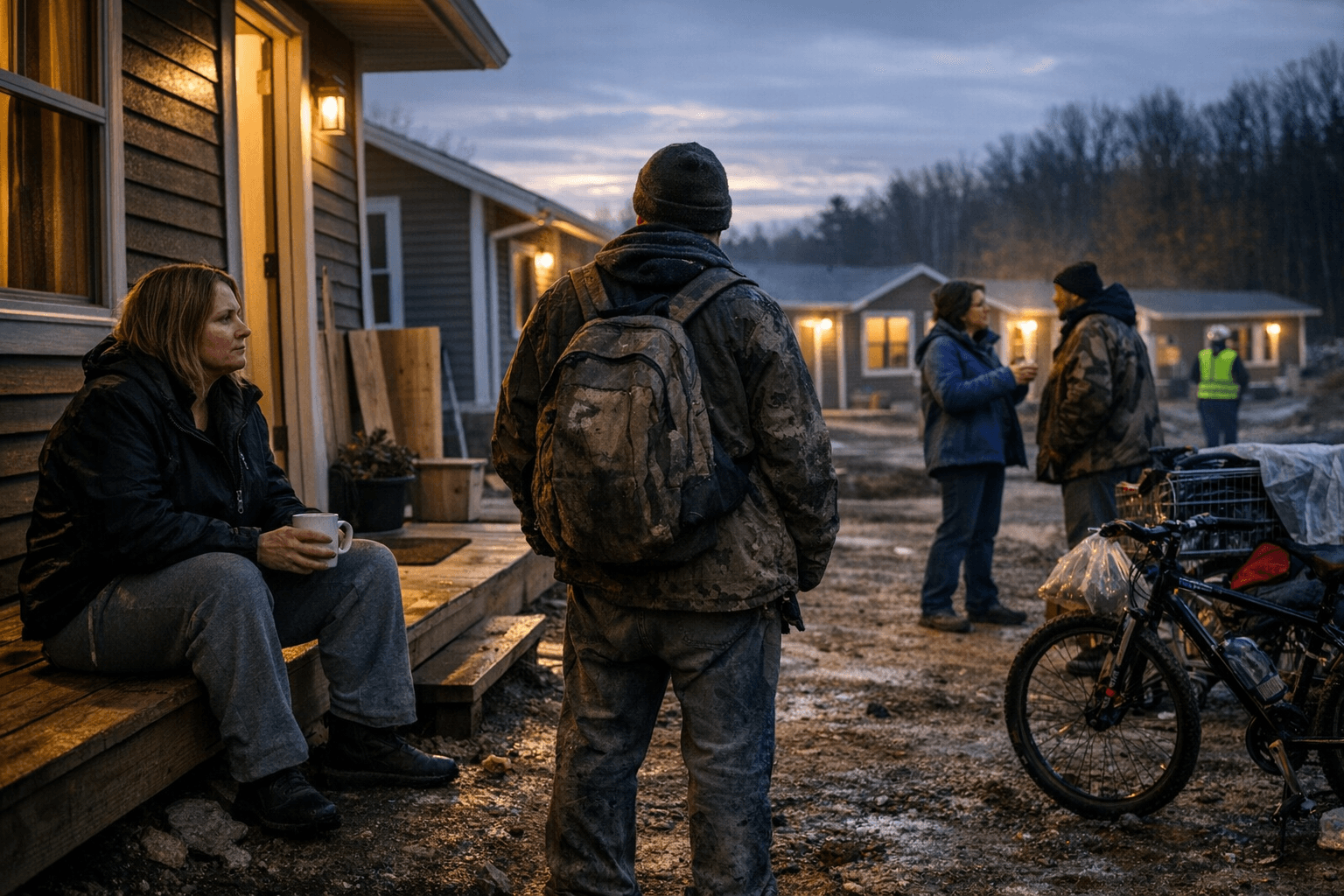
About 250 people are sleeping without permanent housing in the greater Grand Traverse area tonight. Of that population, roughly 20 to 25 percent experience a severe mental illness, and among those who have been homeless for 12 months or more, between 65 and 75 percent carry a mental health disability, making them eligible for services through Northwest Michigan Supportive Housing.
Munson Healthcare announced a $10,000 gift to NMSH, an organization dedicated to providing Permanent Supportive Housing and essential services for individuals experiencing homelessness and living with mental health disabilities, reflecting Munson's commitment to addressing housing insecurity and mental health as two critical priorities identified in its most recent Community Health Needs Assessment.
"Stable housing and having a safe, warm place to live is foundational to health," said Laura Glenn, chief operating officer for Munson Healthcare. "Northwest Michigan Supportive Housing not only provides a safe place to live but also offers the tools and support people need to maintain housing and rebuild their lives. This gift underscores our commitment to improving health by addressing root causes."
NMSH was founded in 1987 by individuals who recognized a need for permanent, stable, supportive housing in the mental health community in the Grand Traverse Area. When the doors of the Traverse City State Hospital closed more than three decades ago, many of its live-in residents were left without stable housing. The organization has grown substantially since, and today provides case management, life skills training, and support services including transportation assistance, budgeting, and practical tenancy education such as maintaining a unit, being a good neighbor, and communicating effectively with a landlord.
NMSH pairs affordable rental housing with supportive services to help households overcome barriers to maintaining stable housing, serving Antrim, Benzie, Grand Traverse, Kalkaska and Leelanau counties. The organization operates six buildings and partners with 35 independent landlords to house clients across that five-county footprint, working alongside the Northwest Michigan Coalition to End Homelessness and other community agencies. According to Munson Healthcare, NMSH currently serves 125 households, including 42 children, and maintains a 96 percent housing retention rate.
Sarah Hughes, executive director of NMSH, described the stakes for people who enter the program with few resources to fall back on. "Every day we see the life-changing benefits of housing and case management services in the lives of our clients," Hughes said. "The people we serve don't have safety nets. When that happens, trauma builds on trauma. Our goal is to provide the stability, dignity and support that our clients need to thrive."
Munson Healthcare's giving strategy prioritizes investments in organizations that advance its three-year Community Health Needs Assessment goals, which currently center on mental health, economic security, and access to healthcare. Since 2024, that approach has directed more than $700,000 to community partners working in those priority areas, including several focused on basic needs such as housing stability. That total includes an annual $150,000 donation to the Street Medicine program, a collaborative effort between Munson Healthcare and Traverse Health Clinic that has supported expansion into Cadillac, Kalkaska, and Benzie counties and funded a full-time coordinator.
For NMSH, the Munson gift arrives as demand for Permanent Supportive Housing in northwest Michigan continues to outpace available units. The wraparound supports provided by NMSH help residents maintain stable housing and work toward independence, though many clients require long-term support. That sustained commitment, measured by a near-perfect retention rate, is what the $10,000 contribution is designed to reinforce.
Know something we missed? Have a correction or additional information?
Submit a Tip