Nicolet Bank, Traverse City Schools Buy Tickets for Fight the Freeze Fundraiser
Nicolet Bank bought tickets and partnered with Traverse City Area Public Schools for the "Fight the Freeze" fundraiser, asking fans to bring cash, grocery gift cards or snacks instead of paying admission.
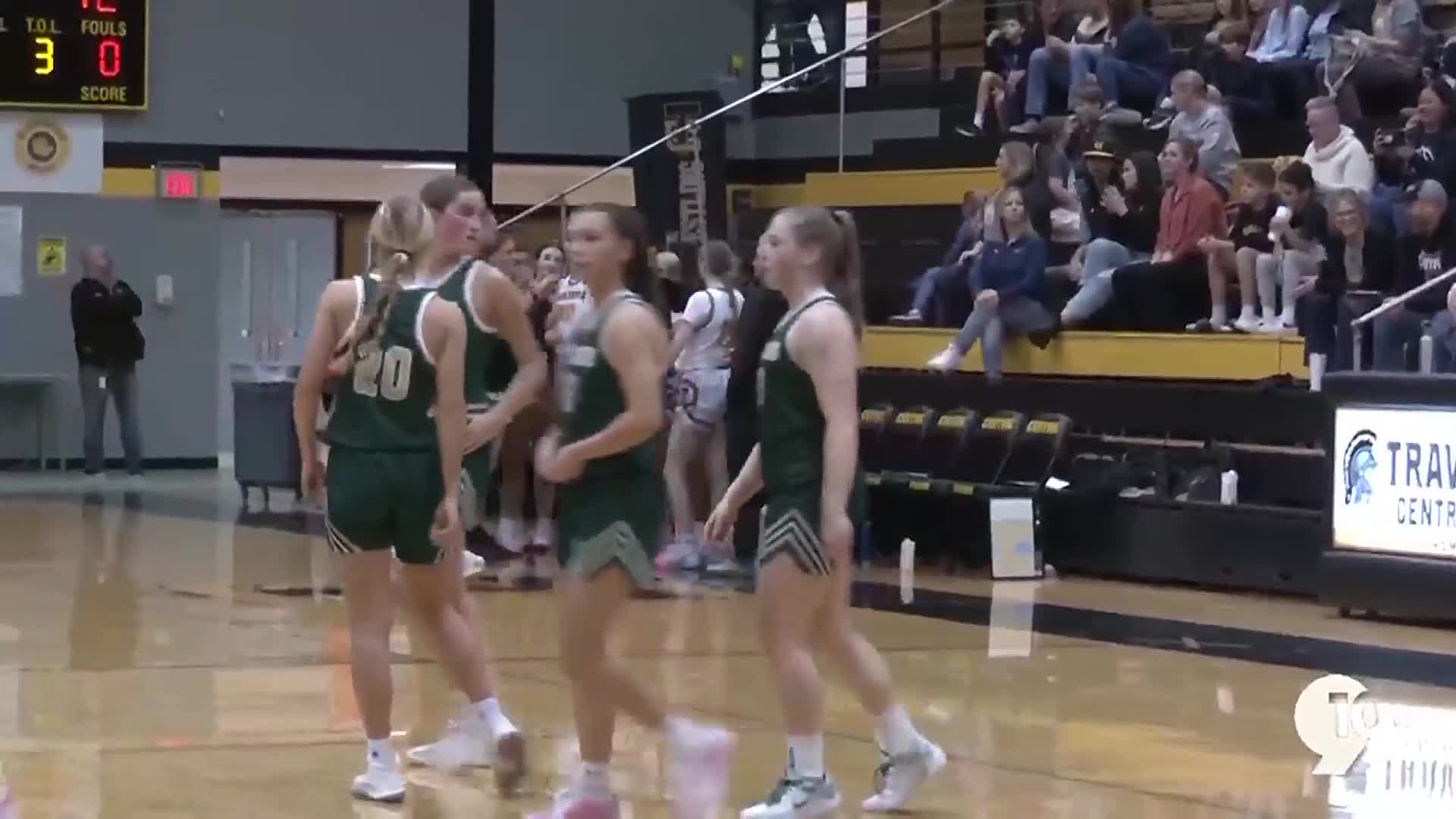
Nicolet Bank teamed with Traverse City Area Public Schools to support students facing housing insecurity at the "Fight the Freeze" fundraiser tied to a TC West vs. TC Central basketball doubleheader. The bank purchased game tickets and organizers invited attendees to bring donations in lieu of paying admission, accepting cash, grocery gift cards and snacks.
The small-scale fundraiser comes as researchers and campus leaders warn that short-term aid is only part of the solution for students struggling with housing. A statewide study led by ECOnorthwest with a community engagement companion report from LISC Puget Sound found that over 38 percent of students experience housing instability. LISC Puget Sound framed the stakes plainly: "We believe housing is educational infrastructure. Students cannot focus on school if they do not have a place to sleep. They cannot complete programs if they are living in crisis. And Washington cannot afford to lose their talent, drive, or potential."
National and statewide examples show a range of campus and community responses. Jessica Wolin, faculty lead of research and impact for the Center for Equitable Higher Education, noted that "College-focused rapid rehousing aims to support students facing housing instability all the way through graduation." Many campuses still rely on one-time interventions such as emergency housing, hotel vouchers and emergency grants, but models that tie campuses to longer-term community housing resources are being promoted as more sustainable.
California State University system efforts illustrate that approach. Cal State documents show 18 CSUs have partnered with community-based organizations to provide housing support, and eight campuses participate in College-Focused Rapid Rehousing - Chico, Long Beach, Northridge, Pomona, Sacramento, San Diego, San Francisco and San José. Cal State described a program model in which students receive subsidized rental support and ongoing case management. "The program was designed to provide housing to students on a longer-term basis than emergency housing," O'Keefe says. "It is designed so that the campuses work with community-based organizations, and it's the community-based organizations that are making accessible the housing placements." The CSU system also introduced an Affordable Housing Grant Program in 2023, and 11 CSUs offer a residence hall meal plan to students in on-campus emergency housing.

Other programs point to creative options for local adaptation. The Tacoma Housing Authority and Tacoma Community College used housing choice vouchers from 2014 to 2022 to connect students to community housing. The Neighborhood Coalition for Shelter’s Scholars Program provides year-round housing and supportive services to unhoused CUNY students. SchoolHouseConnection and other practitioners highlight models that include alumni boarding stipends, host-home placements, cooperative living, and secure vehicle-sleeping programs; examples cited include a $5,000 per semester alumni boarding incentive at the University of Utah and a $2,500 incentive plus free parking at the University of Cincinnati. Community college examples include Cerritos College's The Village, described as 1,477 square feet of modern townhomes housing up to 28 occupants across seven townhomes, and Los Angeles Harbor College's Seahawk Essentials office, listed as Office Tech-215, Phone (310) 233-4057.
For Traverse City residents, the Fight the Freeze event shows how local businesses and schools can mobilize community giving at high-visibility moments. The immediate impact will depend on who collects and distributes cash, gift cards and snacks; the original event report did not specify a beneficiary organization or donation totals. Moving beyond one-off drives, local school leaders and community partners may consider linking emergency support to longer-term housing solutions used elsewhere - vouchers, community partnerships, alumni boarding incentives or host-home networks - to reduce the disruption housing instability causes for students. The next step for readers is to ask Traverse City Area Public Schools and Nicolet Bank how donations will be allocated and whether similar partnerships can be expanded to address persistent student housing needs.
This article was produced by Prism’s automated news system from verified source data, official records, and press releases, then run through automated quality and moderation checks before publishing. The system is built and supervised by the people who set the standards it runs under. Read our full AI policy.
Did this article answer your question?


