Traverse City considers tighter short-term rental limits in zoning districts
Traverse City could trim short-term rentals in several districts, hitting C-1, C-2 and D-2 owners as the city weighs tourism income against year-round housing access.
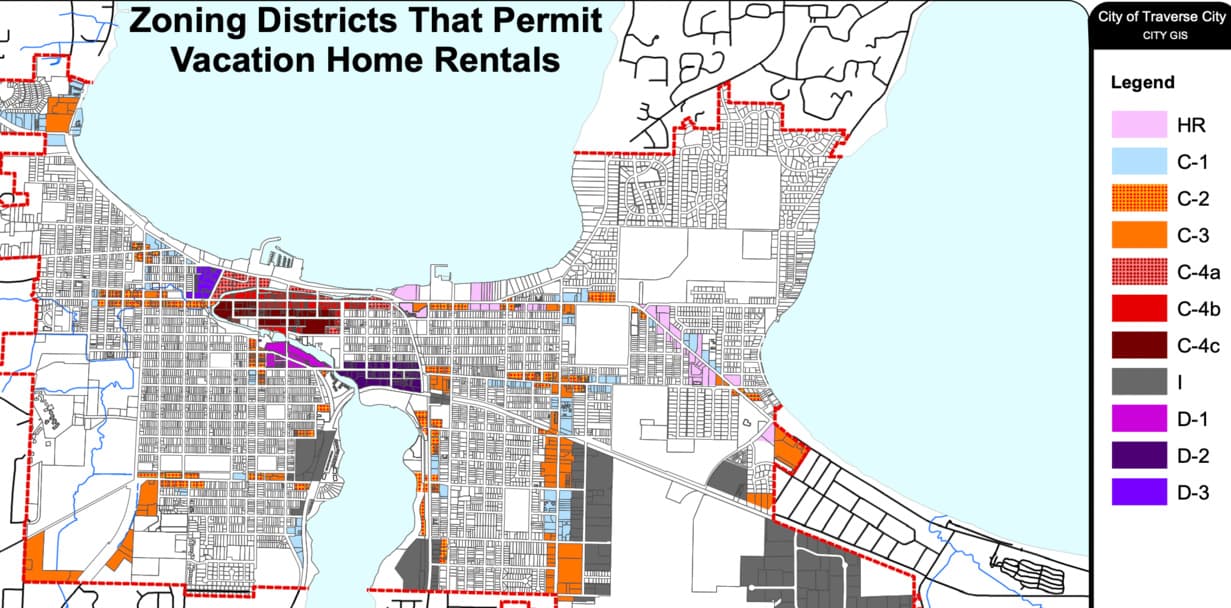
Short-term rental owners in Traverse City’s C-1, C-2 and D-2 districts could be the first to lose room to operate if commissioners tighten vacation-rental limits now under discussion. The change would decide where new short-term rentals can still be licensed, and whether some existing owners keep the rights they have under current city policy.
City commissioners Shawn Winter, Brad Kirkpatrick, Leslie Sickterman, Dave Weston and Katie Miller have been discussing the proposal at recent meetings as part of the city’s Strategic Action Plan. The plan would guide programs and investments through 2030, and the short-term rental debate has become one of its clearest tests: how much visitor lodging Traverse City should allow before it starts to crowd out housing for people who live here year-round.
The city already regulates vacation rentals through Chapter 870, which requires owners to get a license before operating. The application fee is $200, licenses expire on Dec. 31 each year, and renewals can only be processed in the 90-day to 30-day window before expiration. Under the city’s administrative policy, certain existing and pending vacation-home rentals in the C-1, C-2 and D-2 districts were grandfathered if they met licensing and construction requirements.
That existing system matters because Traverse City has already said short-term rentals are not a small issue. In 2021, the city said it had issued 252 Vacation Home Rental and Tourist Home Rental licenses, a number it said represented less than 4% of the city’s housing stock. Any new limits would need to be measured against that baseline, not against assumptions about how many homes might suddenly return to the year-round market.
The city’s Planning & Zoning Department prepares the Master Plan and shapes zoning rules, while Traverse City Code Enforcement handles rental housing, zoning, health, parking and public nuisance complaints. That puts the rental debate at the center of both neighborhood quality of life and the city’s housing policy, especially in districts where vacation-home rentals already have a long paper trail.
The Strategic Action Plan itself was adopted on June 2, 2025, after nine community engagement sessions, a survey with nearly 1,200 verified participants, direct mail to all residential households and a community summit in May 2025. City officials say the process was meant to be inclusive and forward-looking, but the rental issue now asks a more immediate question: whether a tighter cap would meaningfully ease housing pressure for local residents, or mainly shift revenue away from tourism-driven property use.
This article was produced by Prism’s automated news system from verified source data, official records, and press releases, then run through automated quality and moderation checks before publishing. The system is built and supervised by the people who set the standards it runs under. Read our full AI policy.
Know something we missed? Have a correction or additional information?
Submit a Tip