Traverse City infrastructure likely prevented worse April flood damage
New sewer and river-wall work may have kept April floodwaters from dumping 1.5 million gallons a day of sewage into the Boardman/Ottaway River and Grand Traverse Bay.
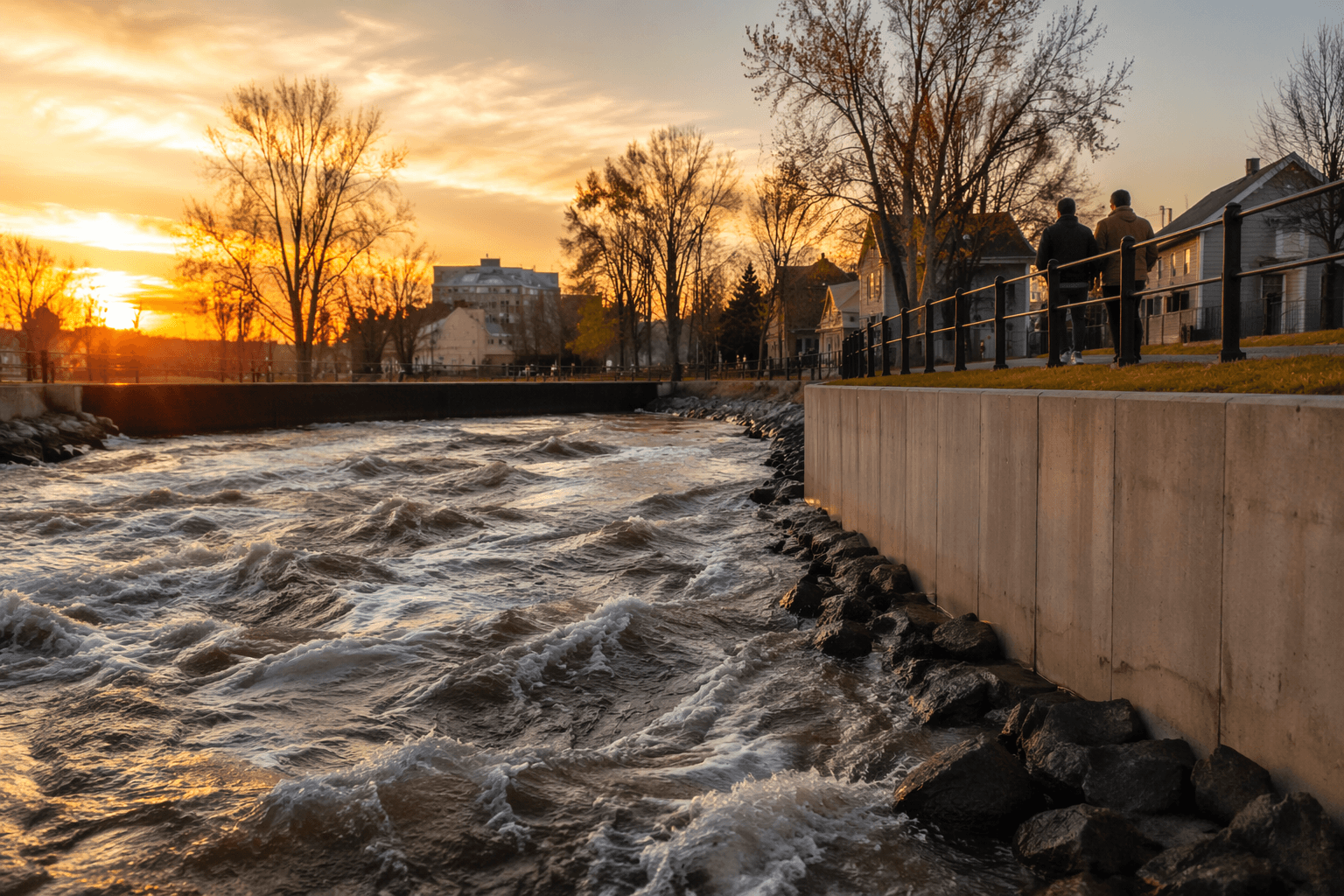
Traverse City came closer than it looked to a downtown and environmental crisis in April, but infrastructure finished in 2023 likely kept the Boardman/Ottaway River flood from becoming far worse. City officials said the river reached levels rarely seen in recorded history, while the FishPass area came within half an inch of what the city classifies as a 500-year flood.
The biggest near-miss involved the sewer system. Without the earlier relocation work, city officials estimated as much as 1.5 million gallons per day of raw sewage could have discharged into the river and Grand Traverse Bay. Instead, the vulnerable 24-inch sanitary sewer that once served the west side of Traverse City and parts of Garfield and Elmwood townships had already been moved and replaced with a new 30-inch main in the alley.
That project, the Boardman River Wall Stabilization and Sewer Relocation Project, began construction on Dec. 13, 2022 and was completed in 2023. It addressed a 1930s retaining wall in the 100 block of East Front Street and the river scouring beneath its footing in the 200 block, where the city said the old wall and sewer infrastructure had become exposed to risk. During the flood, a sinkhole formed in Lot A and exposed an abandoned 24-inch sanitary sewer with a compromised service connection and a six-inch hole, but the relocated trunkline had already removed the main threat.
The water itself was historic. The city said the U.S. Geological Survey gage at Beitner Road could not capture the peak because of roadway washout, but the upstream station near Brown Bridge Road recorded 1,120 cubic feet per second on April 14, 2026. That was far above the previous record of 583 cfs set on April 14, 2014. Grand Traverse County declared a local State of Emergency that same day, saying the move was needed to improve coordination of public safety resources and support response and recovery.
Officials also kept an eye on other weak points. Traverse City’s utilities director said the former Union Street Dam likely would have failed during the storm, which could have worsened flooding downtown and around Boardman Lake. The city’s newer flood performance suggests recent dam-risk reduction, sewer relocation and river-wall rehabilitation did more than protect pipes and pavement. They likely prevented a much larger downtown and bayfront emergency.
This article was produced by Prism’s automated news system from verified source data, official records, and press releases, then run through automated quality and moderation checks before publishing. The system is built and supervised by the people who set the standards it runs under. Read our full AI policy.
Know something we missed? Have a correction or additional information?
Submit a Tip