Traverse City students tackle Great Lakes microplastics with cleanup effort
More than 100 Traverse City middle schoolers helped test for microplastics, turning local cleanup work into usable data from the Boardman-Ottaway watershed.
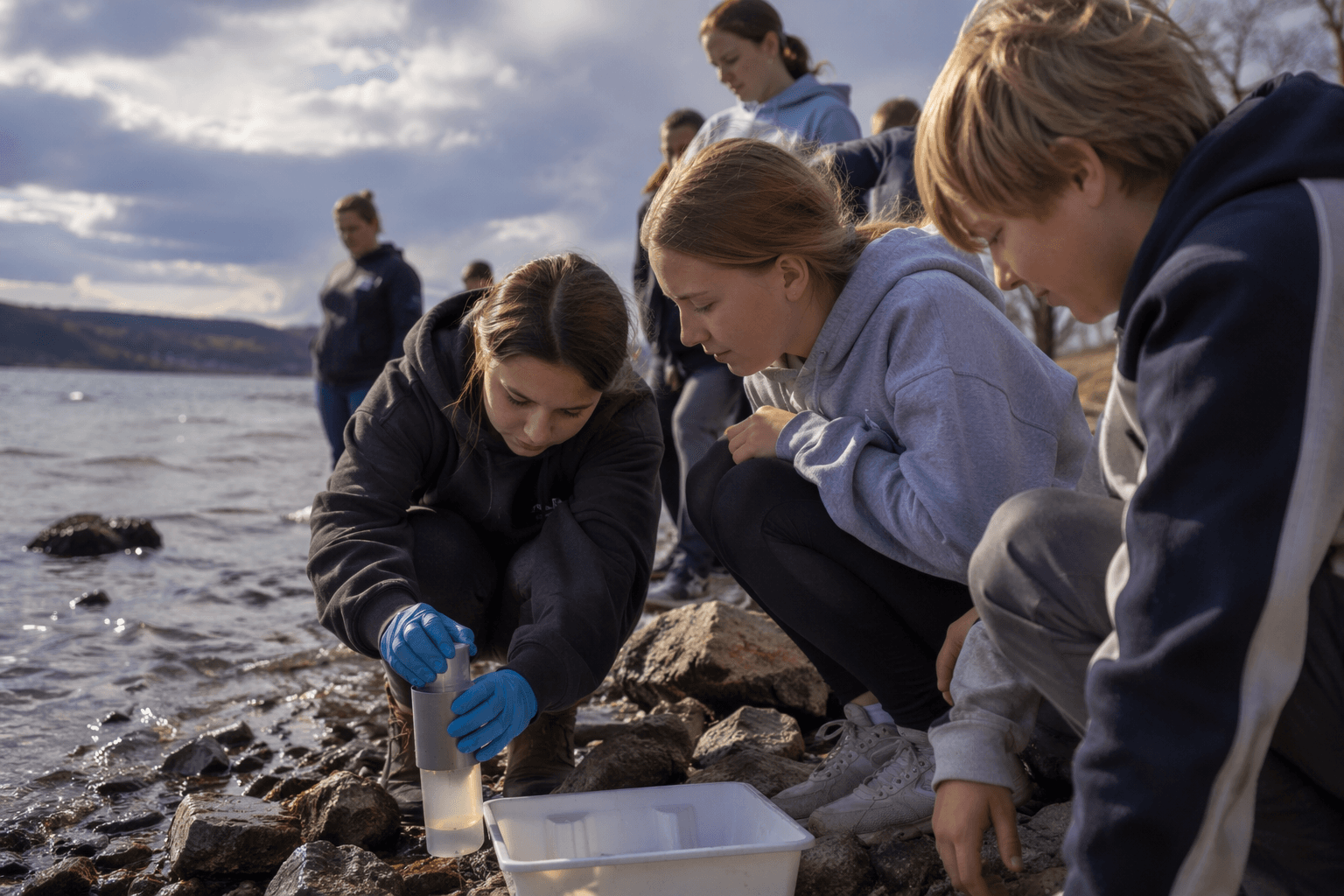
More than 100 Traverse City middle school students took part in a hands-on science project that turned a school lesson into local environmental data, with an added community cleanup effort tied to the work. In Grand Traverse County, where lakes, rivers and drinking water shape daily life, the project put students directly into the growing debate over microplastics in the Great Lakes.
The stakes are real. Scientists define microplastics as plastic pieces smaller than 5 millimeters, and local researchers say they are showing up in places residents rely on for recreation and water. The Great Lakes form the largest surface freshwater system on Earth, and one regional estimate puts plastic waste entering the lakes at about 22 million pounds each year. That scale has made the issue hard to ignore in Traverse City, where schools, researchers and community groups have been pressing for more attention to what is in the water even when it looks clean.
At Northwestern Michigan College, biology professor Nick Roster has been sampling the Boardman-Ottaway River watershed since at least October 2023. His 24-site survey found microplastics in all but one location. Students filtered water samples and counted plastic fragments under microscopes, work that Roster said was a "reality check" because clear water can still contain plastic. For families who fish, paddle or simply live near the Boardman-Ottaway system, that finding made the problem feel less abstract and more immediate.
Roster’s team widened the work by June 2024, testing well water in homes in Grawn, the Old Mission Peninsula, Traverse City and Mancelona. The team was also preparing to sample air, West Bay, Traverse City’s water treatment plant and soil with help from area well drillers. That matters in a county and region where state agencies estimate roughly 30% of Michigan residents get their water from wells, making private groundwater part of the microplastics conversation as well.

The project also reflects a broader local effort to move the issue out of the lab and into public view. A 2022 roundtable at the Delamar Traverse City brought together researchers from Michigan State University, the University of Michigan and Wayne State University to discuss microplastics in the Great Lakes. In Traverse City, the student work now adds another layer: young people are not just learning about pollution, they are helping produce the data that could shape public behavior, school-led cleanup efforts and, eventually, stronger local and state action.
This article was produced by Prism’s automated news system from verified source data, official records, and press releases, then run through automated quality and moderation checks before publishing. The system is built and supervised by the people who set the standards it runs under. Read our full AI policy.
Know something we missed? Have a correction or additional information?
Submit a Tip